
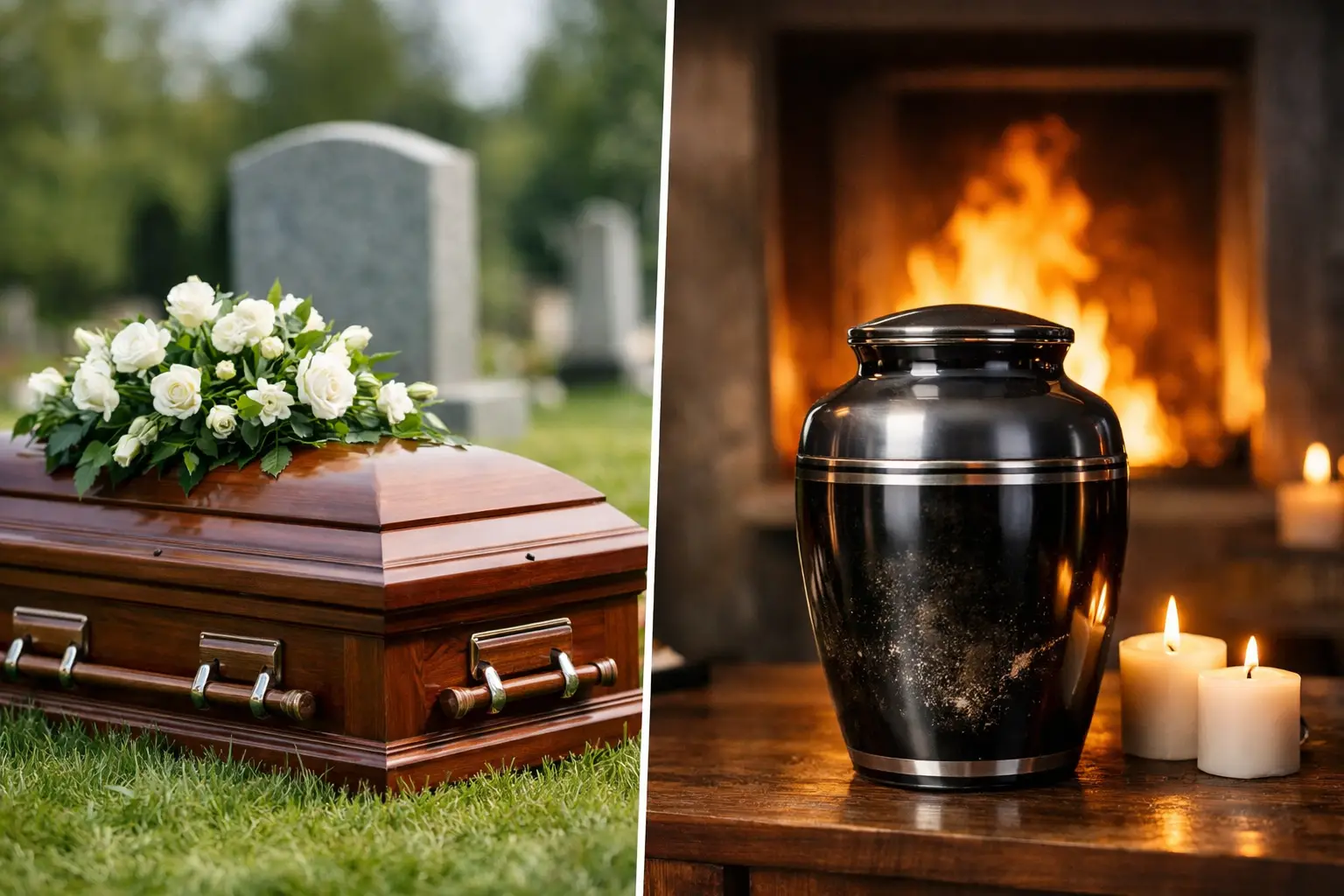

A funeral invoice can feel difficult to read when you are also coping with a death. Families often ask about burial vs cremation costs because they want to make a careful, dignified choice without spending more than they can comfortably afford. The honest answer is that either option can be simple or highly personal, but burial usually carries additional long-term and location-based charges.
The most helpful starting point is not to decide that one type of funeral is always cheaper. It is to understand which parts are essential, which are optional, and which choices matter most to the person who has died and those close to them.
Why burial and cremation costs differ
A cremation generally involves one main venue fee: the crematorium. A burial involves a burial ground or cemetery, preparation of the grave, and usually the purchase or reopening of a grave. These costs can vary considerably between locations, particularly where the person who died did not live within the parish or local authority area.
With a burial, the grave itself may be purchased for a fixed period rather than forever. This is often called an exclusive right of burial. There can also be fees for opening and closing the grave, adding a second burial later, installing a memorial, and maintaining or renewing the right when its term ends. A family grave that already exists can reduce the initial cost, although it will still need to be checked for space, ownership and any reopening fees.
A cremation does not normally require a grave or headstone. However, ashes still need to be cared for. They may be collected by the family, placed in a crematorium garden, scattered in a meaningful place with permission, interred in a cemetery or natural burial ground, or kept in an urn. Some of these choices are free or modestly priced; others create further costs.
Burial vs cremation costs: what the funeral includes
The funeral director’s services are broadly similar whether a family chooses burial or cremation. This can include bringing the person into care, providing suitable facilities, completing arrangements, liaising with venues and officiants, arranging the hearse or other transport, and supporting the family through the day itself.
The difference is usually found in the third-party fees. These are charges paid to other providers, such as the crematorium, cemetery, church, minister, florist, musician or newspaper. A clear funeral estimate should separate the funeral director’s charges from these disbursements, so you can see where the money is going.
For a cremation with a service, the crematorium fee commonly includes the use of its chapel or ceremony room at an allotted time and the cremation itself. There may be extra charges for an extended service time, visual tributes, a webcast, printed orders of service or an early-morning slot.
For a burial, cemetery charges are often more detailed. Families may need to consider the grave purchase, grave digging, interment fee, chapel use if available, and any fee for a minister or celebrant. If the funeral includes a church service before travelling to the burial ground, there can be church fees and additional vehicle time as well.
The choices that have the greatest effect on price
The type of committal is only one part of the total. A modest coffin, a simple hearse and a small service can be arranged for either burial or cremation. Equally, both can involve limousines, flowers, catering, printed stationery, a larger venue and a more elaborate coffin.
A direct cremation is usually the lowest-cost option because there is no attended funeral service at the crematorium. The cremation takes place with dignity, but family and friends do not attend. Many families then hold a separate memorial, gathering at home, church service, celebration of life or ash-scattering ceremony at a time that feels less pressured. This approach can offer flexibility, though it may not suit those who feel they need to be present for the committal.
A simple attended cremation can provide a meaningful farewell while keeping the arrangements focused. Choosing a shorter service, a weekday time where available, family flowers, a single vehicle or no printed stationery can all help manage the budget without making the occasion feel impersonal.
For burials, the greatest variable is often the grave. A new grave in a popular cemetery can cost substantially more than reopening an existing family grave. Natural burial may be an alternative for someone who wanted a less formal, environmentally minded resting place, although fees and the rules around markers vary from one site to another.
Looking beyond the day of the funeral
It is easy to compare only the immediate funeral costs, but it can be kinder to think ahead. Burial may involve later memorial costs, inscriptions, cleaning, cemetery permits or further interment fees. Some families value having a grave they can visit, place flowers on and share with future generations. That sense of a permanent local place can be deeply comforting.
Cremation can bring more choice after the funeral, but this also means a decision may be postponed. There is no need to rush. Ashes can be kept safely until the family feels ready. If they are to be scattered, it is wise to gain the landowner’s permission and to make sure everyone who needs to be involved has had the opportunity to talk.
Neither choice is more loving, responsible or respectful than the other. The right option may be shaped by faith, family tradition, the wishes left by the person who died, environmental concerns, a connection to a particular churchyard or simply what the family can afford.
How to compare funeral estimates fairly
When speaking to a funeral director, ask for a written estimate that makes the essential items clear. It should explain the funeral director’s fee, the crematorium or cemetery fee, the coffin, transport, care of the person who has died, doctors’ paperwork where applicable, and any optional additions.
It is also reasonable to ask what could change the estimate. For example, a burial ground may charge different fees for residents and non-residents, a grave may need to be deeper than expected, or a preferred date may not be available. A good funeral director will explain these possibilities plainly rather than leaving families to discover them later.
If money is tight, say so early. There is no embarrassment in setting a budget. Practical options may include direct cremation, a simple coffin, fewer vehicles, a family-led gathering after the funeral, or a smaller service followed by a memorial at a later date. It may also be worth checking whether there is a pre-paid funeral plan, life insurance policy, workplace benefit, union support or funds held in the estate.
In some circumstances, help may be available through the government’s Funeral Expenses Payment or through local charitable support. Eligibility and the amount awarded depend on individual circumstances, so it should not be assumed that the full funeral cost will be covered.
Personal care should not depend on the budget
A lower-cost funeral should still be handled with patience, respect and proper attention to detail. The chance to choose music, include a favourite reading, gather close family, carry the coffin or arrange flowers from the garden can matter far more than expensive additions.
For families in Exmouth, Budleigh Salterton and across East Devon, local knowledge can also make arrangements clearer. Crematorium availability, parish rules, church connections and natural burial options all affect what is possible and what it will cost. Otter Valley Funerals can talk through these choices at your pace, with no expectation that a simple funeral must be a lesser one.
The most reassuring decision is usually the one that reflects the person who has died, gives those closest to them a way to say goodbye, and leaves the family without avoidable financial worry.