

When a family is faced with funeral decisions, one of the questions that can feel unexpectedly difficult is whether to choose a green burial or a more traditional burial. The choice is not simply about preference. In green burial vs traditional burial, the differences often touch on personal values, faith, family expectations, budget and the kind of farewell that feels most fitting.
For some people, a traditional burial offers a sense of familiarity and comfort. For others, a green burial feels gentler, simpler and more in keeping with the life their loved one lived. Neither option is right for everyone. What matters is understanding what each involves, and what it may mean in practice for the funeral, the resting place and the people left behind.
Green burial vs traditional burial: what is the difference?
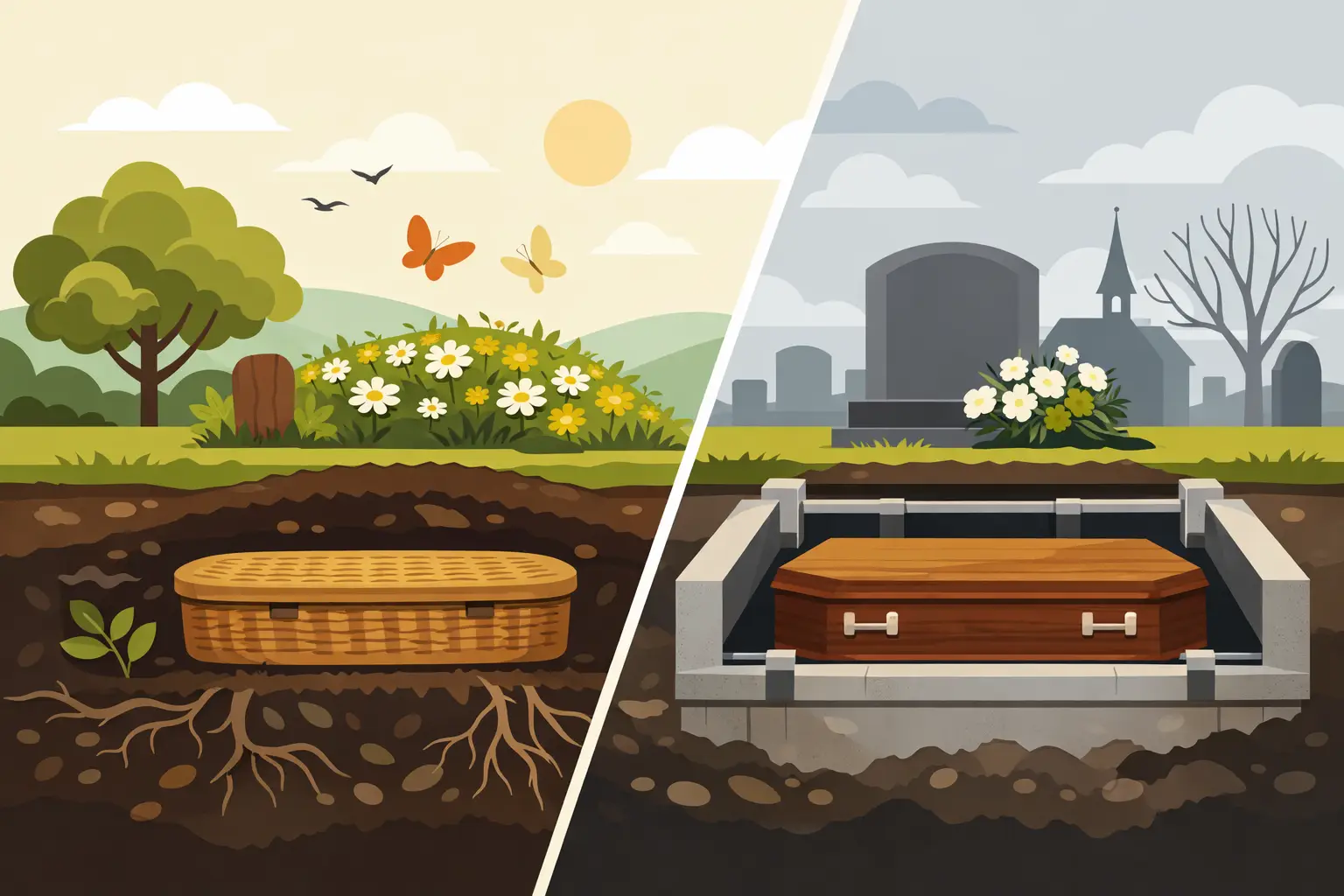
A traditional burial usually follows a format most people will recognise. The person who has died is commonly cared for in a conventional coffin, often made from wood or veneered materials, and may be buried in a cemetery or churchyard. A headstone or memorial is usually placed on the grave, and the grave itself may be lined or prepared according to the rules of the burial ground.
A green burial, sometimes called a natural burial, is designed to reduce environmental impact. It usually takes place in a natural burial ground or a section set aside for environmentally conscious burials. The coffin or shroud is biodegradable, and embalming is generally avoided unless there is a specific reason for it. Memorials are often more understated, with some sites favouring trees, wildflowers or simple plaques over traditional headstones.
The practical distinction is fairly clear, but the emotional distinction can be just as significant. Traditional burial can feel rooted in family custom and continuity. Green burial can feel peaceful, pared back and closely connected to nature.
The environmental impact
For many families, the main reason for considering a green burial is concern about the environment. Traditional burials can involve treated wood, metal fittings, grave liners, stone memorials and, in some cases, embalming fluids. Taken together, these elements can increase the environmental footprint of a funeral.
A green burial aims to keep that footprint lower. Biodegradable materials break down naturally, and natural burial grounds are often managed in ways that support wildlife and preserve green space. Some families take comfort in the idea that the resting place contributes to a living landscape rather than a more formal cemetery setting.
That said, environmental impact is not always a simple calculation. Travel for mourners, choice of flowers, printed orders of service and other funeral elements also play a part. A traditional burial can still include environmentally thoughtful choices, just as a green burial may involve practical compromises depending on location and availability.
Ceremony and atmosphere
One of the biggest misconceptions is that a green burial means a less meaningful funeral. In reality, the ceremony can be just as personal, dignified and carefully planned as any other service.
A traditional burial often takes place in a church, chapel or cemetery chapel, followed by burial in a cemetery or churchyard. This structure can feel reassuring, particularly for families who want familiar rituals or who have religious traditions they wish to observe.
A green burial may offer a different atmosphere. The setting is often quieter and more rural, with less formality and a stronger sense of the natural surroundings. Some families appreciate the simplicity of that. Others may find it too different from what older relatives expect or from what they feel a funeral should look like.
This is where gentle, practical guidance matters. The best choice is often the one that gives the family confidence and space to say goodbye in a way that feels honest rather than pressured.
Cost considerations
Cost is understandably part of the conversation, although it should never be the only factor. Traditional burial can be more expensive, particularly where cemetery fees, grave purchase, memorial costs and more elaborate coffins are involved. In some areas, the cost of a burial plot alone can be significant.
A green burial can sometimes be more affordable, especially if the burial ground fees are lower and the family chooses a simple biodegradable coffin or shroud. The absence of a formal headstone may also reduce later costs.
However, green burial is not always the cheaper option. Some natural burial grounds charge premium fees because of land management, location or limited space. If the nearest suitable site is some distance away, transport costs may also increase. It is worth looking at the whole picture rather than assuming one option will automatically cost less than the other.
Green burial vs traditional burial for religious and personal beliefs
Beliefs matter. For some families, traditional burial aligns closely with faith, culture or long-standing family wishes. The familiarity of a church service, burial in consecrated ground and a marked grave may feel deeply important.
For others, a green burial reflects beliefs about simplicity, stewardship of the earth or returning naturally to the land. It can also appeal to people who were never especially formal and would not have wanted a highly structured send-off.
There is also room for overlap. A funeral can still include prayers, hymns and religious elements within a green burial setting, depending on the burial ground and the wishes of the family. Likewise, a traditional burial can be planned with simplicity and restraint.
The key question is not which option sounds better in theory. It is which one feels true to the person who has died, while also supporting the people who are mourning them.
Memorials and visiting the grave
Memorial choices often influence the decision more than people expect. With a traditional burial, there is usually a clearly marked grave and the option of a headstone, kerb set or inscription. Many families find comfort in having a permanent, visible place to visit, particularly on anniversaries or important dates.
With a green burial, memorialisation is often simpler. Some natural burial grounds allow a small plaque, while others use shared memorial areas, tree planting or records held by the site. The appearance is usually more natural and less formal.
That can be beautiful, but it may not suit everyone. Some people take great comfort from a named stone and a distinct grave space. Others prefer the idea of a less structured resting place, where the landscape itself becomes part of remembrance. Neither response is wrong. It is simply personal.
Practical questions to ask before deciding
Before choosing either option, it helps to ask some clear practical questions. Is there a natural burial ground within a reasonable distance? What are the rules on coffins, clothing, flowers and memorials? Is embalming necessary in the circumstances, or can it be avoided? If a traditional burial is preferred, what are the cemetery fees and memorial regulations?
It is also sensible to think about who will want to visit the grave in the years ahead. A peaceful rural burial ground may feel perfect, but if close family members do not drive or live nearby, that could become difficult over time. Equally, a town cemetery may be convenient but not feel like the right setting for the person being remembered.
When families speak these details through with an experienced funeral director, the decision often becomes clearer. What begins as an abstract comparison turns into a more grounded conversation about what will work emotionally, practically and financially.
Making the right choice for your family
There is no single answer to green burial vs traditional burial because every family brings its own history, beliefs and needs. Some want the continuity of a traditional funeral with all the familiar elements that come with it. Others want a quieter, more natural approach that reflects environmental values or a simpler way of living.
What matters most is that the funeral feels respectful and right. A well-planned traditional burial can be deeply personal and thoughtful. A green burial can be every bit as dignified and moving. The choice is not between caring and uncaring, or meaningful and plain. It is between two different ways of honouring a life.
At Otter Valley Funerals, families often find that once they are given clear information and time to think, the right path becomes less daunting. The gentlest decisions are usually the ones made with understanding, not haste.
If you are weighing up these options now, try to begin with the person rather than the package. Think about what would have suited them, what will comfort those closest to them, and what will feel manageable not only on the day of the funeral but in the months and years that follow. That is often where peace of mind begins.