
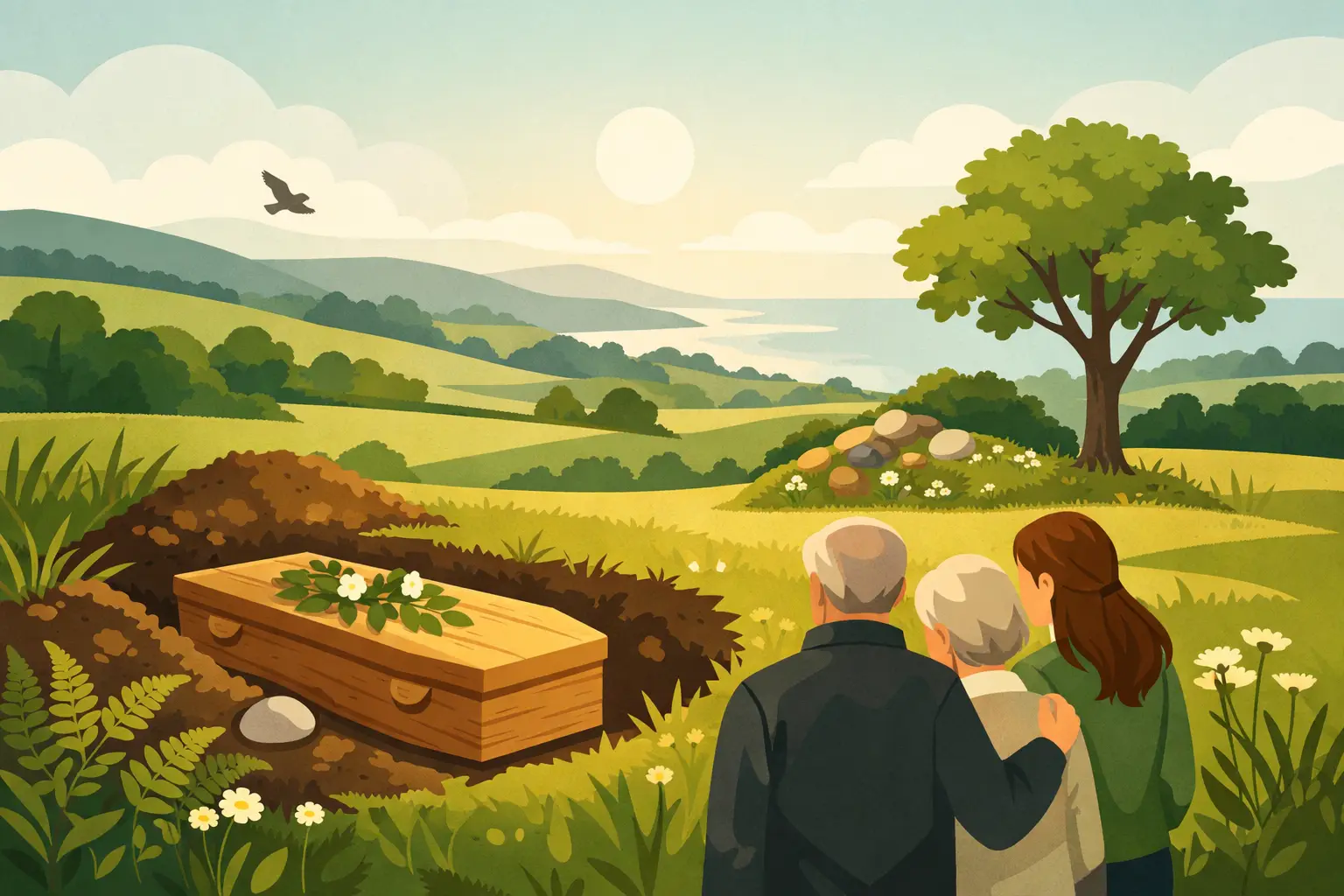

For many Devon families, the thought of a funeral set within open countryside feels gentler, quieter and more in keeping with the person they are remembering. When people begin asking about natural burial Devon options, they are often looking for something simple, dignified and less formal than a traditional cemetery service – but they also want to know exactly how it works.
A natural burial can offer that balance. It allows a loved one to be laid to rest in a way that has a lighter environmental impact, while still giving family and friends the time and space to gather, say goodbye and mark a life properly. For some, that means a woodland setting. For others, it is the reassurance that the funeral can feel personal without becoming complicated.
What is a natural burial?
A natural burial is a funeral where the body is buried in a natural setting using biodegradable materials. The aim is to allow the body to return to the earth as naturally as possible, without the more permanent features that are common in conventional cemeteries.
That usually means a coffin made from materials such as wicker, bamboo, cardboard or untreated wood, or sometimes a natural fibre shroud. Graves are generally not lined with concrete, and memorials tend to be modest. In some burial grounds, a tree may be planted or the area may simply remain part of a managed meadow or woodland landscape.
This is not the right choice for every family, and that is perfectly fine. Some people prefer the familiarity of a traditional grave with a headstone and a cemetery they have known for years. Others feel strongly that a natural setting better reflects the life, values or personality of the person who has died.
Why natural burial in Devon appeals to so many families
Devon is particularly suited to this kind of farewell. Many local families have a strong connection to the countryside, the coast and the landscape around them. A natural burial can feel less like a formal process and more like a peaceful return to a place that matters.
There is also a practical side to the decision. Families often want to reduce the environmental impact of a funeral, and natural burial gives them a clear way to do that. The materials are simpler, the setting is less heavily landscaped, and the overall approach is often more understated.
Just as importantly, natural burial can create a different atmosphere on the day. Services are often quieter and less hurried. There can be more room for personal touches, whether that is favourite music, readings from family members, or a small gathering that feels intimate rather than ceremonial.
Natural burial Devon options: what to expect
If you are considering a natural burial in Devon, the process is usually more straightforward than people expect. The burial still needs to be planned properly, documents still need to be completed, and the day itself still requires thoughtful organisation. The difference is in the setting and the choices you make.
You will usually begin by choosing a burial ground and deciding whether you would like a full funeral service, a shorter committal, or a more informal gathering. Some families prefer a church or chapel service first, followed by burial. Others want everything to take place at the burial ground itself.
From there, practical decisions follow. You may need to choose a coffin or shroud that meets the site’s requirements, think about transport, decide who will attend, and consider whether you want any form of memorial or marker. Some natural burial grounds have specific rules about flowers, tributes and memorial items, so clear guidance early on is helpful.
A good funeral director will explain these details in plain language and help you weigh up the choices without pressure. That matters, because what sounds simple at first can still involve important decisions.
How a natural burial differs from a traditional burial
The biggest difference is the setting. Traditional burials usually take place in churchyards or cemeteries with formal rows of graves, headstones and more structured maintenance. Natural burials take place in landscapes designed to remain closer to nature.
There are also differences in what is permitted. Traditional cemeteries may allow a wide range of coffin styles, memorial masonry and grave decorations. Natural burial grounds are usually more selective so that the land remains environmentally sensitive and visually consistent.
Cost can differ too, although it depends on the burial ground, the funeral arrangements and the materials chosen. A natural burial is not always the cheapest option, and it is best not to assume that it will be. Land fees, attendance, transport and service choices all affect the total cost. What many families value is not simply price, but the feeling that they are paying for something meaningful and appropriate.
Questions worth asking before you choose
When families compare natural burial Devon sites, it helps to ask a few careful questions rather than making a decision on location alone. The character of each burial ground can be quite different.
Ask what type of coffins or shrouds are permitted and whether there are restrictions on clothing, flowers or tributes. It is also worth finding out how the land is managed over time, whether graves are marked in any way, and what future visiting arrangements are likely to be.
Some families find comfort in a named plot or a simple marker. Others are content knowing the area remains natural even if there is no traditional headstone. Neither view is wrong, but it is much better to be clear from the outset than to discover later that a preferred form of memorial is not allowed.
You may also want to ask about accessibility. A rural location can be beautiful, but it may be harder for elderly relatives or those with limited mobility, particularly in poor weather. Parking, pathways and shelter can all make a real difference on the day.
Making the funeral feel personal
Choosing a natural burial does not mean the funeral must be minimal or sparse. Simple and meaningful are not the same as bare. In fact, many of the most personal funerals are those where the details are chosen with care rather than added for show.
A family might include hand-picked flowers from a garden, a favourite poem, or music that feels right for the setting. Some choose to invite children to take part in a gentle, age-appropriate way. Others keep attendance small and hold a separate celebration of life later.
It depends on the person who has died and on the needs of those left behind. A quiet burial with only close family present can feel deeply comforting. Equally, a larger gathering can work beautifully if it is handled with warmth and thoughtfulness.
Planning ahead for a natural burial in Devon
More people are now making funeral wishes known in advance, and natural burial is often part of that conversation. Planning ahead can spare families difficult decisions later, especially if your preferences are clear and out of the ordinary compared with older family traditions.
If you know you would like a natural burial, it helps to record that wish and discuss it with those closest to you. You may also want to note whether you prefer burial in a particular part of Devon, what sort of coffin or shroud you would want, and whether you would like a religious service, a non-religious ceremony, or something less formal.
Pre-planning does not remove every decision, because some details will still depend on timing, availability and family circumstances. But it gives helpful direction and can be a real comfort when emotions are high.
For families in East Devon, working with an independent funeral director such as Otter Valley Funerals can make these conversations feel more manageable. Local knowledge, clear advice and a familiar point of contact can take away a great deal of uncertainty.
Choosing with confidence
Natural burial is not about following a trend. At its heart, it is about choosing a farewell that feels honest. For some families, that means tradition, formality and a permanent memorial. For others, it means open sky, natural ground and a quieter kind of leave-taking.
If you are considering natural burial in Devon, the most important thing is to ask the questions that matter to your family and to choose support that feels personal as well as professional. The right funeral should never feel like a package you are expected to fit into. It should feel like care, given properly, at a time when care matters most.