
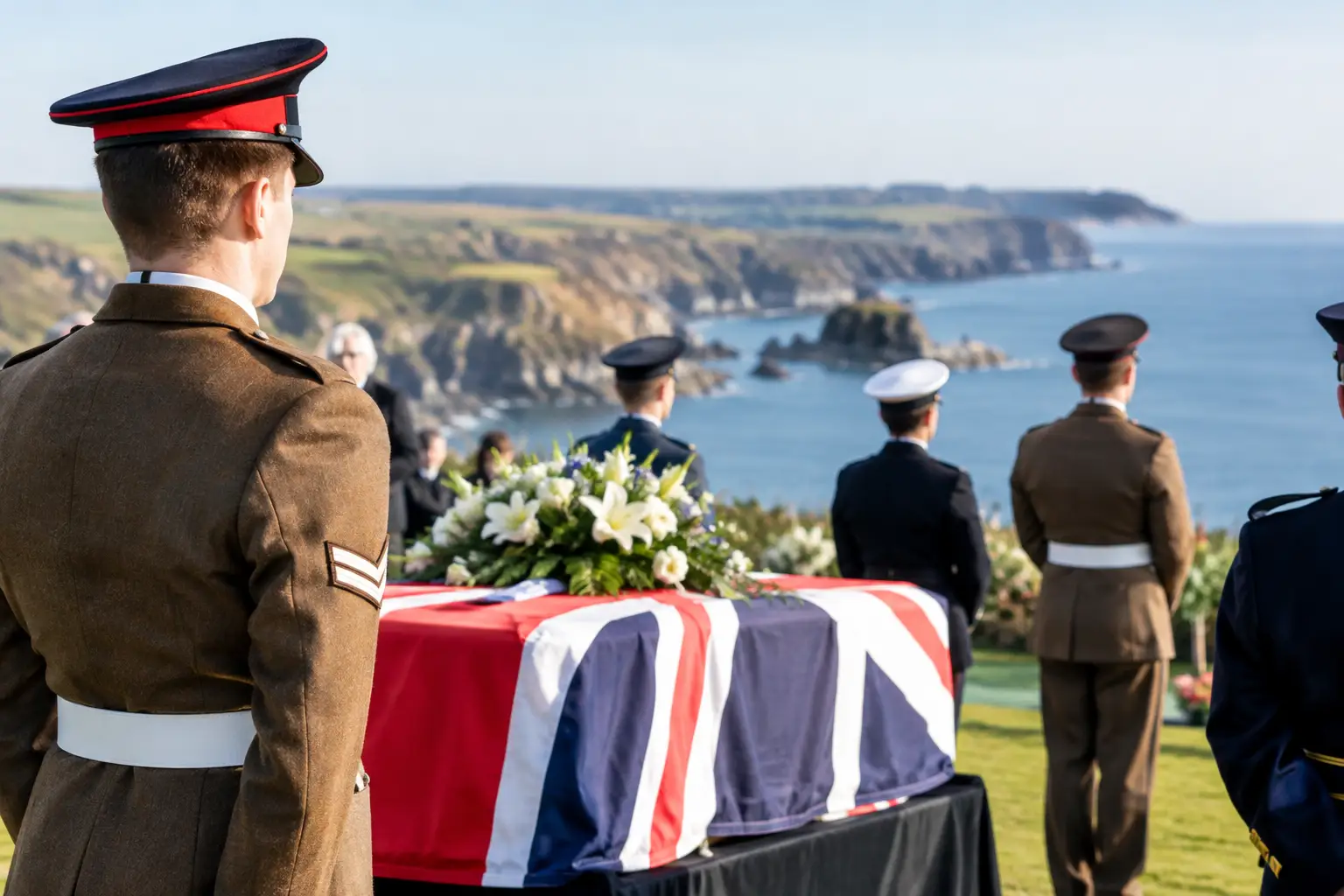

For a family with a connection to the Armed Forces, military funeral honours UK arrangements can offer a moving and dignified way to recognise a loved one’s service. The sight of a flag-draped coffin, the sound of the Last Post or the presence of service personnel can carry great meaning. Yet these elements are never a requirement. The right farewell is one that feels true to the person who has died and offers comfort to those closest to them.
Military honours are arranged according to the individual’s service history, rank, circumstances of death and the resources available at the time. Understanding what may be possible can make a difficult process feel more manageable.
What are military funeral honours in the UK?
Military funeral honours are ceremonial marks of respect provided for eligible serving personnel and, in some circumstances, veterans. They may be included within a church funeral, crematorium service, burial or private family-led ceremony.
The level of support varies. A full military funeral is generally reserved for serving personnel who die in service, particularly where death is attributable to service. Other arrangements may involve a smaller military presence or a tribute organised by a regiment, ship, squadron, association or local branch of a service charity.
Honours may include a coffin draped with the Union Flag, a bearer party, a uniformed escort, a bugler sounding the Last Post, a firing party, a standard bearer, or a military representative attending the service. The flag may be carefully folded and presented to the next of kin at the end of the ceremony.
Not every element will be available or appropriate. Some families find that a quiet service with a standard and a short military reading feels most fitting. Others may wish for a more formal ceremonial farewell. There is no lesser choice in keeping things simple.
Who may be eligible for military funeral honours UK support?
Eligibility is decided by the relevant service and is not based on one rule for every former member of the Armed Forces. Serving personnel are normally supported through their unit, which will guide the family through the process and explain the appropriate ceremonial entitlement.
For veterans, support can depend on their branch of service, length and nature of service, rank, local connections and whether a regiment, association or veterans’ organisation is able to assist. A former soldier may have a close relationship with a regimental association; a former sailor may be remembered by a naval association or local Royal Naval community. These groups can sometimes provide standards, uniformed attendees or practical advice, even where an official military party cannot be provided.
The funeral director can help establish the right point of contact and make clear requests on the family’s behalf. It is sensible to start this conversation as early as possible, especially if the family hopes to arrange a particular military element. Personnel commitments, distance and availability can affect what can be offered and may influence the date or time of the funeral.
Service records and personal details
Useful information includes the deceased’s service number, regiment, corps, ship, squadron or unit, dates of service, rank and any medals received. Families should not worry if they do not have every detail immediately. A name, date of birth and any paperwork found at home can often provide a helpful starting point.
A discharge certificate, veteran’s identity card, old photographs, cap badges and medals may all help tell the story of a person’s service. They can also be incorporated sensitively into the funeral, if the family wishes.
Choosing the right level of ceremony
A military connection can be acknowledged in many ways, from formal honours to personal touches. The decision should begin with the wishes of the person who has died, if known, and the needs of their family.
A full ceremonial presence can be deeply powerful, particularly for families whose loved one remained closely connected to their unit. It may, however, feel overwhelming for those who prefer privacy or who are arranging a small gathering. Equally, a veteran who spoke little about service may still deserve recognition, but their family may choose a discreet tribute rather than a formal military procession.
Personal choices can include displaying medals, placing a beret or cap badge beside the coffin, including a service photograph in the order of service, playing a regimental march during arrival or departure, or inviting former colleagues to form a guard of honour. A standard may be carried into the service, and the Exhortation may be read where it feels appropriate.
The Last Post is often associated with remembrance services and military funerals. It can be played live by a bugler when available, or as a recording if this is preferred. Some families choose it at the end of the committal, followed by a period of silence. Others decide it would be too emotional. Both responses are entirely understandable.
The Union Flag and medals
When a coffin is draped with the Union Flag as part of recognised military honours, it is usually placed and removed by those providing the ceremonial support. The folded flag is then presented to the next of kin or another person chosen by the family.
If official military support is not available, a family may still wish to acknowledge service through flowers in red, white and blue, a poppy tribute, a photograph or a display of medals. It is best not to place medals loose on the coffin, as they can be damaged or misplaced. A framed display or velvet-lined case is usually more secure.
Families and guests who have earned medals may wear them on the left breast. Relatives wearing another person’s medals should wear them on the right breast. This small detail is often appreciated by service families, though no one should feel anxious about getting every custom perfect on the day.
Practical arrangements for the funeral
Once a military element has been requested, the funeral director, family and service representative can agree the order of events. Clear planning is particularly valuable where there will be a bearer party, flag presentation, standards or a bugler, as everyone needs to know where to be and when.
At Otter Valley Funerals, we believe a family should not have to carry these arrangements alone. We can liaise respectfully with military contacts, clergy, celebrants and venues, while ensuring the ceremony remains centred on the person being remembered.
For a burial, the graveside may be the place for the final salute, Last Post or flag presentation. At a crematorium, these elements are often incorporated into the chapel service or at the committal. A church funeral offers further possibilities, but the detail should be agreed with the church and officiant in good time.
It is also worth considering accessibility and timing. Older veterans, former colleagues and standard bearers may need seating, shelter or a shorter period standing outside. In Devon, weather can quickly affect an outdoor element of a funeral, so a thoughtful contingency plan can protect both dignity and comfort.
When official honours are not possible
It can be disappointing to learn that a formal military party cannot attend. This is not a reflection on the value of someone’s service. Operational commitments, staffing and the passage of time can all affect availability.
A meaningful alternative may be created with help from a local Royal British Legion branch, a regimental association, veterans’ group or former colleagues. A standard bearer, a reading, a named tribute in the eulogy and a shared moment of silence can speak just as clearly of service, loyalty and friendship.
The most memorable funerals are rarely defined by ceremony alone. They are shaped by the stories told, the people present and the care taken over the details that mattered to the person who has died. Whether the farewell includes full military honours or one quiet act of remembrance, it can honour a life of service with warmth, respect and sincerity.