
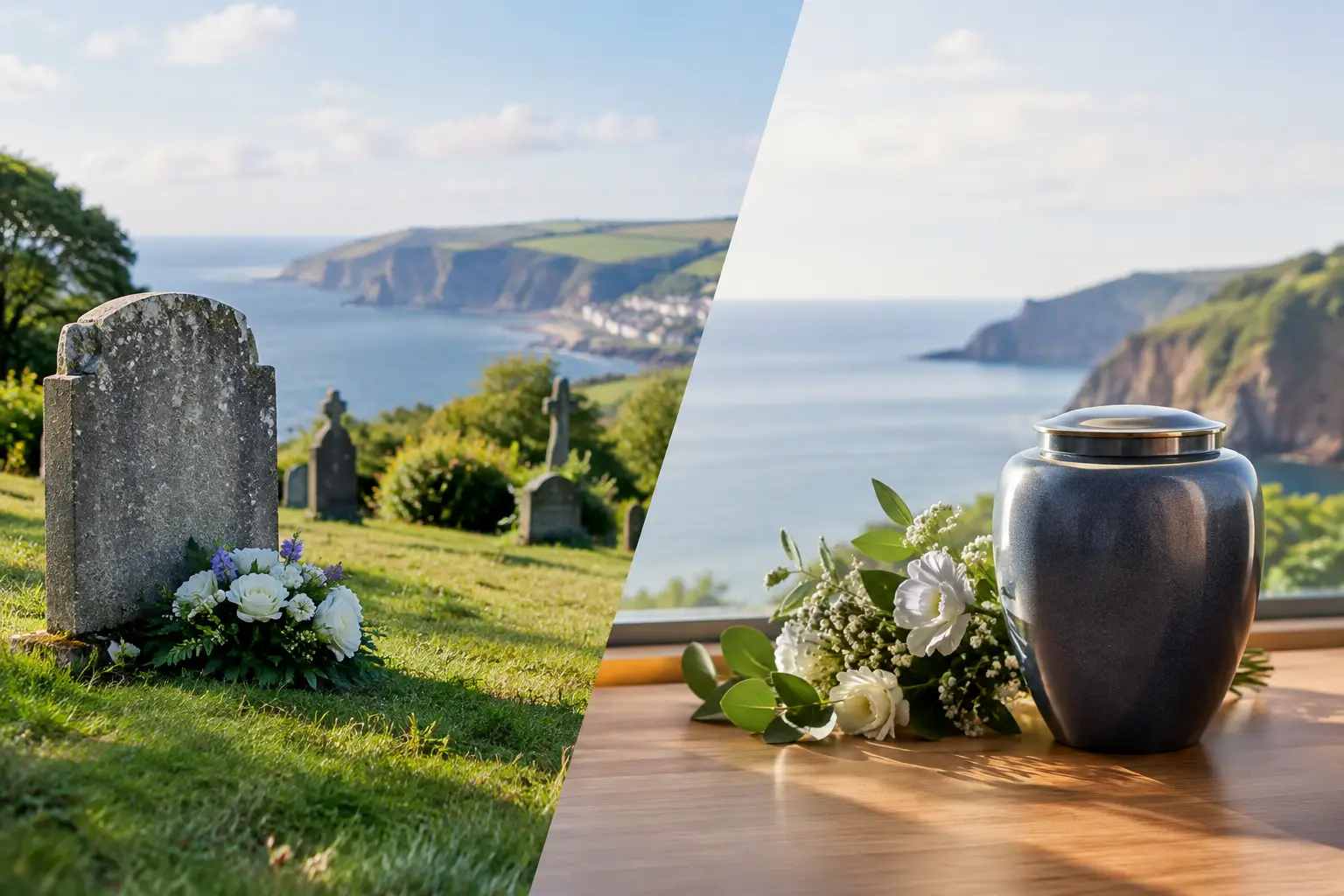

A decision about burial versus cremation can feel unexpectedly weighty, particularly when it needs to be made soon after someone has died. Families may worry about doing the right thing, balancing a loved one’s wishes with practicalities, or agreeing on a choice when views differ. There is no single right answer. The most fitting choice is the one that respects the person who has died and gives those closest to them a sense of peace.
Both options can include a meaningful, personal funeral. Both can be simple or traditional, private or well attended, faith-led or entirely non-religious. Understanding the differences may make the decision feel more manageable.
Burial versus cremation: the central differences
With a burial, the coffin is lowered into a grave in a cemetery, churchyard or natural burial ground. A service may take place beforehand at a church, crematorium chapel, graveside, or another meaningful venue. The grave becomes a permanent place to visit, remember and mark important dates.
With cremation, the funeral service may be held at a crematorium, a church, a graveside, or elsewhere before the committal. Afterwards, the ashes are returned to the family or handled according to the arrangements made. They may be kept, scattered, interred in a cemetery or churchyard, placed in a memorial garden, or divided between family members where appropriate.
The service itself does not need to be defined by the choice. A cremation can be followed by a large gathering, music, readings and a celebration of life. A burial can be quiet and uncomplicated. What matters is creating an occasion that feels honest to the life being remembered.
Start with the person’s wishes
If the person who has died spoke clearly about burial or cremation, that is usually the best place to begin. Their wishes may be written in a funeral plan, will, letter or notes kept with important papers. They may also have shared them with relatives, friends or their faith community.
A will can be helpful evidence of what someone wanted, though funeral arrangements are often made before the will is formally dealt with. If there is no clear instruction, think about the person’s values, beliefs and character. Did they value a traditional family grave? Did they speak about returning to the sea, a favourite garden or the Devon countryside? Would keeping arrangements simple have mattered to them?
Sometimes relatives have different views. In those circumstances, it can help to pause before making a quick decision. A funeral director can explain the practical options without pressure and help families find a way forward that honours the person rather than any one individual preference.
The importance of a place to visit
For many people, the strongest reason for choosing burial is having a physical grave. It can offer a focus for grief and remembrance, especially for families who live nearby or for future generations who may wish to understand their family history. A headstone, inscription and carefully tended grave can become an enduring expression of love.
Cremation also offers opportunities for a permanent memorial. Ashes can be buried or placed in a cemetery or churchyard, and many crematoria have memorial gardens and commemorative options. Yet some families prefer not to have one fixed place. Scattering ashes at a meaningful location, or holding a separate ash-scattering ceremony later, can feel personal and unhurried.
There are practical considerations with scattering. Permission is needed from the landowner, and it may not be suitable everywhere. It is also worth thinking ahead: a place that feels right now may be difficult for others to revisit, particularly if access changes over time.
Cost and practical arrangements
Costs vary significantly depending on the type of funeral, the location and the choices made. Burial often costs more than cremation because, alongside funeral director services, there may be fees for purchasing or reopening a grave, interment, grave preparation and a memorial. Charges differ between local authorities, churchyards and private burial grounds.
Cremation fees are commonly lower, although a cremation funeral can still be highly personalised. There may be costs for the crematorium, service time, printed orders of service, music, flowers, a wake and an urn or ashes casket. A direct cremation, without a funeral service at the crematorium, is usually the simplest and lower-cost option. Families can then arrange a memorial or gathering at a later date, in their own time.
It is sensible to ask for a clear written estimate that separates the funeral director’s charges from third-party fees, often called disbursements. Transparency matters. It allows families to make decisions based on what feels important, rather than assuming that a dignified farewell must involve every available element.
Faith, culture and family tradition
Religious and cultural beliefs can guide the choice very clearly. Some faiths require burial, while others may permit cremation or leave the decision to the individual and family. A minister, priest, faith leader or funeral director can advise on the arrangements, timings and customs that should be respected.
Even when a family is not religious, tradition can carry real meaning. Perhaps grandparents are buried in a particular churchyard, or a family has always chosen cremation followed by a gathering. These connections can be comforting, but they should not prevent a family from making a different choice if it better reflects the person who has died.
Environmental considerations
People increasingly ask which option is kinder to the environment. The honest answer is that it depends on the details. Cremation uses energy and produces emissions, although crematoria have made changes to reduce their environmental impact. Burial uses land and may involve materials used in coffins, grave liners, memorials and maintenance.
A natural or green burial may appeal to someone who wanted a lighter-touch approach. These burial grounds often encourage biodegradable coffins or shrouds and may limit traditional memorials in favour of a landscape that is allowed to develop naturally. Rules differ from one site to another, so it is important to check what is permitted and whether a grave can be marked or visited in the way the family hopes.
For some, the environmental question is only one part of the decision. It should be considered thoughtfully, without allowing it to eclipse personal wishes, faith or the needs of those left behind.
You do not have to choose everything at once
A common misconception is that choosing cremation means every decision must be made immediately. In fact, separating the cremation from the memorial can give families valuable breathing space. Ashes can usually be kept safely until everyone is ready to decide on a permanent resting place or a ceremony.
Equally, choosing burial does not mean a formal, elaborate funeral is required. A simple graveside service, attended by close family, can be deeply moving. A larger celebration of life can follow later, when people have had time to gather themselves.
At Otter Valley Funerals, families are supported to consider each choice at their own pace wherever circumstances allow. The role of a caring funeral director is not to steer a family towards one answer, but to make the options clear and ensure that every arrangement is carried out with respect.
When planning ahead
Planning your own funeral does not need to be morbid. It can be a practical kindness to the people who may one day need to make decisions on your behalf. Write down whether you would prefer burial or cremation, where you would like a service to take place, and any wishes about music, readings, flowers, donations or ashes.
Share those wishes with the people most likely to arrange your funeral. Keep the note somewhere it can be found easily, alongside information about any funeral plan or relevant paperwork. Circumstances and preferences can change, so it is perfectly reasonable to review your wishes from time to time.
A funeral is not measured by whether it follows a particular tradition or costs a particular amount. It is measured in the care taken, the stories shared and the sense that the person at its centre was truly known.