
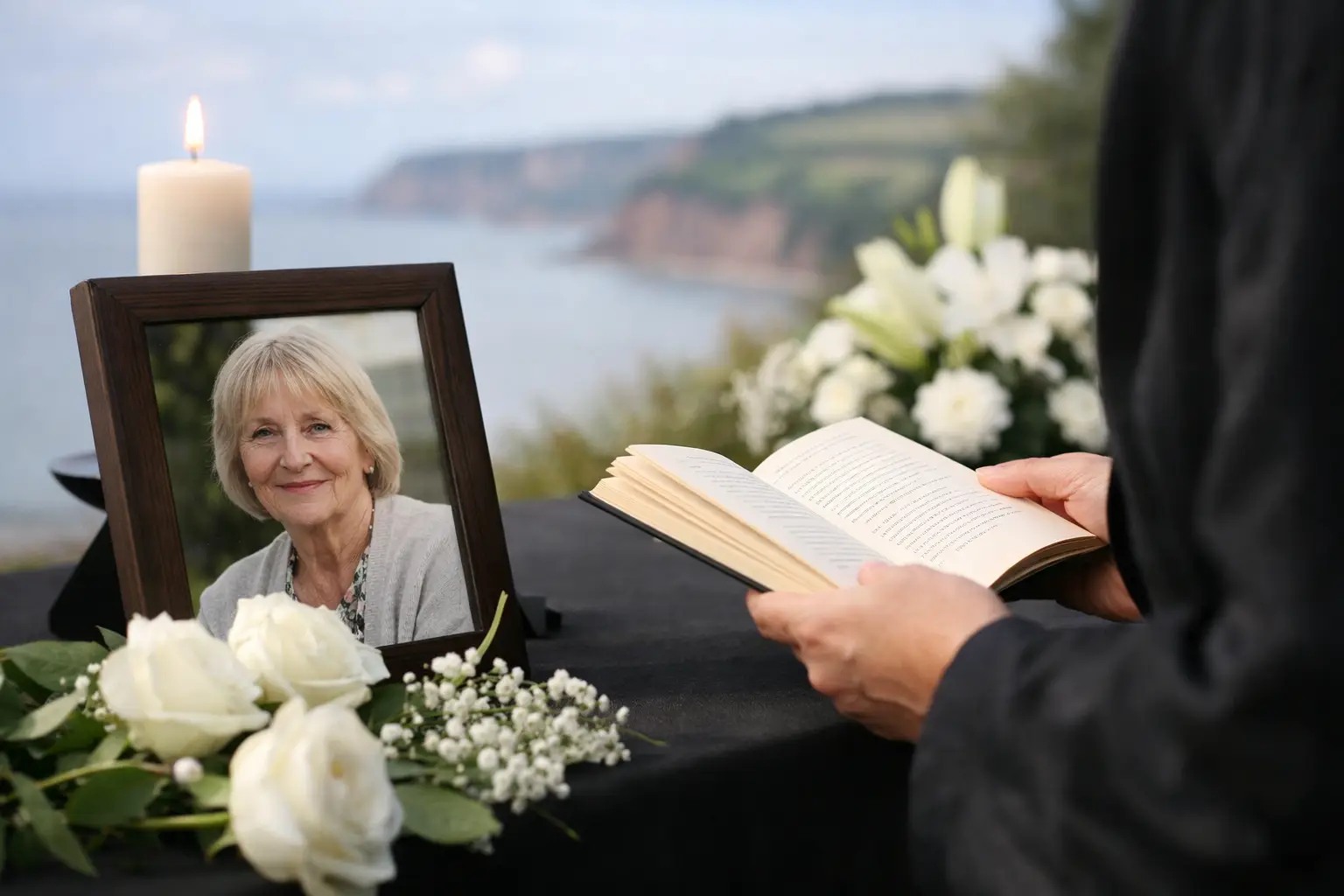

A poem can say what feels impossible to put into words when your mum has died. It may reflect the steadiness she brought to family life, the small things that made her unmistakably herself, or the love that continues after a goodbye. The best funeral poems for mum are not necessarily the most famous or literary. They are the ones that feel truthful when read aloud.
Choosing a reading is often a shared task. One person may remember her humour, another her faith, and another the way she always made room at the table. There is no need to find a poem that captures every part of her life. A few well-chosen lines, read with care, can be enough.
How to choose a funeral poem for your mum
Start with the person she was rather than the kind of funeral you think you ought to have. Was she gentle and quietly dependable, lively and warm, deeply spiritual, fiercely independent, or happiest outdoors? A poem that reflects her character will usually mean more than one chosen simply because it is familiar.
Think, too, about who will read it. Some poems are beautiful on the page but difficult to speak when emotions are close to the surface. A shorter reading may be kinder to a son, daughter, grandchild or friend who wants to take part but is worried about getting through it. It is perfectly acceptable for a celebrant, minister or funeral director to read the poem on someone’s behalf.
The setting can help guide your choice. A traditional church service may suit a prayerful or reflective poem. A celebration of life might call for something warmer and more personal. For a woodland burial, green funeral or ash scattering, words about nature, seasons and enduring connection can feel especially fitting. There are no rules, only the question: does this sound like her?
Best funeral poems for mum by feeling and style
For a loving, nurturing mum
Many families want words that recognise a mother’s everyday love: the care that was freely given, the advice offered, the sense of home she created. Poems in this style need not be sentimental to be moving. Look for plain language and specific images of comfort, guidance and family.
A reading such as Mother to Son by Langston Hughes can be meaningful when a mum faced life with courage and taught her children to keep going. Although it is not written from a child’s perspective, its message of resilience may speak strongly to a family who admired her determination.
For a shorter, simple option, a family may prefer a poem written especially for the service. A few lines about her hands, her cooking, her garden, her laughter or the way she greeted everyone can carry more weight than a well-known verse. Original words are particularly suitable when they come from a grandchild or several family members together.
For a mum remembered with gratitude
Sometimes the feeling that remains strongest is gratitude. You may wish to acknowledge all she gave without making the reading sound formal or like a list of achievements. A poem can gently express thanks for the values, love and practical wisdom passed down through a family.
To My Mother by Edgar Allan Poe is brief and direct, centred on the special place a mother holds in her child’s heart. Its style will not suit every family, but it can work well if you want a traditional and intimate tribute.
You might also choose prose rather than poetry. An extract from a favourite book, a letter written to Mum, or a carefully edited family memory can have the same place in a service as a poem. The reading does not need to be labelled poetry for it to honour her beautifully.
For a mum who loved the natural world
For someone who found happiness by the sea, in her garden, walking the dog or watching the changing seasons, nature poetry can provide a gentle frame for farewell. These readings often offer comfort without trying to explain grief away.
She Is Gone by David Harkins is frequently chosen because it invites people to remember a loved one’s life as well as mourn their absence. Its hopeful tone can be right for a service focused on gratitude and remembrance, though some families may feel it moves too quickly towards positivity. If that does not feel true to where you are, choose something quieter.
The familiar lines of Do Not Stand at My Grave and Weep by Mary Elizabeth Frye can also suit a mum who loved the outdoors. Its images of wind, sunlight and rain are comforting to many people. Because it is widely used, it may feel reassuringly recognisable or, for some, less personal. Both responses are valid.
For a mum whose faith mattered to her
A hymn, psalm or Bible reading can be as meaningful as a poem, particularly where faith shaped your mum’s life. Ecclesiastes 3, with its reflections on the seasons of life, is often selected for its calm and familiar wording. Psalm 23 remains a source of comfort for many families, whether read, sung or included in an order of service.
If she was religious but the rest of the family is less familiar with church services, a short reading can still feel welcoming and sincere. A minister or celebrant can help find wording that respects her beliefs without making anyone feel excluded.
For a mum with humour and spirit
Not every funeral reading needs to be solemn. If your mum would have raised an eyebrow at anything too gloomy, choosing a lighter poem or a fond story may be exactly right. Her service should make room for tears, but also for the smiles she gave people.
A humorous reading works best when it is affectionate rather than embarrassing. A poem about a busy household, a mum’s forthright advice, her love of a cup of tea, or her inability to sit still can bring welcome warmth. Read it aloud beforehand and consider how it will feel in the room. The aim is not to perform, but to let people recognise her.
A few practical points before the service
Once you have found a poem, read it slowly out loud. What looks short on a screen can feel longer when emotions are high, and a pause between lines is natural. If a phrase does not sound like your mum or your family, you can choose another reading. You do not have to defend the decision.
If several people want to contribute, one person could read the poem while others share a sentence each before or afterwards. This is often easier than asking a number of people to give full tributes. A printed copy in a clear, large font is helpful, especially in a church or at a graveside where light and weather may be less predictable.
It is also worth checking the source of any modern poem. A funeral director, celebrant or minister can advise where permission may be needed for printing a poem in an order of service. This small detail is best dealt with early, so your attention can stay on the meaning of the words.
When no existing poem feels right
It can be a relief to stop searching. The right reading may be a short message written by the people who knew her best. Begin with one honest sentence: “Mum made people feel welcome.” Then add two or three details that show it. Perhaps she always had a spare chair, remembered every birthday, knew how to make a difficult day better, or never let anyone leave without being fed.
You could end with a simple promise to carry something of her forward: her kindness, her humour, her love of family, or her resilience. These words do not need to rhyme. They only need to be true.
At Otter Valley Funerals, we often see that the most memorable readings are those chosen without pressure to make them perfect. Give yourselves permission to choose words that sound like your mum, speak them gently, and let the silence around them do its work.