

Choosing between a woodland burial and cremation often comes down to one question: what would feel most right for the person who has died, and for the family left to remember them? When people search for woodland burial vs cremation, they are usually not looking for theory. They want clear, kind guidance at a time when decisions may need to be made quite quickly.
Both options can be simple, dignified and deeply personal. Neither is automatically better than the other. The right choice depends on values, budget, beliefs, practical arrangements and the kind of farewell you want to create.
Woodland burial vs cremation: the main difference
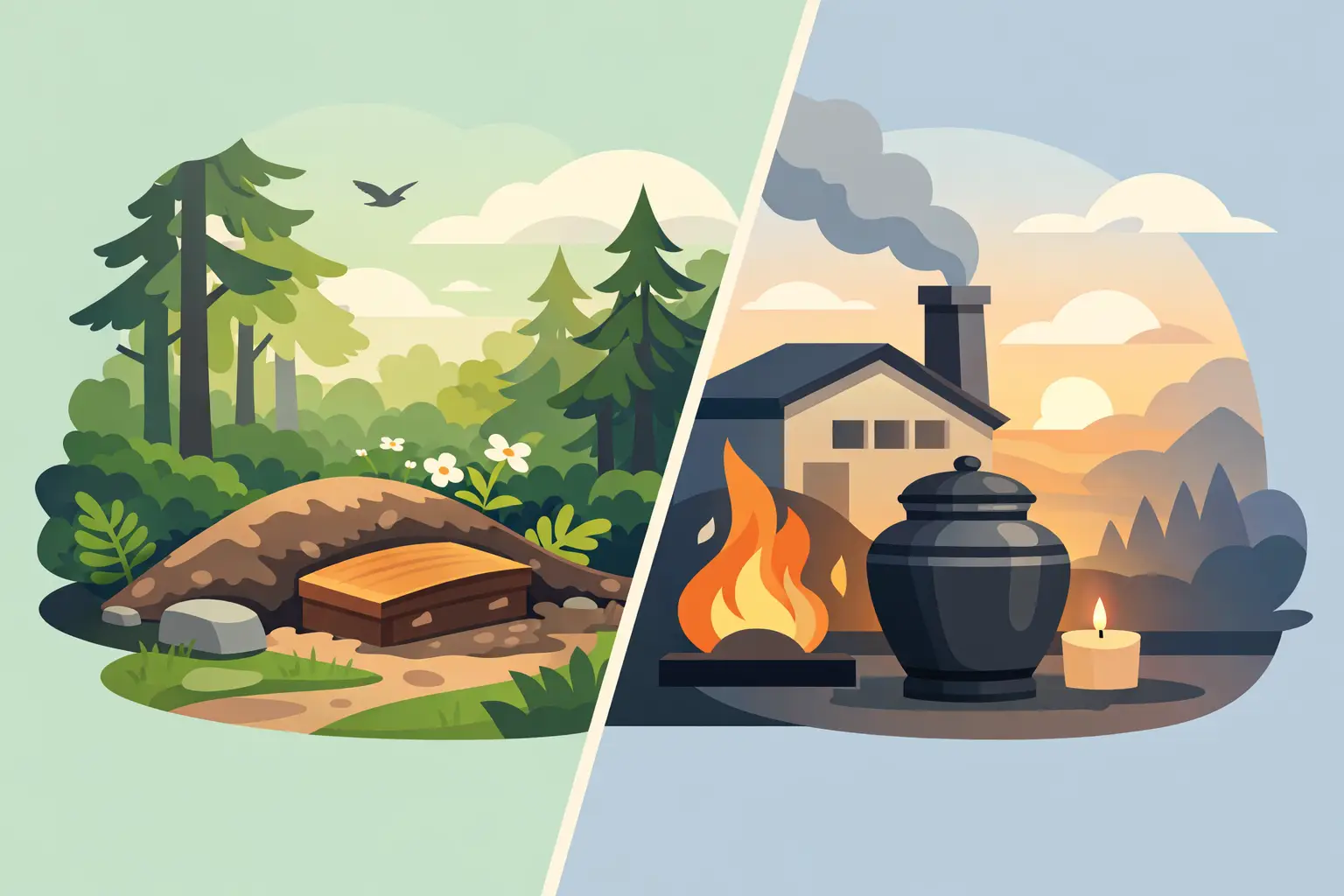
A woodland burial places the body in a natural burial ground, usually in a biodegradable coffin or shroud, with the aim of returning gently to the earth. The setting is often meadow, woodland or protected countryside, and the approach tends to be quieter and less formal than a traditional cemetery burial.
Cremation involves the body being cremated, after which ashes can be kept, buried, scattered or divided among family members. It can be combined with a full funeral service, a simpler unattended committal, or a memorial held later in a place that matters to the family.
That basic difference shapes everything else, from cost and environmental impact to how the funeral feels on the day and what happens afterwards.
How the experience feels for families
For many families, a woodland burial feels gentle and grounded. The setting can offer real comfort. Birds, trees and open space often create a sense of calm that a more formal venue may not. Some people also find reassurance in the idea of a physical resting place in nature, even if that place is marked very simply or not marked at all.
Cremation can feel more flexible. It allows families to separate the practical committal from the memorial, which can be helpful if relatives need time to travel, if emotions are very raw, or if a large gathering would feel too much. Ashes can later be scattered somewhere meaningful, buried, or kept until the family is ready.
This is often where emotion and practicality meet. Some people want a place they can visit. Others do not want loved ones to feel tied to a grave. Some families find comfort in having ashes nearby. Others feel more at peace returning someone to the natural world in one clear act.
Cost considerations
Cost matters, and it is perfectly reasonable to take it into account.
A woodland burial can sometimes cost more than families expect. There may be fees for the burial plot, preparation of the grave, use of the natural burial ground and a suitable biodegradable coffin or shroud. Prices vary quite a lot depending on the site, the location and whether the burial ground allows residents from outside its immediate area.
Cremation can be more affordable, particularly if the family chooses a simple or direct cremation. A full cremation funeral with a service, hearse and attendance can still be a significant cost, but it often gives families more room to adjust the arrangements according to budget.
That said, cost is rarely as simple as burial equals expensive and cremation equals cheap. A woodland burial with modest arrangements may compare favourably with a more elaborate cremation service. What matters is looking at the full picture rather than just the headline option.
Environmental impact and why it matters to some families
People often assume woodland burial is always the greener option, and in many cases it does have clear environmental benefits. It avoids the energy used in cremation and usually encourages biodegradable materials, less intensive land management and a more natural return to the earth. For someone who cared deeply about nature, this can feel especially fitting.
Cremation, however, may still be the preferred choice for practical or personal reasons. Modern crematoria are subject to environmental controls, and some families choose cremation because it avoids land use or because it works better for relatives spread across different places.
If environmental values are central, it is worth asking more detailed questions. How far will people need to travel? What coffin is being used? Will there be flowers, printed orders of service or a large procession? A funeral’s environmental impact is shaped by more than the final method alone.
Religious, spiritual and personal beliefs
Beliefs often guide the decision more strongly than cost or logistics.
Some faiths and family traditions have a clear preference for burial. Others accept cremation without difficulty. Some people are not religious but still feel strongly that the body should remain intact and be buried. Others feel equally strongly that cremation is simpler, cleaner or more in keeping with their wishes.
A woodland burial can suit those who want something natural and understated without losing the significance of burial itself. Cremation can suit those who want simplicity or who like the idea that a memorial can happen later, in a church, garden, village hall or favourite coastal spot, depending on local rules and the family’s wishes.
If the person who has died left clear instructions, those wishes should carry real weight. If they did not, families often find it helps to ask not what they themselves would choose, but what would have sounded right to the person they knew.
Practical questions that can make the choice clearer
When families are unsure, a few practical questions usually bring things into focus.
Do you want a permanent place of burial, or would you prefer the flexibility that comes with ashes? Do you imagine a funeral in a natural outdoor setting, or would an indoor service feel easier for older relatives and winter weather? Is the budget tight, or is the priority more about atmosphere and values than cost? Are there family members with strong expectations, and if so, how much should those views influence the decision?
There are also local considerations. Availability of woodland burial grounds can be more limited than cremation facilities, and travel time may matter, especially for elderly mourners. In Devon, where landscape and connection to place mean a great deal to many families, the setting itself can play an important part in the decision.
Woodland burial vs cremation for future memorials
Memorial choices are often overlooked at first, but they matter later.
With a woodland burial, the memorial is usually part of the landscape rather than separate from it. Some sites allow a simple plaque, tree marker or entry in a book of remembrance. Others keep everything very natural, without traditional headstones. Families who like simplicity often find that beautiful. Others later wish they had a more obvious focal point to visit.
With cremation, memorial choices tend to be broader. Ashes can be scattered, interred in a grave, placed in a niche, kept at home for a time, or incorporated into a private family ritual. That flexibility can be helpful, but it can also create uncertainty if relatives disagree or delay making a decision.
Neither path removes grief, of course. But the way memories are held and revisited can feel quite different.
When one option may be a better fit
A woodland burial may be a better fit if the person valued nature, wanted a low-intervention funeral, disliked formality or clearly preferred burial. It can also suit families who find comfort in having a peaceful natural place to return to.
Cremation may be a better fit if flexibility matters most, if relatives live in different parts of the country, if a later memorial would ease pressure, or if the budget needs careful management. It can also be the right choice when someone wanted a simple farewell without a grave.
Sometimes families worry about choosing the wrong thing. In truth, there is often no perfect answer, only the most fitting one in the circumstances. A loving decision made with care is still a good decision.
Making the decision without added pressure
If you are choosing between these options now, it can help to slow the conversation down just enough to separate wishes from assumptions. What did the person want? What can the family realistically manage? What kind of setting would bring comfort rather than strain?
An experienced funeral director should be able to explain both options plainly, including costs, timescales and what each arrangement would involve on the day. For families in East Devon, that sort of local, personal guidance can make an already difficult decision feel less overwhelming and more human.
The best choice is usually the one that feels honest – honest to the person who has died, honest about what the family needs, and honest about what will bring the most peace in the days that follow.