
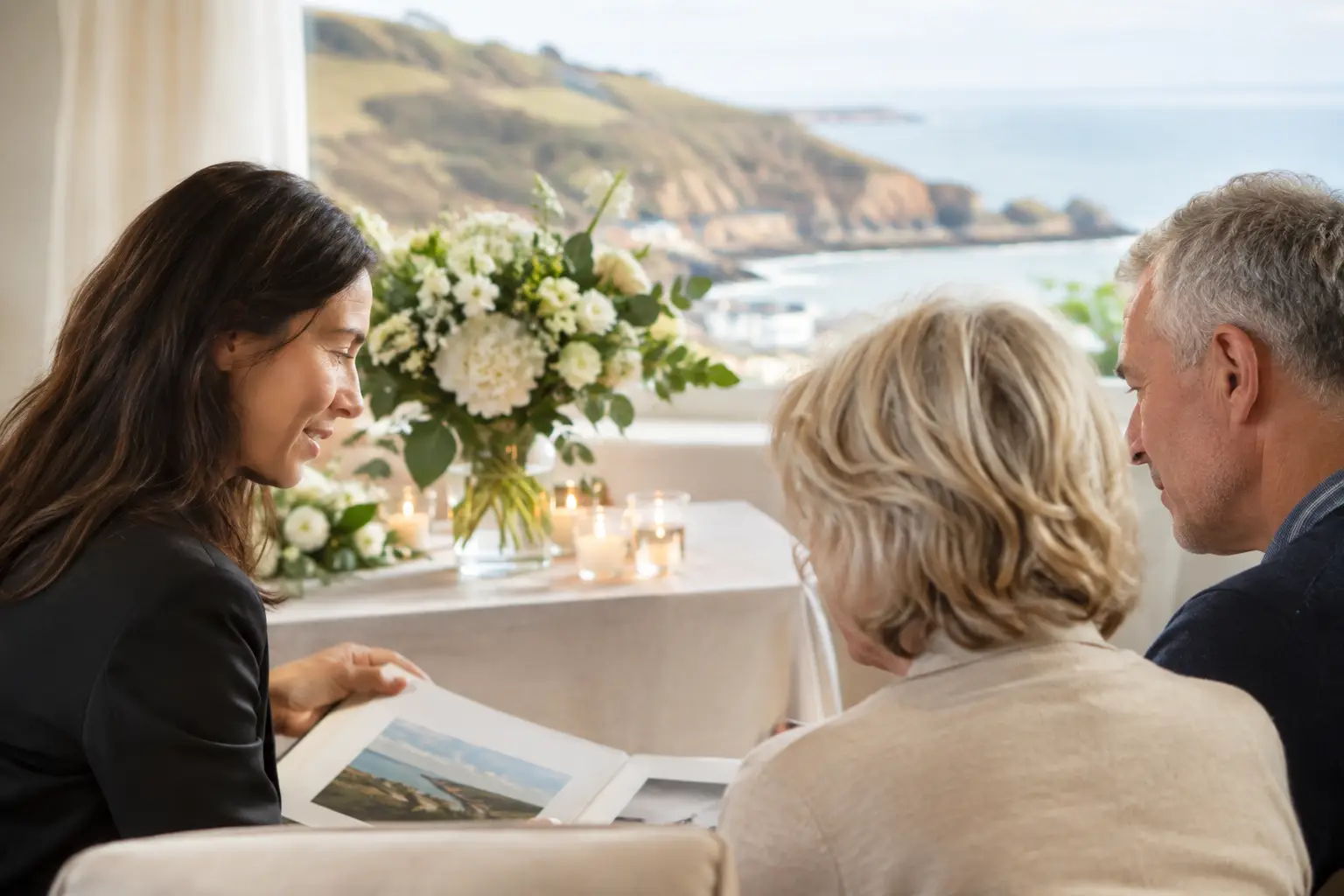


A wake is often the first chance for family and friends to be together after the formalities of a funeral. It can bring relief as well as sadness: a room filled with familiar faces, stories that would otherwise go untold, and time to sit with the people who mattered to the person who has died. Funeral wake planning does not need to mean creating a perfect event. It means making a few thoughtful choices that feel right for your family, while leaving room for people to grieve in their own way.
Some families prefer a quiet gathering at home with tea and sandwiches. Others choose a pub, village hall, hotel or community venue where a larger group can come together. There is no rule that says a wake must follow the funeral immediately, or that it must include a meal, speeches or a particular kind of music. The most meaningful gathering is usually the one that reflects the person being remembered and feels manageable for those arranging it.
Begin funeral wake planning with the purpose
Before looking at venues or deciding on catering, it can help to agree what you hope the gathering will offer. You may want a calm space for close relatives to talk after the service. You may wish to welcome a wider circle of neighbours, colleagues, club friends and former school friends. Or perhaps the family wants a celebration of life with favourite songs, photographs and a chance for guests to share memories.
These choices affect everything else. A small, private gathering can work well in a home or a reserved room at a local pub. A larger wake may need a venue with parking, accessible facilities and enough space for people to move around comfortably. If guests are travelling from the funeral, consider how far they will need to go and whether there is time for the venue to prepare between services.
It is also completely acceptable to hold the wake on another day. This can be especially helpful when family members are travelling from afar, when the funeral is a small service, or when arranging a larger celebration would feel too much to manage straight away.
Choosing a venue that feels comfortable
The right venue is not always the grandest one. It is the place where guests can gather without the family having to worry about every small detail. For a home wake, think honestly about numbers, seating, parking and whether someone will be able to welcome visitors while close family members take a moment when they need to.
A pub, hotel or restaurant can remove much of the practical pressure. Ask whether you will have a private room, whether food and drinks can be pre-ordered, and if there is a member of staff who will be your point of contact. Village halls and community spaces can be more flexible for a personal gathering, particularly if you would like to display photographs, play music or provide your own refreshments. They may, however, require more organising and clearing up afterwards.
For families in Exmouth, Budleigh Salterton and the surrounding area, a venue near the funeral location can make a real difference, particularly for older guests or those unfamiliar with the area. Accessibility matters too. Check for level access, suitable toilets, nearby parking and seating for people who cannot stand for long.
Decide who needs to be there
A wake can be open to everyone who knew the person, or it can be by invitation only. Neither approach is unkind. A larger gathering allows a wider community to pay its respects, while a smaller one may give the closest family more privacy at an exhausting time.
If the wake is open, include the location and timing in the funeral notice or service sheet. If numbers are limited, ask guests to let you know if they intend to come. This is not about excluding anyone. It gives you a clearer idea of food, space and seating, and avoids unnecessary worry on the day.
Consider whether there are people who may need a personal call rather than a general notice. An old friend, neighbour, former colleague or someone who provided regular care may be deeply grateful to be included. If making those calls feels too difficult, another family member or trusted friend can help.
Food, drink and personal touches
Simple food is often enough. Tea, coffee, soft drinks and a buffet give people something to do with their hands while they talk, and allow guests to stay for as long or as little as they wish. A sit-down meal can be right for a small family gathering, but it creates more structure and may feel less relaxed after an emotional service.
When choosing food, think about the time of day, likely numbers and dietary requirements. It is sensible to include vegetarian options and clearly label anything that contains common allergens. If alcohol is served, make sure there are appealing non-alcoholic choices too, particularly where guests are driving or may simply not wish to drink.
Personal details can make the wake feel like a true reflection of someone’s life, but they do not need to be elaborate. A table of photographs, a favourite flower, a playlist playing quietly in the background, or a memory book for guests to write in can be enough. If the person loved gardening, cricket, sailing, baking or a particular charity, a small nod to that part of their life often prompts warm conversations.
A slideshow can be lovely, but only if someone has time to prepare it and the venue has reliable equipment. There is no need to turn a wake into a presentation. In many cases, a few printed photographs are easier for guests to gather around and talk about.
Share the responsibility
The person arranging the funeral should not have to carry every decision alone. People often want to help but do not know what would be useful. Giving them a specific task can be a kindness to them as well as to you.
For example, one person might confirm guest numbers, another could bring photographs, and someone else could welcome guests at the door or collect written memories. If the wake is at home, arrange for a friend to oversee refreshments and washing up so immediate family can spend time with those who have come.
A practical plan for the day may include these essentials:
- a named contact at the venue;
- a rough guest estimate and any food requirements;
- a place for coats, cards, flowers and photographs;
- transport arrangements for anyone who needs assistance; and
- one person who can deal with questions without troubling close family.
It may also help to decide in advance whether anyone will say a few words. A short toast, prayer, poem or favourite reading can give shape to the gathering, but there should be no expectation that family members must speak. Grief can make even simple words difficult. Silence, conversation and shared memories are more than enough.
Make room for different kinds of grief
A wake can hold many emotions at once. Some guests may be tearful, while others laugh at a story the person would have loved. Both responses are natural. Children may move in and out of the room, play quietly or ask direct questions. If children are attending, a small activity table, colouring materials or a quiet corner can make the occasion easier for them and their parents.
Families can also have different views about what feels appropriate. One person may want a formal, traditional gathering; another may prefer bright colours and music. Try to return to one question: what would best honour the person who has died, while being kind to the people closest to them? Where there is no clear answer, choosing the simpler option is often wise.
Keep costs proportionate
A meaningful wake does not have to be expensive. Venue hire, catering, drinks, flowers and printing can add up quickly, especially when numbers are uncertain. Set a comfortable budget before making arrangements, and ask for clear prices from venues and caterers.
If cost is a concern, an afternoon tea at home, a modest buffet, or a gathering where guests purchase their own drinks can be entirely appropriate. Most people will understand that the family’s care and presence matter far more than an elaborate spread. A bereavement is not a time to feel pressured into spending beyond your means.
Let the gathering end gently
There is no perfect way to close a wake. Guests will usually begin to leave naturally once conversations quieten. If the venue has a finishing time, it can be helpful for a friend or venue contact to manage this discreetly.
Close family may feel unexpectedly low once everyone has gone. If possible, arrange something simple for afterwards: a lift home, a prepared meal, or a quiet hour with one or two trusted people. The practical work of the day may be over, but the need for care is not. A thoughtfully planned wake gives people the chance to remember, support one another and begin carrying their loved one’s story forward.