

A funeral ceremony can be deeply personal without being religious. This guide to funeral celebrant services explains what a celebrant does, how a ceremony is created and the choices available to families who want a meaningful farewell that reflects the person who has died.
For many people, arranging a funeral is unfamiliar ground. You may know that a church service is not right, but feel unsure how a non-religious ceremony will work, who will lead it or what will be said. A good celebrant brings structure, care and confidence to that moment, while making room for the memories, beliefs and personality that matter most to your family.
What is a funeral celebrant?
A funeral celebrant is a trained professional who leads a personalised funeral or memorial ceremony. They work with the family to understand the life of the person who has died, then write and conduct a service that is respectful, accurate and individual.
Celebrants are often chosen for crematorium funerals, burials, natural burials, memorial services and celebrations of life. They can lead a ceremony at a chapel, graveside, woodland burial ground, village hall, hotel or another suitable venue. The setting and type of funeral will influence the practical arrangements, but the purpose remains the same: to give people a way to say goodbye together.
A celebrant-led funeral is commonly non-religious or humanist in style. However, it does not have to exclude faith altogether. Some families choose a ceremony with a hymn, prayer, blessing or quiet spiritual reading alongside secular music and personal tributes. Others prefer no religious content at all. There is no single correct balance. It should feel right for the person being remembered and those closest to them.
What happens when you choose a funeral celebrant?
Your funeral director will usually help arrange a celebrant, or you may already have someone in mind. The celebrant will then make contact with the person or people arranging the funeral, often by telephone, video call or a visit at home. This conversation is sometimes called a family meeting, although it can be informal and shaped around what feels manageable at the time.
The celebrant will ask about the person’s life: their family, work, friendships, interests, humour, favourite places and qualities. They may ask about significant events, difficult periods, traditions or phrases that capture who they were. You do not need to have every detail ready. Photographs, a favourite song, notes from relatives and even small everyday stories can help build a fuller picture.
From this, the celebrant prepares the order of service and writes a tribute or eulogy. They will normally discuss the draft with you before the funeral, so you can correct dates, add a memory or remove anything that does not feel appropriate. This review matters. A funeral tribute should never sound generic or include details the family is uncomfortable sharing.
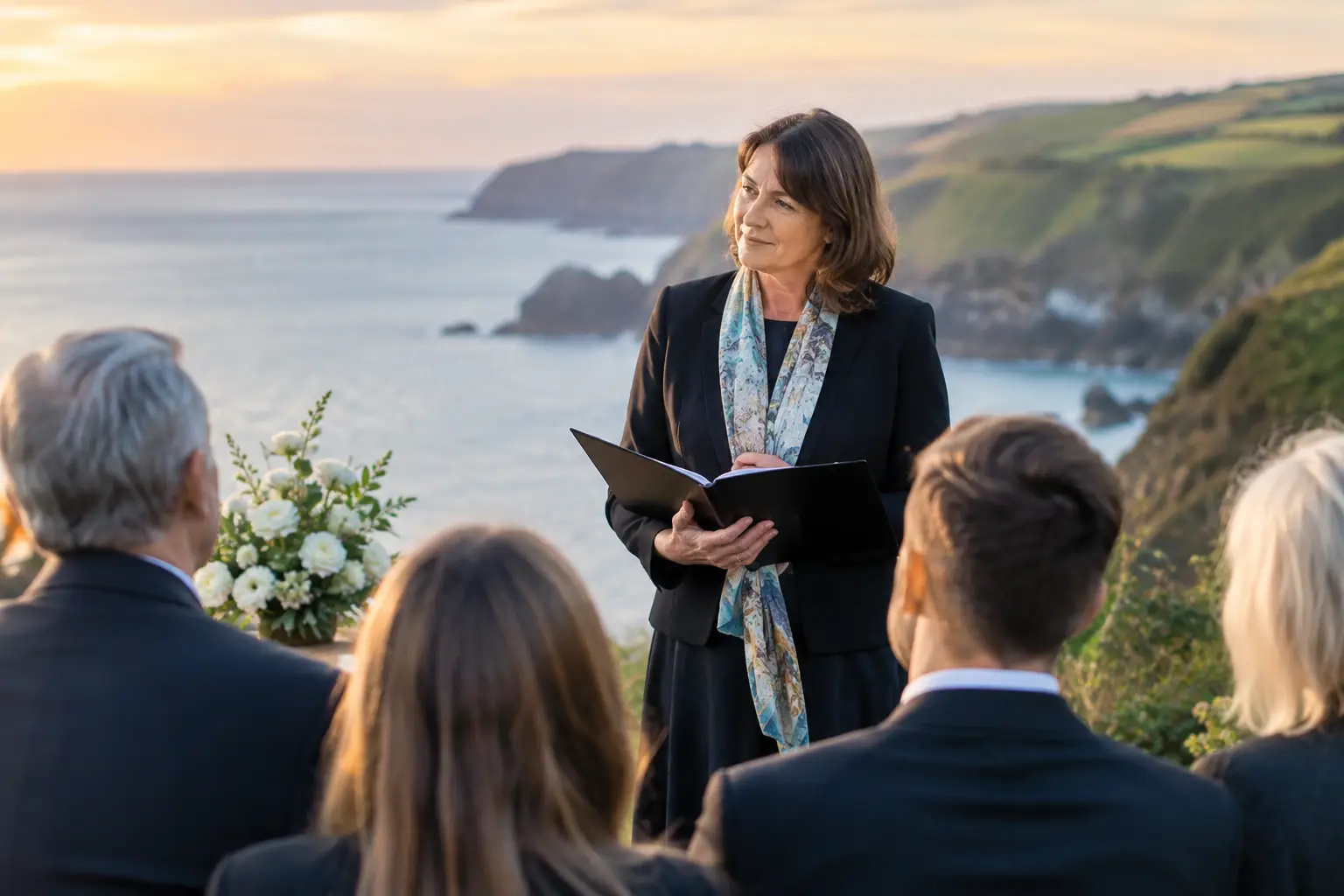
On the day, the celebrant welcomes everyone, explains what will happen and guides the ceremony at a calm pace. They introduce music, readings and speakers, deliver the tribute, and lead the committal or final farewell where appropriate. Their role is not to take over the service. It is to hold it gently, so family and friends can be present without carrying every practical responsibility themselves.
The ceremony does not need to follow a fixed pattern
Most services include an opening welcome, music, a tribute, readings or contributions from family and friends, a moment of reflection and closing words. Yet these elements can be adapted. A short crematorium service may need to be carefully timed, while a memorial gathering or celebration of life can allow more space for several speakers, poetry, shared food and stories.
Music often carries particular meaning. It might be a traditional hymn, a much-loved piece of classical music, a song played at family celebrations or simply a piece that creates a quiet pause. Readings can come from poetry, literature, song lyrics or family writing. If children or grandchildren wish to take part, the celebrant can suggest a role that feels comfortable, such as placing a flower, sharing a memory or choosing music.
Choosing the right celebrant for your family
The relationship between a celebrant and the family is important, even when there is only a short time before the funeral. You are placing a personal story in their hands. A compassionate celebrant will listen closely, ask thoughtful questions and write in a way that sounds true to the person rather than relying on stock phrases.
It is reasonable to ask how the celebrant approaches faith, whether they are happy to include particular music or readings, and whether you can see the tribute before the service. You may also want to ask how they support family members who are speaking, especially if someone is worried about becoming overwhelmed.
Practical experience matters too. A celebrant should understand the timings and procedures of the chosen venue, communicate clearly with the funeral director and be able to respond calmly if plans change. Sometimes a speaker cannot continue, a piece of music is delayed or a family member arrives late. Quiet reassurance and good judgement can make a great difference.
If you are arranging a funeral in Exmouth, Budleigh Salterton or the surrounding area, a local independent funeral director can help match you with a celebrant who suits the tone and type of service you have in mind. This can be particularly helpful when plans include a graveside farewell, a green burial or a celebration of life in a less traditional setting.
Funeral celebrant services and the role of family
Families sometimes worry that they must speak at the funeral or produce a polished eulogy. Neither is required. The celebrant can read the tribute on your behalf, and a service can be moving with no family speeches at all. Equally, if several people wish to contribute, the celebrant can help shape the order so that each voice has a place without the ceremony becoming rushed.
There are many quiet ways to be involved. You might choose the coffin flowers, write a few lines for the tribute, select photographs for a display, carry the coffin, place a sprig of rosemary on it, or simply sit together and listen to music that mattered to them. Participation should be an invitation, not an expectation.
It can also help to think about the people attending. If the funeral is likely to include friends of different ages, backgrounds or beliefs, a celebrant can use inclusive language that welcomes everyone. This does not mean making the ceremony vague. It means finding words that are honest and warm without asking anyone to set aside their own beliefs.
Costs and practical considerations
The cost of a celebrant is usually shown separately within a funeral estimate or included as a professional fee, depending on the arrangements. The fee reflects preparation time, the family meeting, writing the ceremony, liaison with the funeral director and conducting the service. Ask for clear pricing early, including whether there are additional charges for a memorial service, a long journey or a weekend ceremony.
The venue can affect what is possible. Crematorium chapels often have a fixed service length, which may influence how many readings or speakers can be included. A burial service may involve different timings, especially if there is a separate ceremony beforehand. For a direct cremation, some families choose to hold a celebrant-led memorial at a later date, when there is more time to gather and less pressure to arrange everything quickly.
A celebrant-led service is not automatically more informal or less dignified than a religious funeral. It can be traditional in atmosphere, simple and quiet, or full of colour, laughter and shared memories. The best choice depends on the person who has died, the wishes they expressed and what will bring comfort to those left behind.
When a celebrant may be especially helpful
A celebrant can be particularly valuable when family circumstances are complex. Perhaps the person had mixed beliefs, had been estranged from a faith community, or was known by different groups of friends who did not know one another. Perhaps there are difficult emotions around the death, or a life story that deserves careful handling rather than easy assumptions.
They can also provide a steady presence after an unexpected death, when relatives are trying to make decisions while in shock. A celebrant will not remove the sadness of the occasion, but they can give the ceremony shape and ensure that the person at its centre is remembered with kindness and care.
There is no need to create a perfect funeral. A few truthful words, a familiar piece of music and the chance to be together can be enough. Choosing a celebrant gives your family the support to make those moments personal, considered and recognisably theirs.