
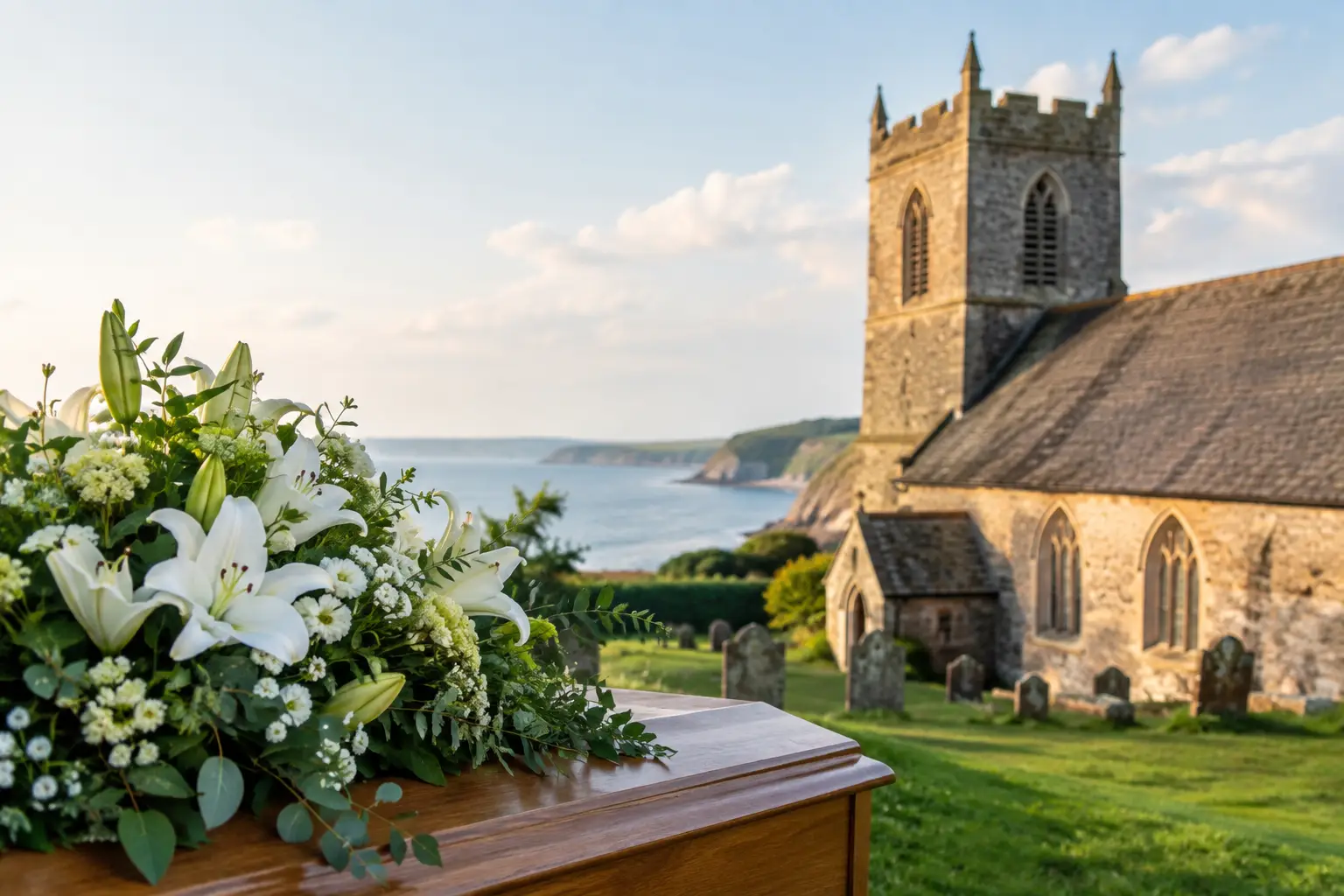

A church funeral can offer something many families need when the person they love has died: a familiar place, time to reflect, and words that hold both grief and hope. Yet arranging one can feel daunting, particularly when decisions need to be made quickly. Knowing how to plan a church funeral means taking one decision at a time, with support from the church, your funeral director and the people closest to the person who has died.
Begin with the church and the family’s wishes
The first question is whether a church funeral reflects your loved one’s wishes, faith or connection to their community. They may have attended regularly, been married or baptised there, supported the church from afar, or simply found comfort in its setting. A church funeral can be appropriate even if they were not a frequent worshipper, although this depends on the church and the minister.
Contact the parish church or minister as soon as you can. In the Church of England, the parish priest will usually be able to explain what is possible, discuss dates and guide you through the service. If the person belonged to another Christian denomination or faith community, their minister or faith leader can advise on the customs that matter most.
It helps to share the practical facts early: the date you are hoping for, whether there will be a burial or cremation afterwards, the expected number of mourners, and any special family circumstances. A funeral director can make these initial arrangements on your behalf and coordinate the church, crematorium or cemetery, vehicles and timings.
How to plan a church funeral service
A church funeral service is often built around a clear order, but it should still feel personal. The minister will lead you through the choices and make sure the service is suitable for the church tradition. You do not need to arrive with every answer prepared.
Most services include a welcome, prayers, hymns or other music, readings, a tribute, a short address from the minister, and a final commendation. If there is a burial, the service may continue at the graveside. If cremation follows, the committal may take place later at the crematorium, either with close family present or as part of the main service.
The most meaningful services tend to include details that genuinely belong to the person. This might be a favourite hymn sung for generations in the family, a reading that reflects their beliefs, a grandchild carrying a flower, or a tribute that captures their humour as well as their achievements. A eulogy does not have to tell an entire life story. Often, a few carefully chosen memories say more.
Choosing readings, hymns and music
The minister can suggest Bible readings and hymns, whether you know the church tradition well or not. Popular choices can be reassuring because people know the words, but there is no need to choose something simply because it is familiar. Consider what would have mattered to your loved one and what will help those attending take part.
Churches may have guidelines about recorded music and the use of the organ, choir or bell ringers. Discuss your preferences early, especially if you would like a particular piece played as people enter or leave. Some churches will accommodate a favourite recorded song; others may ask that music fits the setting and service. These are not barriers to a personal farewell, but practical details best agreed in advance.
If someone in the family would like to give a reading or tribute, check that they feel comfortable doing so. Grief can make public speaking unexpectedly difficult. It is perfectly acceptable for the minister, a friend or the funeral director to read words on their behalf.
Decide who needs to be involved
Funeral arrangements can bring together relatives who have different views, and this is common. One person may want a traditional service, while another hopes for something simpler. Try to return to a single question: what would the person who died have wanted?
Choose one or two family members to be the main points of contact. They can gather suggestions without every decision becoming a group discussion. This helps the minister and funeral director communicate clearly, and it reduces the strain on the person who is already handling the legal and practical matters.
Children and young people can be included in gentle, age-appropriate ways. They may wish to place a flower on the coffin, choose a piece of music, draw a picture, or attend only part of the day. There is no single right choice. What matters is preparing them honestly for what they will see and allowing them to decide with support.
Consider the practical arrangements
A church funeral has several moving parts, particularly if the church, cemetery and wake are in different places. Allow enough time between the service and the next part of the day, especially in busy areas or when older guests may need assistance getting around.
The church will normally explain its fees, which can include charges for the minister, church use, organist, verger, heating and bells where applicable. These costs vary. Your funeral director should set out all funeral costs clearly, including disbursements paid to third parties such as the church, crematorium or cemetery.
If you are arranging a burial in a churchyard, ask about availability and eligibility. Churchyards may have limited space, and there can be rules about who may be buried there, memorials, inscriptions and the type of flowers or tributes permitted. A local cemetery, natural burial ground or cremation may be a better fit in some circumstances.
You will also need to choose a coffin or casket, transport and bearers. These decisions can be traditional or simple. A hearse and limousines may feel right for one family, while others prefer a more modest arrangement, with relatives making their own way to the church. Dignity does not depend on the size or cost of the funeral.
Let people know in a way that feels right
A funeral notice can give the date, time and location, as well as whether people are welcome to attend afterwards. It can also state the family’s wishes regarding flowers, charitable donations or dress. Some families prefer bright colours to reflect a lively character; others find comfort in more traditional mourning clothes. Either is acceptable when it is communicated clearly.
For a larger service, consider who may need extra support. Reserve seating for close family, make sure there is access for wheelchair users, and let the church know if anyone has hearing or mobility needs. A printed order of service can be helpful, particularly where hymns, readings or responses are included.
After the service, people often need a place to sit, eat and talk. A wake does not need to be elaborate. Tea and sandwiches at a village hall, pub, home or local venue can give friends and family time to share stories that may not fit into the formal service.
Accept help during the days that follow
There is a great deal to manage after someone dies, and funeral planning takes place alongside shock, tiredness and grief. Let others take practical tasks where they can – collecting photographs, speaking to caterers, writing names and addresses, or welcoming visitors.
An experienced independent funeral director can keep the arrangements calm and well organised while leaving the family space to make the choices that matter. At Otter Valley Funerals, families in Exmouth, Budleigh Salterton and across East Devon are supported by people who understand that every church, family and farewell is different.
A church funeral need not be perfect to be meaningful. It only needs to be honest, respectful and shaped with love. In the months ahead, people rarely remember whether every detail went exactly to plan; they remember the words, the music, the faces around them, and the care shown to the person they miss.