

A funeral reception can be the part of the day where people finally have time to breathe. After the formality and emotion of a service, it offers family and friends a place to sit together, share a cup of tea, tell a story and remember the person who has died in their own words. The best funeral reception ideas UK families choose are rarely elaborate. They are thoughtful, manageable and true to the life being remembered.
There is no right way to hold a reception. Some families prefer a quiet gathering with immediate relatives, while others welcome a full room of neighbours, colleagues and old friends. What matters is creating an atmosphere in which people feel cared for, without placing too much pressure on the family arranging it.
Begin with the feeling you want to create
Before choosing a venue or deciding on food, it can help to consider what would have suited your loved one. Were they happiest in a busy pub with familiar faces? Did they enjoy the peace of a garden, a walk by the sea or the company of a small circle of friends? A reception need not follow a set pattern to be respectful.
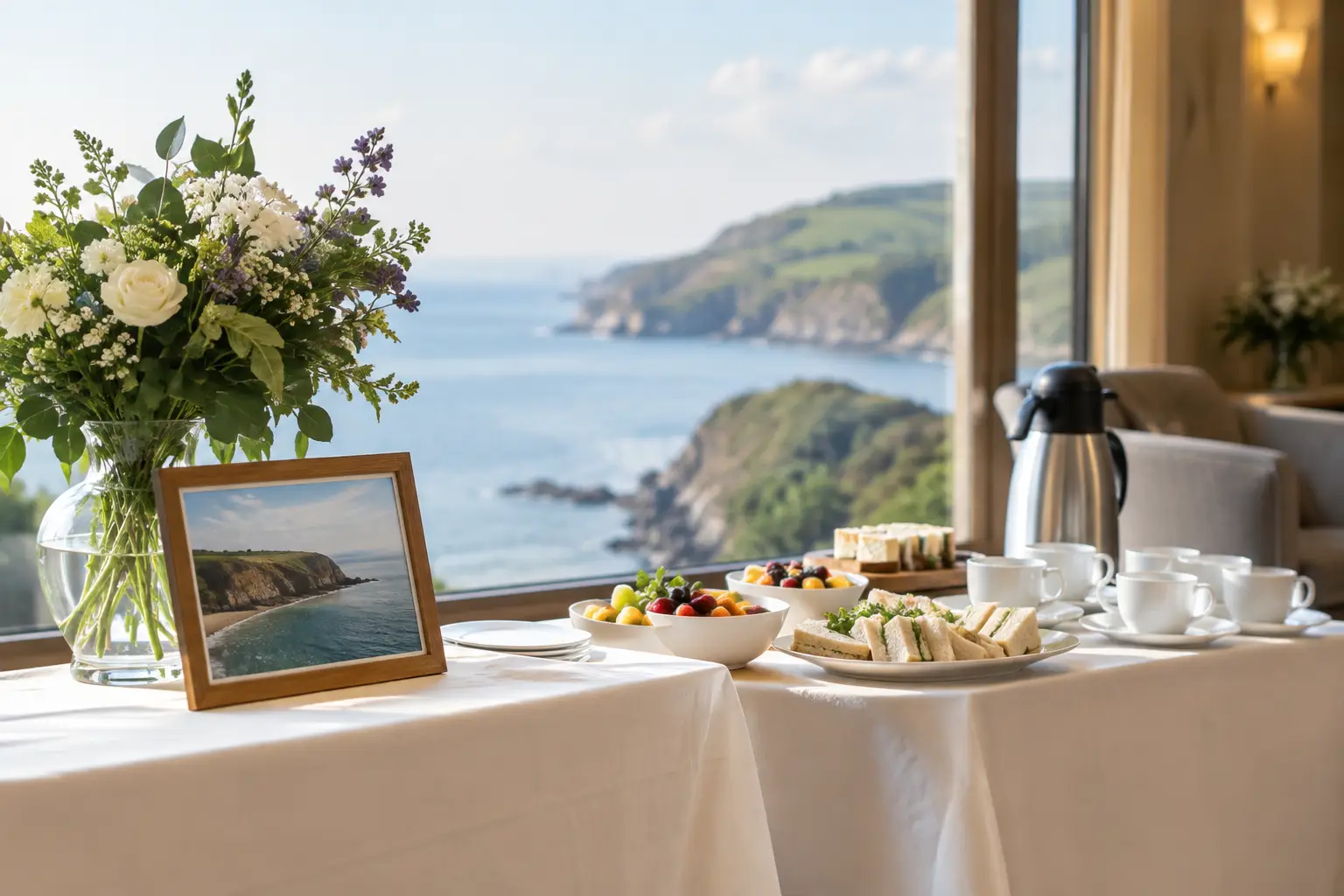
For some, a traditional wake at a local hotel, pub or village hall feels comforting because it gives everyone space to attend. For others, a family home, garden or private room in a restaurant feels more personal. In East Devon, a gathering near the coast may feel especially fitting for someone who loved the sea, while a community venue can be a natural choice for a person well known in the area.
It is also perfectly acceptable to hold the reception on another day. This can be a kinder option when mourners are travelling, when the funeral itself is small, or when the immediate family needs time to rest.
Choosing a venue that makes guests feel welcome
Practical matters make a real difference. Look for a venue with suitable access for older guests or anyone with mobility needs, convenient parking, enough seating and a quiet corner for those who may feel overwhelmed. Ask whether there is a private room, how long it is available for, and whether staff can accommodate dietary requirements.
A pub or hotel can reduce the work for family members, particularly if food, tea and coffee, and clearing away are included. A village hall may allow greater freedom to decorate or bring your own catering, but it will usually require more organising. Holding the gathering at home can be intimate and familiar, although it may become tiring if many guests are expected.
There is no need to provide a large meal. Tea, coffee, soft drinks and a simple buffet are often enough, especially following a morning or early afternoon funeral. If the gathering falls over lunchtime, guests may appreciate sandwiches, soup, pasties or a light hot meal. The aim is hospitality, not perfection.
Food with a personal connection
Food can be a gentle way to bring someone’s character into the room. Perhaps your loved one was known for a particular cake, enjoyed fish and chips by the seafront, or never missed a Sunday roast. Including one familiar favourite can prompt stories and smiles without turning the occasion into an elaborate event.
If catering is being arranged externally, give the provider a realistic guest estimate and ask about vegetarian, vegan, gluten-free and allergy-aware choices. It can also be sensible to appoint one trusted friend or relative to speak with the venue on the day, so the closest family members are not answering practical questions.
Funeral reception ideas UK families can make personal
Personal touches do not have to cost a great deal. Often, the most meaningful details are simple things that encourage people to pause and remember.
A table of photographs can show different parts of a life: childhood, family occasions, work, holidays, hobbies and friendships. Rather than trying to display everything, choose a small number of photographs that feel representative. A favourite hat, gardening gloves, a sports scarf, craft work, military medals or a treasured book can also say much about a person without needing explanation.
A memory book gives guests an opportunity to write down a message, anecdote or name of a shared song. This can become a precious keepsake in the weeks and months afterwards, particularly when the day itself passes in a blur. For a larger gathering, small cards may be easier than asking everyone to queue for one book.
Music can set a gentle tone as guests arrive or look through photographs. A short playlist of favourite songs may be enough. Keep the volume low enough for conversation, and do not feel that every choice has to be sombre. A song that makes people smile may be exactly right.
If the person had a favourite charity, cause or community group, a discreet collection box or card can give guests a way to make a contribution. This should always be optional. Some families prefer flowers only, while others would rather ask for donations in memory of the person. Either approach is entirely valid.
Making space for stories, without putting people on the spot
Conversation is usually the heart of a reception. People often remember different sides of a loved one, and hearing those stories can be a comfort. There is no need to schedule speeches, particularly when emotions are raw, but a brief welcome or toast may help bring people together.
A family member, friend or celebrant could simply thank guests for coming and invite them to share memories. Keep it short. The room does not need to be silent or formal, and it is fine if laughter sits alongside tears. Both can be expressions of love and loss.
If someone would like to say a few words but is worried about managing them on the day, ask another person to read them. Alternatively, place a written tribute beside the photographs for guests to read quietly. This can feel less daunting and ensures the words are still shared.
Include children in a gentle way
Children may need a little support at a funeral reception, especially if they did not know what to expect from the service. A quiet activity table with paper, coloured pencils and memory cards can give them a meaningful role. They might draw a picture, write down something they remember or choose a photograph for a memory display.
There is no requirement for children to stay throughout the gathering. Having a trusted adult available to take them outside or home if they are tired can make the day easier for everyone.
Keep the arrangements manageable
Grief affects concentration, energy and decision-making. A reception does not need themed decorations, printed menus or a detailed programme to be meaningful. In fact, too many decisions can make an already difficult week feel heavier.
Choose one or two personal elements, then let the rest be straightforward. For example, a private room with a buffet, a photograph table and a memory book is more than enough. If friends offer practical help, accept it where you can. One person could gather photographs, another could greet guests, and someone else could take home cards and flowers afterwards.
It can also help to agree in advance who will settle the venue bill, collect belongings and deal with any leftover food. These are small details, but knowing they are covered can allow close family to be present rather than occupied.
When a reception is not the right choice
Not every funeral needs a gathering afterwards. A direct cremation, a small family service or a private burial may suit the person’s wishes and the family’s circumstances. Some families arrange a memorial tea weeks later, once they have had time to process what has happened. Others meet only with immediate relatives.
Choosing not to hold a reception is not a sign that someone was less loved. The care shown in the funeral, the memories shared privately and the support offered to one another matter far more than the size of the gathering.
At Otter Valley Funerals, we understand that a reception is often one small but significant part of saying goodbye. Whether you would like a simple gathering or help thinking through a more personal farewell, gentle practical planning can leave room for what matters most: being together, remembering honestly and taking comfort in the people around you.