

When someone has died, a direct cremation family experience can feel both simpler and more personal than people expect. There is no formal service at the crematorium, but that does not mean there is no care, no choice or no opportunity to say goodbye in a way that feels right for the person who has died.
For many families, direct cremation removes the pressure of arranging a funeral within a short timescale. It creates space to deal with immediate practical matters, gather relatives who live further away, or plan a memorial when everyone feels more able to take part. It is a quieter choice, but it still deserves clear communication, respectful handling and a funeral director who treats your loved one as an individual.
What direct cremation involves
Direct cremation is cremation without a funeral service or mourners attending at the crematorium. After the person has died, the funeral director brings them into their care, completes the necessary arrangements with the family and works with the crematorium to arrange the cremation. The ashes are then returned, or handled in accordance with the wishes agreed beforehand.
This is different from a simple attended cremation. With an attended service, even a short one, family and friends can be present at the crematorium and may choose music, readings or a moment of reflection. Direct cremation has no such service at that point.
The practical details can vary between providers. It is worth asking exactly what is included, how and when you will be kept informed, which crematorium will be used, and how the ashes will be returned. A lower headline price is only helpful if families understand the service behind it.
Why families choose it
Cost is often part of the decision. Without a hearse procession, chapel service, limousines, celebrant or printed orders of service, direct cremation can be a more affordable option. Some people have also made their wishes known during their lifetime, preferring a straightforward cremation and asking their family not to spend money on a traditional funeral.
Just as often, the choice is about personality. A person may have disliked being the centre of attention, wanted something modest, or felt strongly that loved ones should meet later in a more relaxed setting. A memorial at home, a favourite pub, a village hall, a coastal walk or a place with family meaning can feel more fitting than a formal chapel appointment.
There are circumstances where it can be especially helpful. If a death follows a long illness, relatives may be emotionally exhausted and not ready to organise a large gathering immediately. If family members are abroad, a later event gives them a realistic chance to attend. Some families simply want privacy in the first days after a death.
None of these reasons makes the loss any smaller. Choosing direct cremation is not choosing less love or less respect. It is choosing a different timetable and format for expressing it.
The emotional side of a direct cremation family experience
The absence of a service can bring relief for some people, particularly when the thought of speaking in public or managing a large group feels overwhelming. For others, it can leave an unexpected sense that something has been missed. Both responses are entirely understandable.
A funeral service often gives people a clear point at which the death becomes real. It brings people together, offers a ritual and allows condolences to be shared. When there is no attended cremation, families may need to create that moment intentionally rather than assume it will happen by itself.
That does not have to mean organising a large event. A few close relatives might light a candle, look through photographs, play a favourite piece of music or share a meal together. Children may want to draw a picture, write a message or choose a small item to place with the ashes later. These acts can be gentle but significant.
It also helps to recognise that different relatives may have different needs. One person may be grateful for a private cremation, while another may need a gathering to feel they have said goodbye. Talking openly, where possible, can avoid hurt feelings. A later memorial can allow both wishes to be respected.
What good care should look like
Even with the simplest arrangements, families should never feel they are handing their loved one over to an anonymous process. They should know who is caring for them, what happens next and who to contact if they have a question.
At a difficult time, practical reassurance matters. You should be given clear guidance about registering the death, the paperwork needed for cremation and any circumstances that may affect timing. If there is a delay, families deserve an explanation rather than being left to chase for information.
A compassionate funeral director will also ask about the person who has died. Their name, any faith or cultural needs, whether there are personal wishes in place, and what you would like to happen with their ashes all matter. Direct cremation may be straightforward, but it should not be impersonal.
For families in Budleigh Salterton, Exmouth and the surrounding area, a local independent funeral director can offer the reassurance of a named team who understand that small details carry great weight. Otter Valley Funerals believes that affordability and personal attention should sit together, not be treated as alternatives.
Planning a farewell after the cremation
A later gathering can be as formal or informal as the family wishes. The key question is not what is usually done, but what would be meaningful for the people involved and true to the person being remembered.
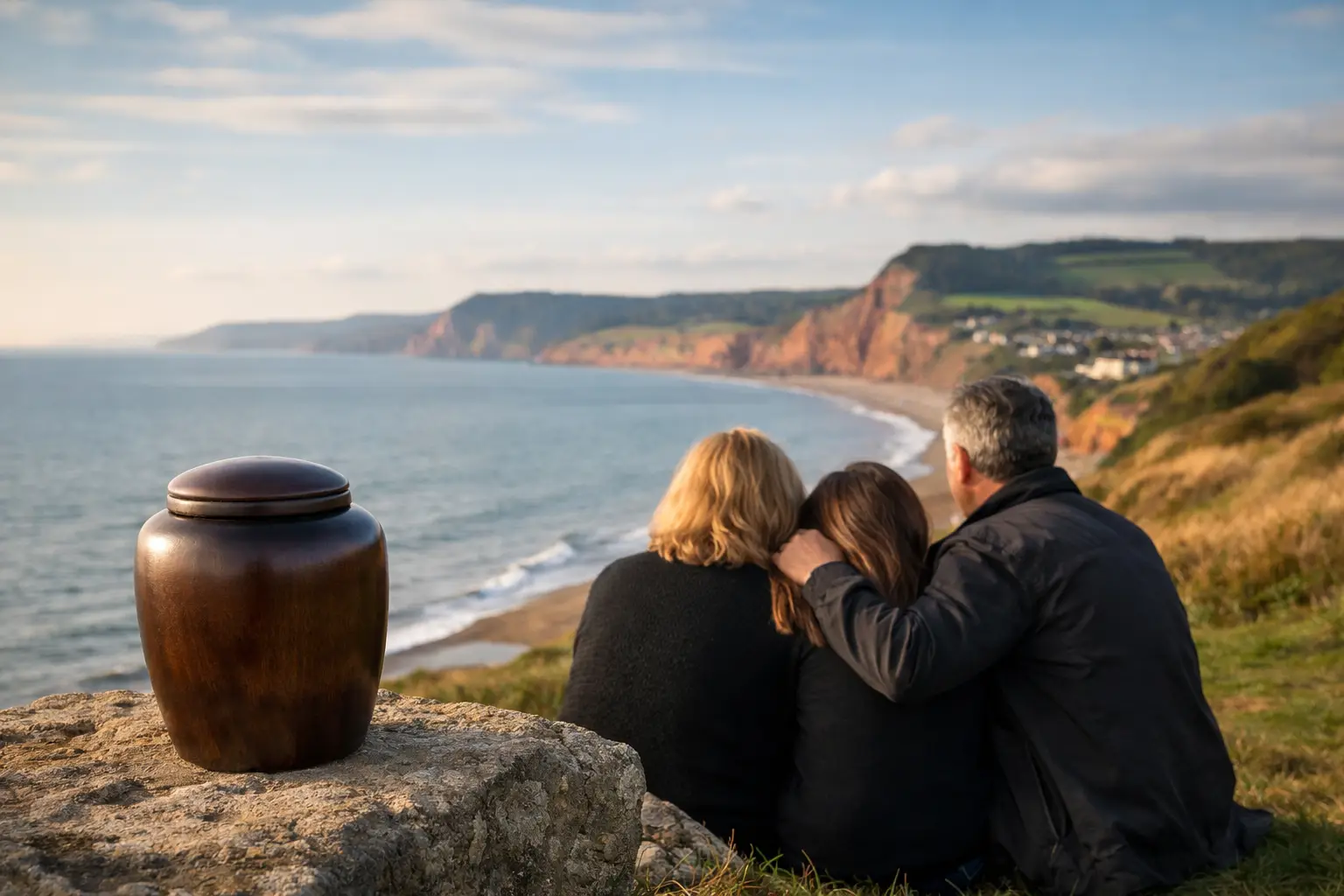
Some families choose a memorial service in a church or another familiar setting. Others arrange a celebration of life with photographs, music and stories. If the person loved the sea or the Devon countryside, scattering ashes at a suitable location or taking a quiet walk together may feel more appropriate. Before scattering ashes, make sure you have permission from the landowner or relevant authority.
Having the ashes present can provide a focus, but it is not essential. You may prefer to keep them safely at home until a date feels right, inter them in a cemetery or churchyard, or divide them between close family members where appropriate. There is no need to rush this decision. Grief rarely follows a timetable, and the right answer may become clearer with time.
If you are arranging a gathering, give people enough notice and keep the invitation simple. Let them know whether it will be a reflective service, an informal remembrance or both. This helps relatives who are grieving in different ways to decide what they can manage.
When direct cremation may not be the right choice
Direct cremation is not automatically the best option simply because it is less expensive or less formal. If the person who has died wanted a church funeral, a procession, a graveside farewell or an attended crematorium service, it is worth considering how those wishes can be honoured.
It may also be harder for a family where there are unresolved relationships or where many people need the shared support of a funeral. A service can provide structure at a time when life feels unstructured. In those circumstances, a simple cremation with a brief attended ceremony may offer a useful middle ground.
There is also no single right answer within one family. A direct cremation followed by a well-planned memorial can be deeply moving. Equally, a small traditional funeral may be exactly what relatives need. The most suitable choice is the one that balances the wishes of the person who has died, the needs of those closest to them and the practical reality of the situation.
Questions worth asking before you decide
Before making arrangements, ask whether the cremation will be unattended, how your loved one will be transported and cared for, what paperwork is included, and when the ashes will be available. Ask whether you can add personal requests, and whether there are any additional charges that may arise.
It is also sensible to talk about the farewell before agreeing to direct cremation. If you know that a memorial, ash scattering or family gathering will matter, you can begin to picture the whole process rather than viewing cremation as the final event. That perspective often brings comfort and makes a simple arrangement feel more complete.
There is no perfect way to mark a life. There is only the way that gives your family the greatest sense of honesty, care and connection – whether that is a quiet direct cremation now, a shared remembrance later, or both.