
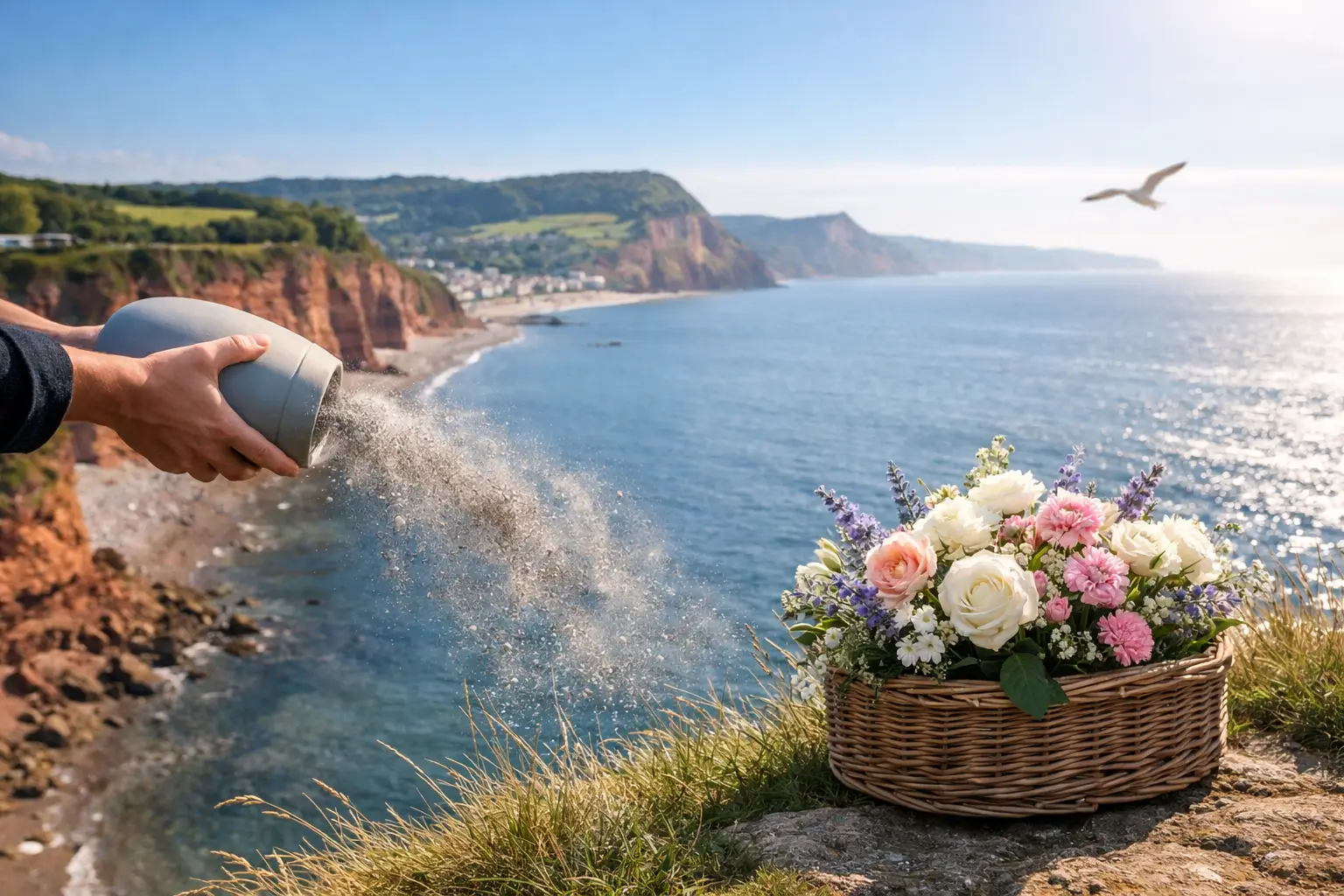

Some families know immediately where their person would want to be remembered: beside the sea, in a favourite garden, or overlooking a much-loved view. Others need time to decide. The most meaningful ashes scattering memorial ideas are rarely elaborate. They simply reflect the person who has died and give those attending a gentle way to say goodbye.
A scattering can take place soon after a cremation or many months later, when family members are able to come together. There is no right timetable. What matters is choosing a setting and a small act of remembrance that feels honest, manageable and personal.
Ashes scattering memorial ideas that feel personal
Begin with the place. It might be somewhere associated with happy holidays, dog walks, gardening, fishing, sailing, family picnics or a long-held love of the Devon coast. A place does not need to be dramatic to carry meaning. A quiet stretch of shoreline, a woodland path or a private garden may feel more fitting than a busy landmark.
Before the scattering, invite one or two people to share a memory. Keeping this brief can make it easier for everyone to take part, particularly when emotions are close to the surface. A grandchild might read a poem, a friend may tell a favourite story, or someone might simply say a few words of thanks. Silence is equally valid. There is no need to fill every moment.
Music can add warmth if it suits the occasion. A favourite song played quietly, a hymn sung together, or a piece of instrumental music can create a clear beginning and ending. If the location is exposed to wind or close to other visitors, consider whether music will be practical and respectful.
Some families bring a single flower to place at the site afterwards, while others take photographs, share a toast or enjoy tea together nearby. These moments can be especially valuable where a direct cremation has taken place and the scattering is the main opportunity for friends and relatives to gather.
Giving everyone a role in the farewell
A scattering ceremony need not be led by one person. Giving people small roles can help a family feel involved without placing pressure on anyone to speak.
You could ask different relatives to choose a reading, carry flowers, play music, share a memory, or hold the ashes until the moment feels right. Children may appreciate a simple role, such as drawing a picture to keep, choosing a flower, or placing a pebble at the location. Let them decide how much they want to take part.
If several people wish to scatter ashes, it is often kinder to divide them into small containers beforehand. This avoids a difficult decision at the last minute and allows each person a private moment. Equally, some families prefer one person to scatter while others stand close by. Neither choice is more meaningful than the other.
It can help to say beforehand that tears, laughter and hesitation are all welcome. A memorial does not have to be solemn from beginning to end. Often, the story that makes everyone smile is the one people remember most clearly.
A simple order of service
For those who would welcome a little structure, a short gathering may include a welcome, a reading or piece of music, shared memories, the scattering itself, and a final pause. This can take as little as fifteen minutes.
A more formal ceremony might include a celebrant, a religious blessing or prayers. This may be right for a family who would value guidance, but it is never a requirement. A close relative speaking from the heart can be just as moving.
Choosing a location with care
In the UK, cremated ashes can usually be scattered in many places, but permission is essential when the land is privately owned. This includes farms, private gardens, country estates and many beaches or coastal areas managed by an organisation. A funeral director can help you understand what is appropriate and make the necessary enquiries.
For a sea or riverside scattering, think about tides, wind direction and access. It is best to choose a quiet time, stand upwind, and avoid areas where people are swimming, eating or playing. A biodegradable water urn may be preferable for families who would rather place ashes gently on the water than scatter them from the shore.
At a beauty spot, woodland or public park, take care not to disturb other visitors or leave objects behind. Flowers should be natural and free from plastic wrapping, ribbons or wire. Biodegradable confetti may sound fitting but can still create litter, so it is usually best avoided.
A garden scattering can be particularly comforting, especially where visiting a cemetery or travelling to the coast would be difficult. However, if it is not your own garden, obtain the homeowner’s clear permission. Consider also whether the family will continue to have access to the property in future.
When one place is not enough
It is common for families to keep a small portion of ashes rather than scatter everything at once. This can be helpful when close relatives live in different parts of the country, when someone cannot attend, or when the right location is not yet clear.
One portion might be scattered at a coastal spot in Exmouth or Budleigh Salterton, while another is kept for a later family gathering elsewhere. Some people choose an ashes interment or a memorial garden so there is a permanent place to visit. Others keep a small amount in a keepsake urn. The choice depends on what will bring comfort over time, rather than what anyone feels they ought to do.
There can also be practical reasons to wait. A winter cliff path may be unsafe, a favourite garden may not be accessible, or family members may need time to travel. Postponing the scattering is not postponing love. It gives you the chance to make the occasion feel right.
Small details that make the day easier
Wind is the practical detail families most often underestimate. If you are scattering ashes outdoors, check the forecast and bring tissues, drinking water and a bag for any packaging. Wear sensible footwear for uneven ground, and ensure that anyone with limited mobility can reach the chosen spot comfortably.
It is wise to carry the ashes in a suitable container until you are ready. Your funeral director can advise on vessels designed for scattering and on how to transfer ashes into smaller keepsake containers if needed. If you are uncertain about what to say or how the act of scattering will work, talk it through beforehand. A little planning can prevent a stressful moment on the day.
Afterwards, avoid rushing straight home if you can. A meal, a cup of tea, a walk, or simply sitting together can give people space to talk. Grief does not follow an order of service, and the quiet time after a memorial is often when families begin to share what the person meant to them.
Otter Valley Funerals can provide respectful, practical guidance for families who are considering an ash scattering, from discussing suitable arrangements to helping create a farewell that feels true to the life being remembered.
The best memorial may be a few spoken words by the water, a shared smile in a garden, and the knowledge that everyone was given room to remember in their own way.