


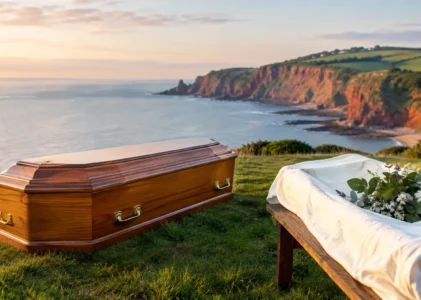
A coffin is often assumed to be part of every funeral, but it does not have to be the only choice. When families are considering a coffin versus shroud, they are usually weighing more than appearance. They may be thinking about a loved one’s wishes, faith, the type of burial, environmental concerns, and what will feel most respectful when the day arrives.
Neither option is inherently more caring or more dignified. A traditional coffin can provide a familiar, formal sense of occasion. A shroud can offer simplicity and a close connection with nature. The right decision is the one that reflects the person who has died and gives those closest to them confidence that their wishes are being honoured.
Coffin versus shroud: the practical difference
A coffin is a rigid container, commonly made from wood, cardboard, wicker, bamboo or other materials. It supports the person during care, transport, the service and committal. Coffins vary greatly in style, from simple wooden designs to more personalised choices, and may be suitable for burial or cremation depending on the material and the crematorium’s requirements.
A burial shroud is a covering, usually made from natural cloth such as cotton, linen, wool or calico, in which a person is gently wrapped. It may be tied with bands and can be used with a carrying board, stretcher or simple casket for moving the person safely and respectfully. A shrouded burial is most often associated with natural or woodland burial grounds, although some cemeteries may also permit it.
The practical arrangements matter. A cemetery, burial ground or crematorium has its own rules, so it is essential to check what is accepted before making a final decision. For cremation, the crematorium will normally need to be satisfied that the covering and any supporting board are safe and suitable for their equipment. For burial, the graveyard may specify whether a coffin is required, whether a shroud is permitted, and whether certain fabrics or materials must be avoided.
Why a coffin may feel right
For many families, a coffin provides a reassuring structure at a time when everything else can feel unfamiliar. It gives relatives a clear focal point during a church service, ceremony or gathering at the crematorium. It can also be carried by family members or bearers, decorated with flowers, and chosen in a style that feels fitting.
A coffin does not need to be elaborate to be meaningful. A simple solid-wood coffin, a woven willow coffin or a plain cardboard coffin can each offer a personal and respectful choice. Families sometimes add photographs, handwritten messages or artwork from grandchildren, where the chosen coffin and venue allow this.
There are also practical reasons to choose a coffin. If a funeral includes travel over a distance, a traditional service with pallbearers, or burial in a cemetery with more conventional requirements, a coffin may be the most straightforward option. It can make the arrangements easier for those involved without making the funeral any less personal.
Why a shroud may feel right
A shroud can be a deeply simple and peaceful choice. For some people, it reflects a wish to return to the earth with as little intervention as possible. The absence of a rigid coffin can feel more natural, particularly at a woodland or meadow burial where biodegradable materials are part of the ethos.
It can also hold spiritual or cultural significance. In several faith traditions, including Islam and Judaism, shrouding forms an important part of the funeral process, although the precise customs and timescales vary. A funeral director should listen carefully to the family and, where appropriate, work alongside faith leaders to ensure traditions are respected.
Families sometimes worry that a shroud will feel too stark at a service. In practice, it can be presented with great tenderness. A shroud may be made in a soft natural fabric, covered with flowers or a favourite blanket, and placed on a willow stretcher or simple board. The result can be modest but beautiful, with the emphasis on the person and the people gathered to remember them.
Environmental considerations
The material itself matters more than the label. Not every coffin has the same environmental impact, and not every shroud is fully biodegradable. If environmental concerns are a priority, ask about the source and composition of the materials, any plastic fittings, glues, metal handles, dyes and linings.
Natural burial grounds commonly favour biodegradable coffins, such as willow, bamboo, cardboard or untreated wood, as well as natural-fibre shrouds. They may also limit embalming fluids, artificial flowers and grave markers to protect the landscape and encourage wildlife. However, each burial ground has its own conditions, so a choice that is accepted in one location may not be accepted in another.
It is worth remembering that a greener funeral is not about finding a perfect answer. Travel arrangements, floral tributes, memorial products and the burial ground itself can all play a part. Choosing a simple coffin or shroud made from appropriate natural materials is one meaningful way to reflect someone’s values.
Cost and what is included
A shroud is often less expensive than a coffin, but this is not always the case once the necessary support, transport and cemetery fees have been included. Equally, a coffin can be a modest, affordable choice. The most helpful comparison is not simply the price of the coffin or shroud on its own, but the full cost of the funeral arrangements.
Ask for clear information about what is included: care of the person who has died, collection, transport, dressing or shrouding, use of a board or stretcher, bearers, service arrangements, burial fees and any third-party charges. Transparent pricing allows families to make decisions based on what matters to them rather than feeling pressured towards a particular style.
At Otter Valley Funerals, families can talk through both simple and more bespoke options at their own pace. A good funeral director will explain what is possible, be honest about venue requirements, and never treat a lower-cost choice as a lesser act of love.
Questions to consider before deciding
The decision often becomes clearer when you start with the person rather than the product. Did they express a preference? Were they drawn to tradition, faith, simplicity or the natural world? Is there a particular cemetery, churchyard or natural burial ground in mind? And will the family want a formal service with pallbearers, or a quieter committal attended by only a few people?
It can also help to think about what relatives need on the day. Some find comfort in the familiar formality of a coffin entering a church or chapel. Others feel that a shroud reflects a gentler, less formal farewell. There is no correct emotional response, and it is entirely possible for family members to have different views.
Where wishes were not left in writing, try to choose the option that best reflects the person’s character and values. A decision made with thought, care and honest conversation is a respectful one.
Planning ahead can remove uncertainty
If you are making your own funeral wishes known, writing them down can spare those close to you from having to guess. You do not need to decide every detail, but noting whether you would prefer a coffin, a shroud, cremation, burial or a natural burial gives your family useful guidance.
For someone arranging a funeral now, it is okay to ask for time to consider the options. The arrangements need to meet practical requirements, but they should not be rushed beyond what is necessary. An experienced funeral director can contact the relevant crematorium or burial ground, explain the choices in plain language and help create a farewell that feels true to the person being remembered.
Whether you choose a carefully selected coffin or a simple shroud, the lasting meaning lies in the care surrounding it: the stories shared, the hands held and the respect shown to someone who mattered.