
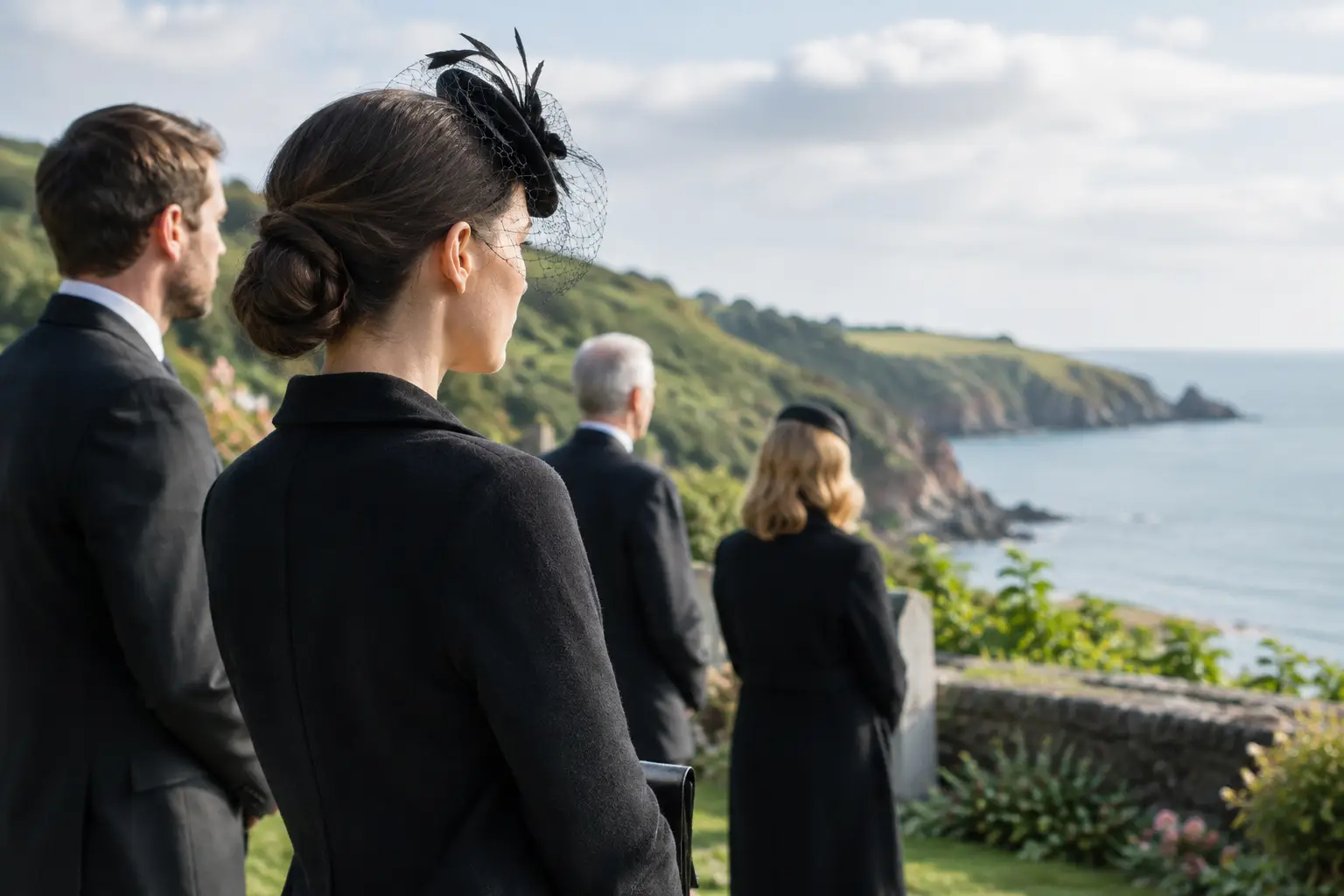

When you are grieving, deciding what to wear can feel like one more thing to manage. This guide to funeral attire etiquette is here to take away some of that uncertainty. The simplest principle is to dress in a way that shows respect for the person who has died, their family and the type of service being held.
There is no single uniform for a funeral. A traditional church service, a natural burial and a celebration of life may each call for something slightly different. If the family has given a dress request, that request comes first. If they have not, smart, modest and comfortable clothing in subdued colours is usually the right choice.
Start with the family’s wishes
Funeral notices, invitations and word of mouth may include guidance such as ‘family flowers only’, ‘bright colours welcome’ or ‘please wear something colourful’. These details are not small matters. They often reflect the character, beliefs or expressed wishes of the person being remembered.
If the family asks guests to wear bright colours, a favourite football shirt, floral prints or a particular colour, following that request is a thoughtful gesture. It does not mean you need to dress flamboyantly unless that has been clearly requested. A colourful scarf, tie, blouse or dress can be enough.
Where there is no guidance, it is perfectly reasonable to ask a close family member or the funeral director. Many people worry about getting it wrong, but a quiet question is usually welcomed. At Otter Valley Funerals, we find that clear, practical reassurance can make a difficult day feel a little more manageable.
Funeral attire etiquette for traditional services
For a church funeral, crematorium service or formal burial, darker and neutral shades remain a safe choice. Black is traditional, but it is not compulsory. Navy, charcoal, dark green, brown, burgundy and muted grey are all respectful options.
A suit, smart trousers with a shirt, a modest dress, skirt and blouse, or tailored separates are commonly worn. Jackets, ties and formal hats may be appropriate, particularly for a traditional service, but they are not essential. The aim is to look considered rather than to meet a strict dress code.
Choose clothing that allows you to sit, stand and walk comfortably. Funerals can involve travelling between a service, burial ground, wake or family gathering. In Devon, weather may also play a part, especially if there will be a graveside committal. A warm coat, umbrella and sensible shoes can be just as important as the outfit beneath them.
Shoes, accessories and grooming
Smart, clean shoes are usually best. Avoid anything that is likely to make walking difficult on gravel, wet grass or uneven ground. This is particularly worth considering for burials and natural funerals, where paths may be less formal.
Keep accessories understated if you are unsure. A simple piece of jewellery, a watch or a tie clip is absolutely fine. Strong fragrances are best avoided, as some guests may be sensitive to scent and close seating can make perfume or aftershave feel overwhelming.
There is no need to buy new clothes for the occasion. Clean, tidy and modest clothing you already own is more than enough. Funeral etiquette should never create financial pressure for someone who wants to pay their respects.
What to wear to a celebration of life
A celebration of life may be held in a village hall, hotel, pub, private home, garden or on the water. It can be more relaxed than a formal funeral, but it is still a time of remembrance. The wording of the invitation is your best guide.
Some families actively ask people to avoid black and wear colour, summer clothes or something that reflects the person’s hobbies. Others may describe the gathering as ‘smart casual’. In these circumstances, neat trousers, a smart shirt, a blouse, a simple dress, a cardigan or clean, polished shoes will usually feel appropriate.
Smart casual should not be read as anything goes. Clothing that is very revealing, heavily distressed, beachwear or outfits with slogans can distract from the purpose of the day, unless the family has specifically requested something informal or themed. It is possible to look relaxed while still showing care.
A celebration of life can hold both tears and laughter. Wearing the colour or item requested by the family can help create a shared sense of affection, without taking away the dignity of the occasion.
Clothing for green funerals and natural burials
Green funerals and natural burials often take place outdoors and may have a less conventional feel. Families may choose biodegradable coffins, wildflower settings or a service shaped around nature. This does not mean guests must wear outdoor clothing, but practicality matters more than usual.
Earthy, gentle colours such as green, blue, brown, cream or soft floral patterns may suit the setting if the family has not asked for traditional mourning dress. Layers are useful, as are waterproof coats and footwear with a good grip. In wet weather, heels and delicate shoes can quickly become uncomfortable.
It is also wise to think about the length of time spent outside. A warm scarf, gloves or a sun hat may be appropriate depending on the season. Being comfortable helps you stay present for the service rather than worrying about the cold, mud or rain.
Children, uniforms and cultural dress
Children do not need to wear formal black clothing. Neat, comfortable clothes that allow them to move and feel at ease are usually best. A dark jumper, clean trousers, a dress or a smart cardigan are all suitable. Expecting children to remain completely still or silent for a long service is not realistic, and families generally understand this.
School uniform can be practical if a child is attending before or after school, particularly when the family is comfortable with it. Equally, there is no requirement for a child to wear a tie, formal shoes or an unfamiliar outfit that will make an already emotional day harder.
Service uniforms, including those of the Armed Forces, emergency services and other organisations, may be worn where appropriate and in accordance with the relevant guidance. For some families, this is a meaningful mark of respect. Cultural or religious dress should always be welcomed. Funerals bring together different generations, faiths and traditions, and respect includes allowing people to honour the person who died in a way that is true to them.
If you are part of the immediate family
Close family members sometimes feel they must look a certain way because they will be visible throughout the day. There is no need to place that burden on yourself. Choose something you can wear for several hours and that feels like you.
You may be greeting guests, carrying flowers, travelling in the funeral cortege or attending a reception afterwards. Consider layers, tissues, water-resistant outerwear and shoes you can stand in comfortably. If you are carrying a loved one’s coffin, the funeral director will discuss practical arrangements with you in advance, including any clothing considerations.
Some people choose an item that quietly connects them to the person who has died: a piece of jewellery, a favourite colour, a scarf or a buttonhole. These personal touches can be deeply comforting, even when the rest of the outfit is simple.
When you are unsure what is expected
If you only have a few moments to decide, wear the smartest, cleanest and most subdued clothes you have. A dark jumper with tidy trousers, a plain dress with a cardigan, or a shirt with smart trousers will rarely be out of place. Do not let the absence of black clothing stop you from attending.
Your presence matters more than perfect funeral attire. Bereaved families are far more likely to remember the kindness you showed, the hand you held or the memory you shared than the exact shade of your coat.
If you are arranging a service and would like to make the dress code clear, include a short, kind line in the funeral notice. It gives guests confidence and lets them honour your loved one in the way that feels right to your family.