
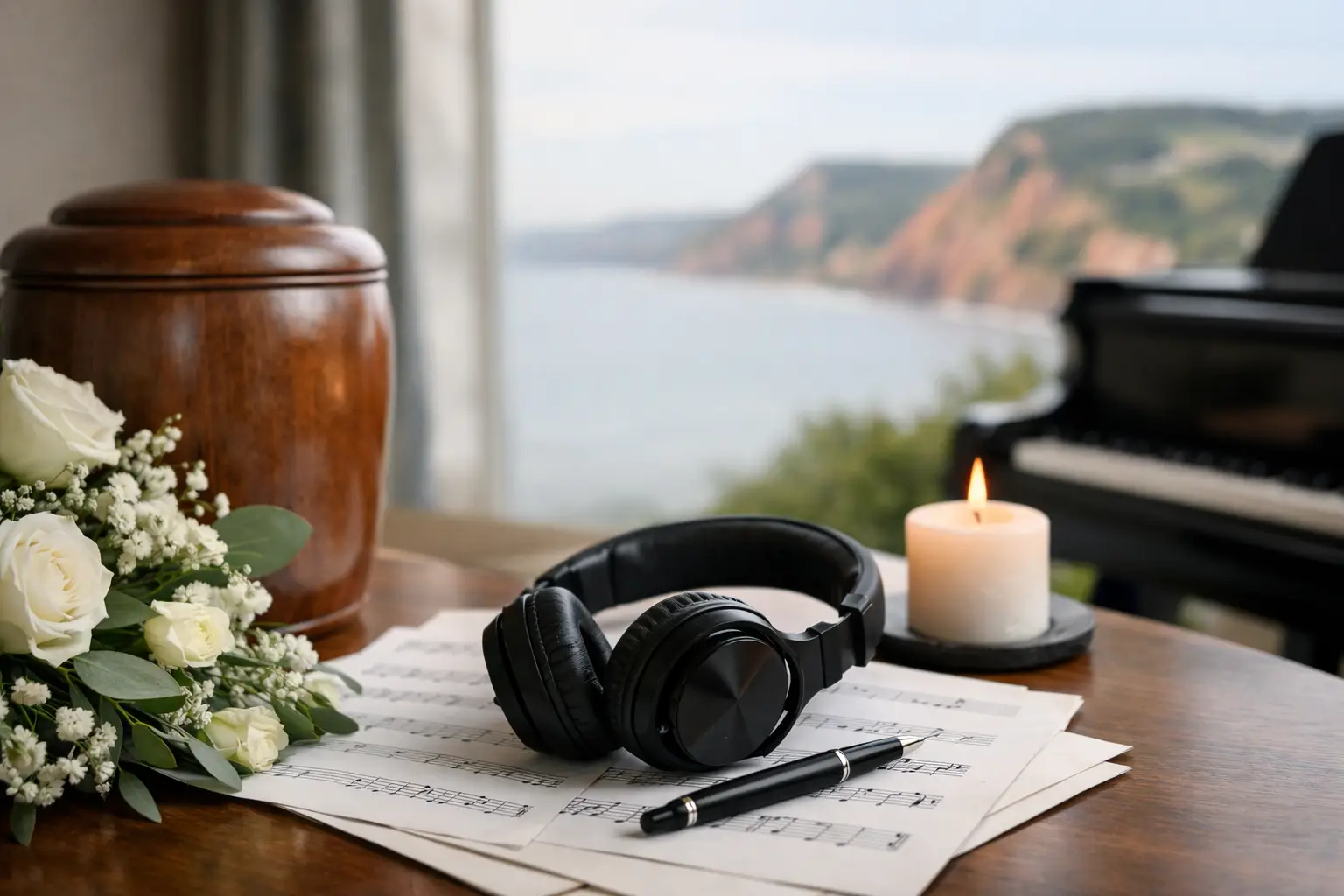

A piece of music can bring someone into the room more vividly than a photograph. It may recall their singing in the kitchen, a long car journey, a wedding dance or a quiet moment shared with family. Knowing how to choose funeral music can therefore feel both deeply meaningful and unexpectedly difficult, especially when there are many other decisions to make.
There is no single right choice. The most fitting music is not necessarily the most traditional, the saddest or the most familiar. It is the music that feels honest to the person who has died and offers those attending a moment to reflect, remember or simply breathe.
Start with the person, not the playlist
Before looking for particular songs, think about the character and life of the person being remembered. Were they devoted to hymns and church music? Did they love classical music, jazz, folk, motown or the songs played on the radio when they were young? Perhaps one particular artist, football anthem, military march or film soundtrack always made them smile.
A funeral does not need to follow a fixed musical formula. A traditional church service may include well-loved hymns, while a crematorium, woodland burial or celebration of life may make room for recorded music that is more personal. Many families choose a mixture, such as a hymn for shared singing and a favourite song as people enter or leave.
If your loved one left wishes about their funeral, begin there. Even a brief note, a saved playlist or a comment made in passing can provide reassurance. If they did not, it can help to ask close relatives and friends one simple question: what music immediately makes you think of them? Patterns often emerge quickly.
Choose music for each moment of the service
Most services have two or three musical moments, although this can be adapted to suit the family, venue and type of funeral. Thinking about what each moment needs to do makes the choice more manageable.
Music for arrival
Entrance music sets the tone as people take their seats and the coffin arrives, if there is one. Some families prefer something calm and reflective. Others choose a song that captures warmth, character or a love of life. Instrumental music can be particularly helpful if lyrics feel too direct at the start of the service.
A hymn, song or reflective piece
The middle of the service often includes a hymn, a piece of recorded music or live performance after a tribute or reading. This is an opportunity for shared reflection. A familiar hymn can give mourners something to do together when words are hard to find. Equally, a recorded song with meaningful lyrics may say what the family cannot.
Music for leaving
The recessional music is played as people leave. It does not have to be solemn. Many families choose something hopeful, uplifting or unmistakably connected to the person who has died. It can gently shift the mood from the formal service towards stories, refreshments and time together afterwards.
For some families, three choices are enough: one for arrival, one for reflection and one for departure. Others may include background music during a visual tribute or a short instrumental piece during a committal. The right number depends on the service, not on what anyone else has done.
Let the words matter, but do not overthink every line
Lyrics deserve consideration, particularly if a song will be played in full. Listen again from beginning to end rather than relying on the chorus you remember. A much-loved song may include verses that do not feel appropriate, or it may be longer than the available time.
That said, music does not need to be literally about bereavement to belong at a funeral. A song about friendship, home, devotion, laughter or shared adventures may be far more truthful than a conventional farewell. Families sometimes worry that an upbeat choice will seem disrespectful. If it reflects the person well, it can be a generous and moving choice.
It is also all right to choose a piece without lyrics. A favourite classical work, a piano arrangement or a gentle instrumental version of a meaningful song can create space for private thoughts. This may suit a family who finds the words of songs too overwhelming on the day.
Balance personal choices with those attending
A funeral is personal, but it is also a gathering of people with different memories and beliefs. If the person who died had strong preferences, these should usually guide the choices. Where there were no wishes, aim for music that feels recognisable to their life rather than trying to represent every relative equally.
A small disagreement is not unusual. One family member may want traditional hymns, while another feels their loved one would have preferred a favourite pop song. A combination often works well, giving room for both shared tradition and individuality. If there is only space for one choice, focus on what the person themselves would have wanted.
For a church funeral, it is wise to speak with the minister about suitable hymns and any music that may need approval. Some churches have particular expectations, especially for recorded secular music. A celebrant or funeral director can similarly advise on timings and practical arrangements at a crematorium or burial ground.
Consider live music carefully
Live music can be beautiful, whether that is an organist, piper, singer, violinist or a family member playing a piece themselves. It brings a sense of presence that recorded music cannot always replicate. However, it can also feel emotionally demanding for a relative or friend who is grieving.
If someone close to the person who died wishes to sing or play, give them permission to change their mind. It may help to arrange a recorded version as a quiet back-up, without making a fuss about it. The same applies to anyone reading lyrics, performing a poem or leading a hymn.
Recorded music is no less meaningful. It is often the clearest way to hear the original version of a song that mattered to someone, and it removes pressure from family and friends on an already difficult day.
Check the practical details early
Once you have chosen the music, provide the title, artist and preferred version as early as possible. Different recordings of the same song can have different lengths, introductions or lyrics. If there is a particular live performance, cover version or instrumental arrangement you want, make that clear.
Ask how the venue receives music and when final choices are needed. Some venues request tracks in advance so they can be checked and played through their own system. If you are using a church organist, choir or other musician, confirm the hymns, keys and order of service in good time.
It is worth having one reserve choice as well. A requested version may not be available, a live musician may be unwell, or a track may prove unsuitable for the service length. A back-up avoids a last-minute decision when emotions are high.
Give yourself permission to keep it simple
You do not have to find the perfect song. The pressure to make every detail meaningful can be exhausting when you are tired, grieving and managing practical arrangements. A simple hymn your family knows, a song your loved one enjoyed, or a peaceful instrumental piece can be more than enough.
At Otter Valley Funerals, families are often reassured by talking through their choices aloud. Sometimes the answer is already there in a memory: the record always played on a Sunday morning, the song from a first dance, or the tune that made grandchildren think of them.
If choosing the music feels too difficult right now, choose one piece that feels true and allow the rest to be guided by the shape of the service. Music does not have to carry every memory. It only needs to make space for the love that remains.