
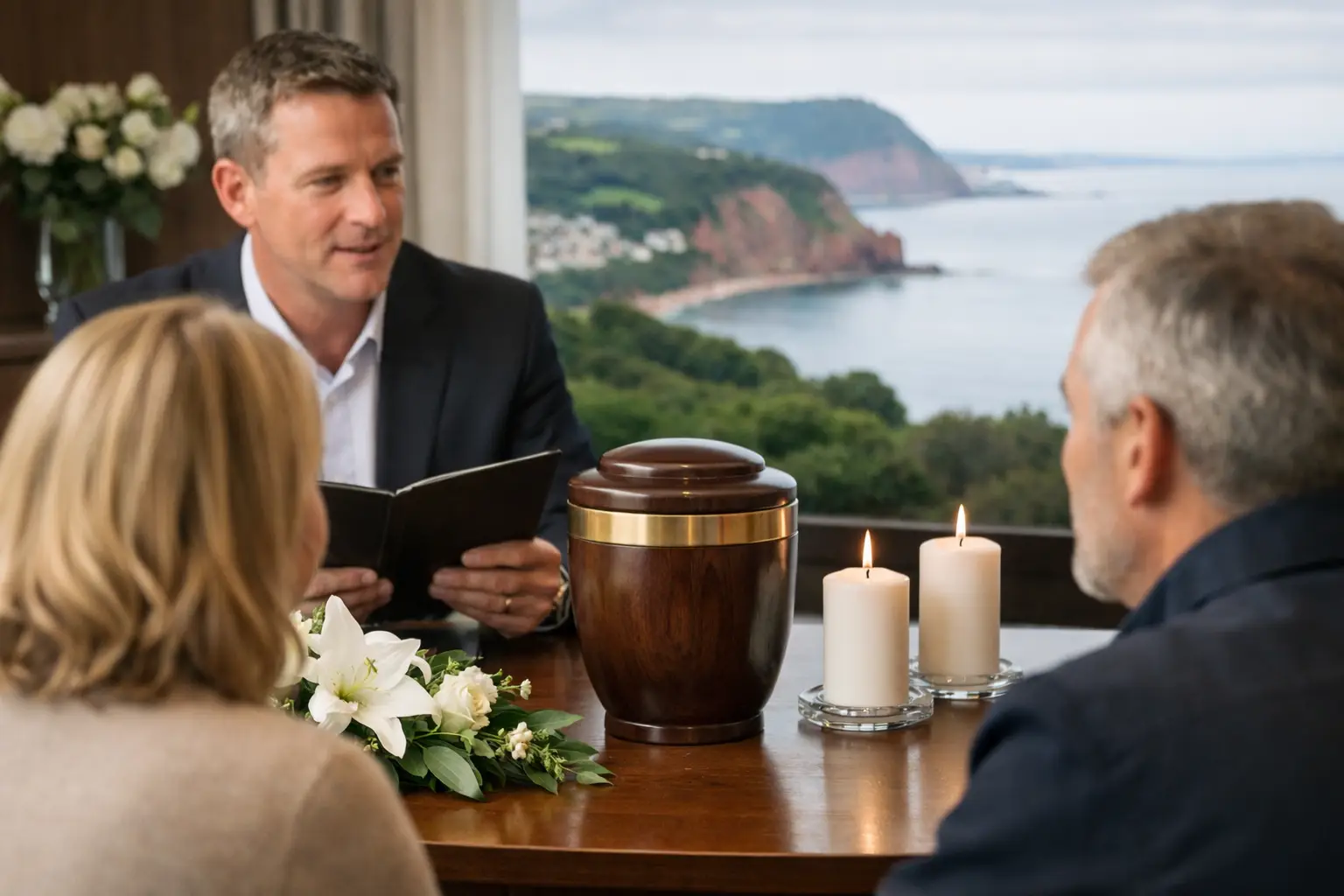

A search for funeral directors near me often happens at a moment when there is little time, a great deal to absorb and no clear idea of where to begin. Whether a death has just occurred or you are planning ahead, the right funeral director should make the practical decisions feel manageable while treating the person who has died, and everyone who loved them, with genuine care.
The nearest firm may be the right one, but proximity is only one part of the decision. Families deserve clear answers, a named person to speak to and the freedom to create a funeral that feels appropriate, whether that is a quiet direct cremation, a traditional church service, a natural burial or a more personal celebration of life.
What a local funeral director should offer
A good funeral director is there to take responsibility for the arrangements that can feel overwhelming. This may include bringing the person who has died into their care, completing the necessary paperwork, arranging the cremation or burial, liaising with a church, celebrant or cemetery, organising transport and helping with notices, flowers, music and orders of service.
Just as importantly, they should listen. There is no single correct kind of funeral. Some families want a formal service with hymns and a full cortege; others prefer a small gathering, a woodland setting or time together after an unattended cremation. A caring funeral director will explain each option without making you feel that a larger or more expensive funeral is expected.
Local knowledge can make a real difference. A director who knows the churches, crematoria, burial grounds and celebrants in the area can offer practical guidance and help arrangements run calmly on the day. For families in Budleigh Salterton, Exmouth and across East Devon, this familiarity can also provide reassurance when relatives are travelling from further away.
How to compare funeral directors near me
It is entirely acceptable to contact more than one funeral director. You do not need to make a decision during the first phone call, and asking questions is not impolite. In difficult circumstances, clarity is a form of kindness.
Start by considering how you are treated. Is someone available to speak with you directly? Do they explain what happens next in plain language? Are they patient when you need a moment, or when family members have different views? The arrangement process can involve several decisions, so a responsive, approachable team matters as much as the services listed on a website.
Ask for a written estimate that separates the funeral director’s charges from disbursements. Disbursements are third-party costs, such as crematorium or cemetery fees, a doctor’s fee where applicable, church costs, a celebrant or newspaper notice. This distinction helps you compare like with like and avoid surprises later.
It is also reasonable to ask who will be looking after the arrangements. Some larger providers are part of national groups and may use a central call centre or arrange aspects of the funeral through another branch. This is not necessarily a concern, but families who value direct contact may prefer an independent, family-run firm where they can speak to the same people throughout.
Questions worth asking before you decide
The answers do not need to be complicated. A funeral director should be comfortable discussing the following:
- What is included in the quoted price, and what may be charged separately?
- Can we visit the person who has died, and where will they be cared for?
- Who will be our main point of contact before and on the day of the funeral?
- What choices do we have if we need to keep costs modest?
- Can you help us arrange a service that reflects specific beliefs, traditions or personal wishes?
If an answer is unclear, ask again. You are making arrangements for someone important, not purchasing a standard package.
Choosing the right type of funeral
The most suitable funeral depends on the wishes of the person who has died, the needs of those close to them and the available budget. A thoughtful funeral does not have to follow a familiar pattern, and a simple funeral is not a lesser expression of love.
A direct cremation is usually the most straightforward option. The cremation takes place without a funeral service or mourners present, allowing the family to hold a memorial, scatter ashes or gather in their own time. It can be a sensible choice where someone did not want a formal ceremony, or where relatives live far apart.
A simple cremation service gives family and friends an opportunity to attend a shorter, uncomplicated ceremony. A church funeral may be right for someone with a strong faith or connection to their parish. Burial offers a permanent place to visit, while green funerals and natural burials can appeal to people who cared deeply about the countryside and wanted a lighter environmental impact.
There are also more individual ways to say goodbye. A celebration of life cruise or an ash scattering service, for example, can create space for stories, music and a setting that meant something to the person. The practical details will vary, so ask what is possible, what permissions are needed and how costs are calculated.
Price matters, and so does choice
Many people worry about discussing money after a death. It can feel uncomfortable, yet an open conversation early on protects families from unnecessary pressure. Be honest about the budget you need to work within. An experienced funeral director can explain where costs are fixed and where there is flexibility.
For example, the type of coffin, hearse or alternative transport, printed materials, flowers and the scale of the service can all affect the final cost. Some choices are practical rather than emotional. A family may choose a simple coffin and put more of the budget towards a gathering afterwards, or prefer no formal service but a meaningful ash scattering at a later date.
Transparent pricing should never mean a one-size-fits-all approach. It means knowing the cost before agreeing to arrangements and understanding why each item is included. If you are arranging a funeral on behalf of someone else, keep a written note of decisions and estimates so that other family members can feel informed too.
When a death has just happened
If someone dies at home, in a care home or in hospital, the immediate steps can differ. The staff involved will usually explain what happens next, and a funeral director can guide you through bringing your loved one into their care and beginning arrangements. There is rarely a need to decide every detail straight away.
If the death has been referred to the coroner, there may be a delay before the funeral can take place. This can be frustrating, especially when relatives are waiting for plans to be confirmed, but the funeral director should keep you updated and help you make provisional arrangements where possible.
You can choose any funeral director you wish. If a particular firm is suggested by a hospital, care home or another organisation, you are still free to contact others and decide what feels right for your family.
Personal care continues after the funeral
The day of the funeral is significant, but grief does not follow a timetable. Families may need help with funeral notices, ashes, memorial choices or simply the uncertainty of what to do next. A compassionate director will not disappear once the service is over.
At Otter Valley Funerals, personal care means being available for both the formal arrangements and the quieter questions that can arise afterwards. For some people, that is practical advice; for others, it is being listened to without being hurried.
When you are ready to make a call, look for the person who gives you confidence that your loved one will be treated with dignity and that your family will be supported with patience. That reassurance is often the most valuable thing a local funeral director can provide.