
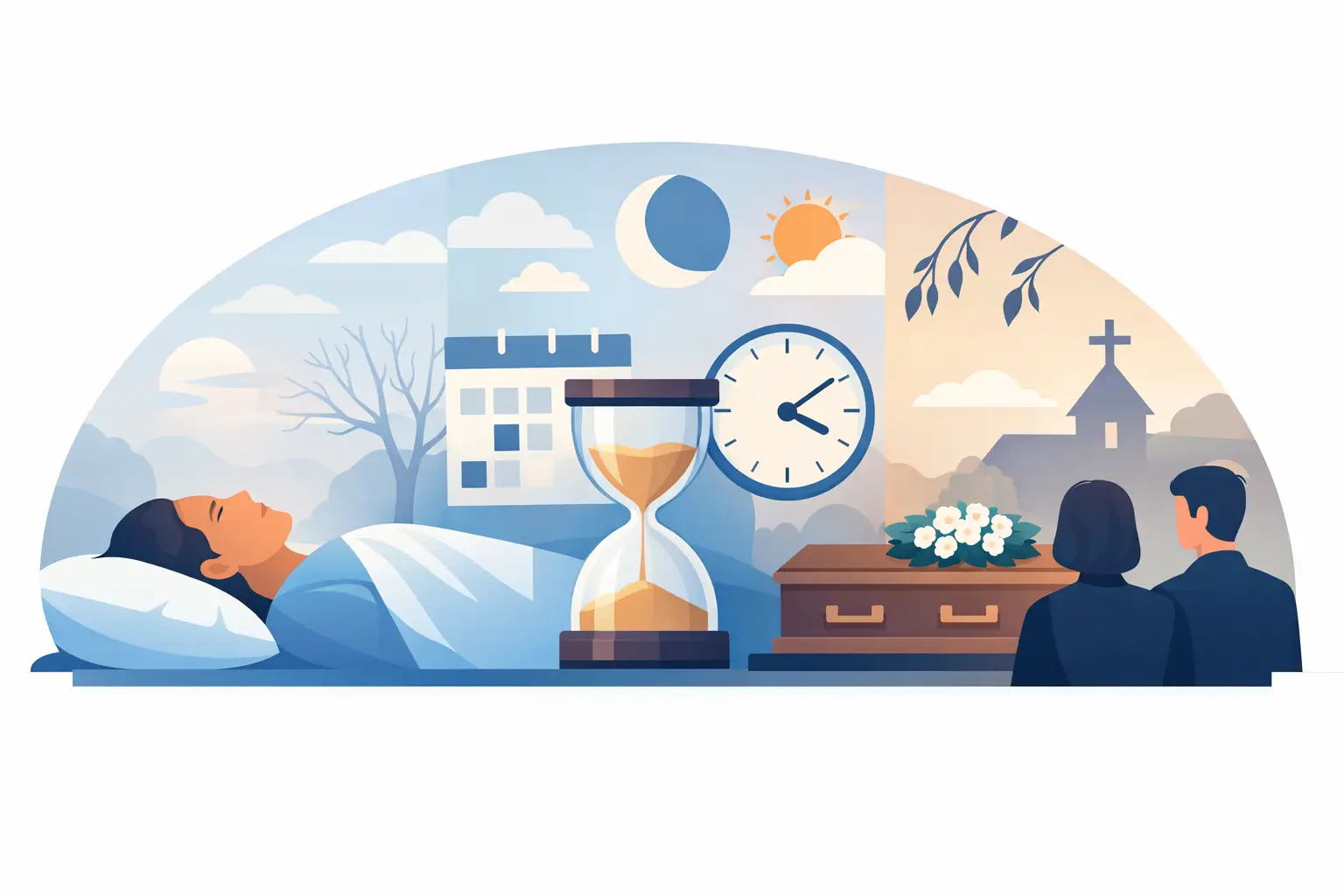


In the first few days after someone dies, time can feel oddly distorted. Some families want the funeral to take place quickly, while others need a little longer to gather relatives, make decisions, or simply catch their breath. If you are asking how long after death funeral arrangements usually take, the honest answer is that there is no single rule, but there are clear patterns and practical reasons behind them.
Across the UK, most funerals take place within one to three weeks of the death. That is often the most realistic timescale once the death has been registered, the necessary paperwork is in place, and a date is available with the crematorium, cemetery, minister or celebrant, and funeral director. In some cases it can be sooner. In others, it can take longer, especially if there are legal or medical delays.
How long after death funeral services usually take place
For many families, a funeral is usually held around 7 to 14 days after a death, but that is only a guide. In Devon and elsewhere, availability at local venues can affect timings, and so can the type of funeral you choose. A simple cremation may be arranged more quickly than a large church service with several moving parts. A burial may depend on cemetery space, grave preparation, and whether a new or existing family grave is being used.
There is also a difference between what is possible and what feels right. Some families prefer not to rush. They may want time to contact relatives abroad, sort clothing, choose music, write tributes, or plan something more personal. Others feel more comfortable holding the funeral sooner, particularly where faith, culture, or family circumstances point in that direction.
What needs to happen before the funeral can go ahead
Before a funeral date can be confirmed, a few formal steps usually need to be completed. In most situations, the death must be registered. Once that has happened, the paperwork needed for burial or cremation can move forward.
If the doctor can issue the medical certificate promptly and there are no unexpected concerns, this part can be relatively straightforward. The funeral can then be booked around practical availability. If everything aligns well, a service may take place within a week, though that is not always possible.
Where a cremation is planned, the crematorium’s diary often plays a major part in timing. Popular times of day can book up quickly. If the family is willing to consider a different day or time, there may be more flexibility. For a burial, coordination with the cemetery or churchyard is equally important.
Why some funerals take longer
When families worry that the funeral feels delayed, there is often a clear reason. Sometimes it is due to paperwork. Sometimes it is because the death has been referred to the coroner. In other cases, it is simply that family life is complicated and not everyone can be in the same place at short notice.
A coroner’s involvement is one of the most common reasons a funeral cannot be arranged immediately. If the death was sudden, unexplained, or happened in particular circumstances, the coroner may need to make further enquiries. That could mean waiting for a post-mortem or, in some cases, an inquest process. This does not always lead to a long delay, but it can.
There are also practical reasons that matter just as much. Relatives may be travelling from overseas. A favourite minister may be unavailable for several days. The family may want a weekend celebration of life after a private committal. None of these choices are wrong. They simply shape the timing.
How long after death funeral dates may be delayed by the coroner
If the coroner is involved, families often feel particularly anxious because so much is out of their hands. The delay can be a matter of a few extra days, or longer depending on what information is needed. In many cases, the coroner will release the body once the necessary examinations are complete, allowing funeral arrangements to continue before any later inquest hearing.
That can be a relief, but it still means the timetable is less predictable. During this period, what families usually need most is clear communication and steady guidance. Waiting is hard enough without feeling left in the dark.
Does religion or culture affect funeral timing?
Yes, very often. Some faiths traditionally hold funerals as soon as possible, sometimes within 24 hours where circumstances allow. Others place less emphasis on speed and more on the order of service, gathering of the community, or particular rites.
Even within the same religion, families may make different choices. A church funeral may depend on parish arrangements and the availability of clergy. A non-religious service may offer more choice in venue and timing, but it still depends on bookings and paperwork. The best approach is usually to balance tradition, practical reality, and the wishes of the person who has died.
What if you need more time?
Needing more time is more common than many people realise. Immediate decisions can feel overwhelming, especially in the first days of grief. If family members are divided about burial or cremation, if there are concerns about cost, or if you are trying to create a service that truly reflects the person, a few extra days can make a real difference.
This is where gentle, practical support matters. A good funeral director will explain what has to happen urgently and what can wait. Not every decision needs to be made on day one. Often, once families understand the sequence of events, the pressure eases.
Some people also choose to separate the farewell into stages. For example, there may be a direct cremation first, followed later by a memorial service or celebration of life when more people can attend. That option can be especially helpful where relatives live far away or where the family wants a less formal gathering at a later date.
Can a funeral happen before probate?
Yes. Probate is not usually needed before the funeral takes place. Funeral costs are generally treated as an early expense from the estate, but the service itself does not normally need to wait until probate has been granted.
That said, finances can still affect choices. Some families want to keep arrangements simple until they know exactly what funds are available. Others may already have a funeral plan in place or clear instructions left by the person who has died. Honest conversations about budget can feel uncomfortable, but they are an important part of planning a funeral with confidence.
How to think about timing without added pressure
When considering how long after death funeral arrangements should take, it can help to replace the word should with could. There is no prize for doing everything quickly, and there is no failure in needing a little more time. What matters most is that the funeral is handled properly, lawfully, and with care.
The right timing is often the point where the practical pieces come together and the family feels ready enough to say goodbye. That may be sooner than expected. It may be later than hoped. Both can still lead to a dignified and meaningful service.
For families in East Devon, local knowledge can make this process gentler. Knowing the usual timescales at nearby crematoria and cemeteries, understanding registration and coroner procedures, and having someone available to answer straightforward questions can remove a great deal of uncertainty. That is often where personal support matters most, particularly when emotions are high and decisions feel heavy.
Grief rarely works to a timetable, and funeral planning does not always do so either. If you are facing these decisions now, try not to judge the process by how fast it moves. A funeral held with thought, kindness, and the right support will still feel meaningful whether it takes place in a few days or after a longer wait.