


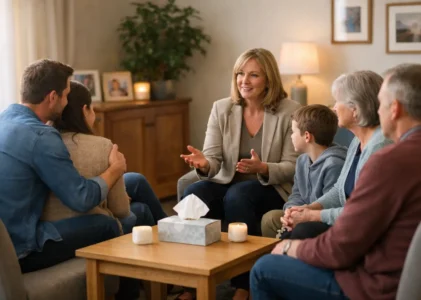
Grief rarely follows a timetable. One day, you may need help with a practical task or a difficult form; on another, you may simply need someone to listen without trying to put things right. The best bereavement support resources are the ones that meet you where you are, whether the death was recent or many years ago.
There is no single correct way to mourn, and there is no requirement to cope alone. Support can come from a trusted friend, a local group, a specialist charity, your GP, a faith community or a counsellor. The right choice depends on your relationship with the person who died, what you are finding hardest, and the kind of support that feels manageable at the moment.
What makes bereavement support genuinely helpful?
Good support does not try to hurry grief along. It gives you room to speak honestly, ask practical questions and experience difficult feelings without judgement. It may also help you understand that changes in sleep, concentration, appetite and confidence can be common after someone dies.
For some people, one-to-one support feels safer, particularly when the death was sudden, traumatic or surrounded by complicated family circumstances. Others find comfort in meeting people who understand because they have experienced a similar loss. A group can reduce the sense of being alone, but it is not for everyone, and it is fine to try one and decide it is not the right fit.
Practical accessibility matters too. Consider whether you would prefer support by telephone, online or in person; whether travelling is realistic; and whether the service has experience of the particular circumstances you face. A resource can be well regarded and still not be right for you. Choosing another option is not a failure.
Best bereavement support resources to consider
Your GP and local health services
A GP is a sensible first point of contact if grief is affecting your day-to-day life, your physical health or your ability to cope. They can listen, discuss treatment where appropriate and refer you for counselling or mental health support. This may be especially important if you are experiencing persistent low mood, panic, severe anxiety, trauma symptoms, or are relying on alcohol or medication to get through the day.
If you have caring responsibilities, your GP can also help you consider the impact on your own wellbeing. Many bereaved people focus so fully on everyone else that they do not notice how depleted they have become.
Specialist bereavement charities
National charities can offer information, telephone support, online communities and local groups. Cruse Bereavement Support is widely known for supporting adults after a death, while organisations such as Child Bereavement UK and Winston’s Wish provide specialist help for children, young people and the adults caring for them.
There are also charities for particular types of loss. Some support people after suicide, homicide, pregnancy or baby loss, military bereavement, or the death of a person with a long-term illness. Specialist support can be valuable when you feel that the circumstances of the death are difficult for others to understand.
When contacting a charity, you do not need to have the right words prepared. It is enough to say who has died, when it happened and what you are struggling with today. The person answering will understand that it may be hard to begin.
Local bereavement groups and community support
A local group can offer something that a telephone service cannot: familiar faces, a regular place to go and the reassurance of speaking with people from your own community. In Exmouth, Budleigh Salterton and across East Devon, groups may be run through churches, community centres, hospices, charities or local wellbeing services. Some are open to anyone, regardless of faith; others have a religious foundation.
Ask how the group works before attending. Some are structured around a course, while others are informal drop-ins. Some invite people to share, whereas others are more focused on companionship over tea. Knowing what to expect can make the first visit less daunting.
Local support can be particularly helpful after the funeral, when visitors have gone home and everyday life starts to feel strangely quiet. It may also offer gentle routes back into the community, such as walking groups, craft sessions or volunteer opportunities. These are not a replacement for counselling where that is needed, but they can bring welcome routine and connection.
Hospice bereavement services
If your loved one received hospice care, the hospice may offer support to families before and after a death. This can include counselling, groups, remembrance events and advice for children. Some hospice services accept referrals from people whose loved one was not cared for there, although this varies.
Hospice teams understand anticipatory grief too: the sorrow and fear that can arise while someone is seriously ill. Support does not always have to wait until after a death, and seeking it early can be a kindness to yourself and your family.
Counsellors and therapists
Counselling offers private time to explore your grief with a trained professional. It can be useful where loss has brought up past trauma, guilt, anger, relationship difficulties or fears about the future. A counsellor will not tell you how to grieve. Their role is to help you make sense of your own experience and find ways to live alongside it.
It is worth checking a counsellor’s qualifications, professional registration and experience of bereavement. Cost, waiting times and whether sessions are in person or remote may influence your choice. If the first person you meet does not feel like a good match, it is reasonable to look elsewhere. Trust and comfort are central to useful therapeutic support.
Supporting children and teenagers after a death
Children often grieve in bursts. They may ask a direct question, then go outside to play, then return to the subject days later. This is not a sign that they do not care. It is one way young people take in something very difficult at a pace they can bear.
Clear, age-appropriate language is usually kinder than vague phrases. Explaining that someone has died, rather than saying they have “gone to sleep”, can prevent frightening misunderstandings. Let children know they can ask questions more than once, and keep routines where possible.
A school or college can be an important source of support. Tell a trusted teacher or pastoral lead what has happened, so they can respond sensitively to changes in behaviour, concentration or attendance. If a child is withdrawing for a long time, feels responsible for the death, or is having intense distress that is not easing, seek specialist advice.
When grief needs urgent help
Bereavement can feel unbearable, but you deserve immediate support if you are worried that you may harm yourself, cannot keep yourself safe, or are in danger. Contact emergency services, go to A&E, call NHS 111 for urgent mental health guidance, or speak to the Samaritans. If possible, tell someone you trust and avoid being alone with those thoughts.
Urgent help is also appropriate where grief is accompanied by violence at home, severe substance use, or an inability to care for yourself or dependent children. Asking for help in a crisis is a practical, brave step.
How to take the first small step
Try not to set yourself the task of finding the perfect resource. Choose one small action: mention your loss to your GP, call a charity, ask a friend to attend a group with you, or write down what you want help with. You can change direction later.
After a funeral, families are sometimes given information about local aftercare alongside practical guidance. At Otter Valley Funerals, we believe care should not end when the service is over, because the weeks and months afterwards can bring their own challenges.
Grief changes, even when the love and loss remain. A conversation, a familiar room, or a person willing to sit quietly beside you may not solve everything, but it can make the next day feel possible. Start with the support you can manage today.
Pingback: Funeral Aftercare Support Services That Help - Otter Valley Funerals Funeral Director for Exmouth and Budleigh