
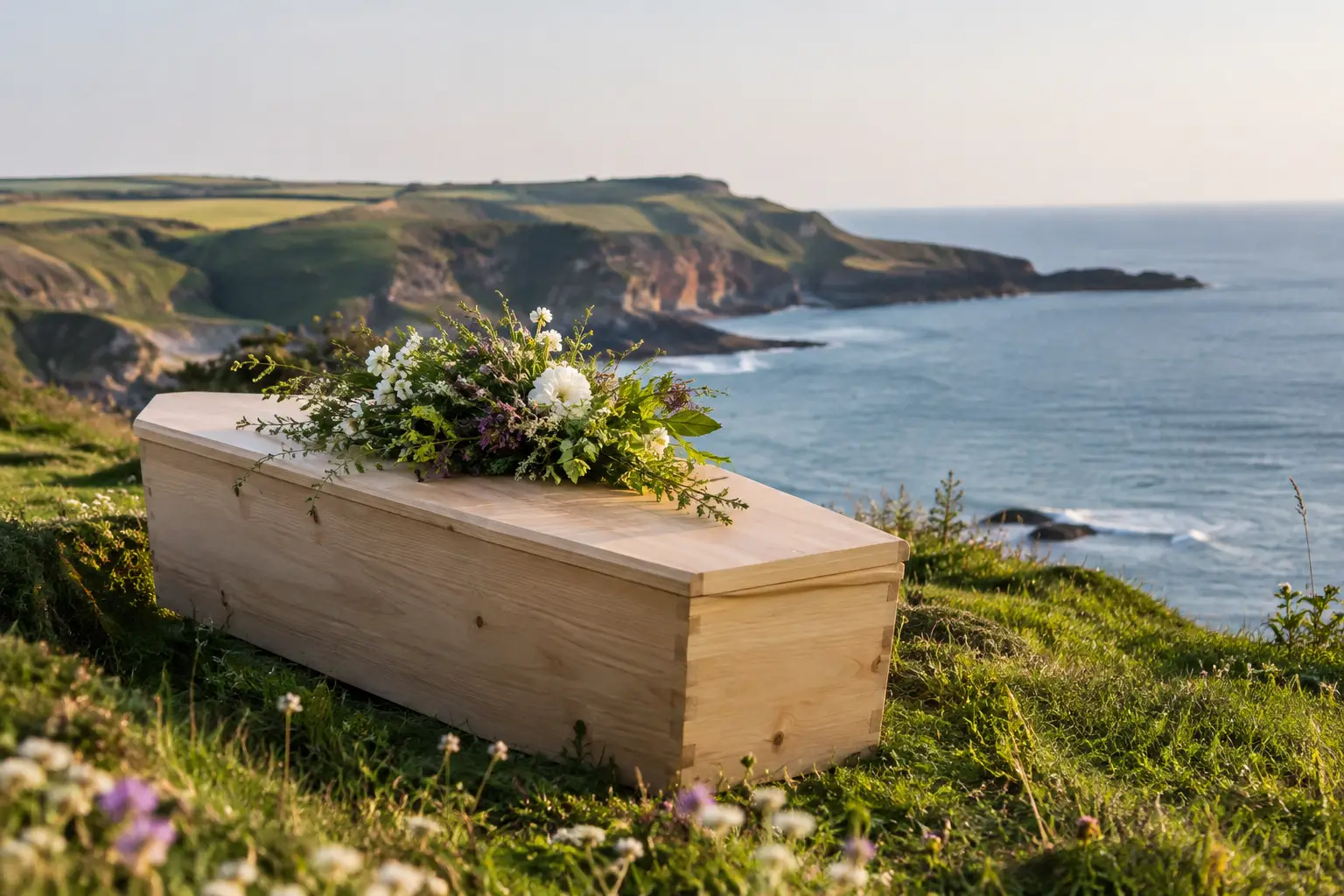

Choosing a coffin can feel like one decision too many when a family is grieving. A biodegradable coffin review UK families can rely on should do more than describe a product as ‘eco-friendly’. It should explain what it is made from, whether it is right for cremation or burial, how it will look on the day, and what practical arrangements may affect the choice.
A biodegradable coffin can be a thoughtful part of a green funeral, but it is not automatically the right answer for every person or every service. The best choice is the one that reflects your loved one’s wishes, works with the cemetery or natural burial ground, and gives the family confidence that everything will be handled with dignity.
What makes a coffin biodegradable?
A biodegradable coffin is designed to break down naturally over time after burial. Rather than being made from chipboard, metal fittings and synthetic finishes, it is usually formed from natural materials such as wicker, willow, bamboo, banana leaf, wool, cardboard, seagrass or sustainably sourced wood.
The word biodegradable describes the whole intention of the coffin, but materials and construction still vary. A woven willow coffin may have a warm, traditional appearance and feel reassuringly substantial. A cardboard coffin can be simple, modern and highly personal, particularly if family members wish to write messages or add drawings. Wool coffins have a softer appearance and are often chosen for their gentler feel and natural lining.
For a genuinely lower-impact choice, ask about the handles, liners, plaques and any decorative elements as well as the main structure. Some burial grounds and crematoria have their own requirements, particularly around plastic components, metal fixings, varnishes or non-natural clothing and keepsakes placed inside.
Biodegradable coffin review UK: the points that matter
There is no single ‘best’ biodegradable coffin. A fair review comes down to suitability, quality, appearance and the practical details of the funeral.
Appearance and personal meaning
Natural coffins do not have to look plain or impersonal. Willow and wicker can suit a countryside funeral, a church service or a natural burial equally well. Their handwoven texture brings warmth without feeling informal. Wool coffins are available in a range of colours and designs, while cardboard options can offer scope for photographs, painted details or handwritten tributes.
That said, families sometimes worry that a biodegradable coffin will look less formal than a polished wooden one. This depends on the style of service and the individual coffin. A carefully arranged flower tribute, a smart hearse or a well-chosen funeral vehicle, and the presence of family and friends all help create a respectful occasion. The coffin should feel right to the person being remembered, not meet somebody else’s idea of what a funeral ought to look like.
Strength, handling and reassurance
A common concern is whether a natural coffin is strong enough. Reputable biodegradable coffins are made and tested for funeral use, with appropriate load-bearing capacity and secure handles. Woven coffins in particular can feel very solid, although their appearance is softer than a conventional veneered coffin.
It is sensible to discuss the person’s height and build with the funeral director. This is not an awkward detail or an extra burden for a family to manage. It simply ensures that the correct coffin size and design are selected, and that bearers can carry it safely and comfortably.
Burial or cremation suitability
Most biodegradable coffins can be used for burial and cremation, but confirmation should always be obtained for the specific model and the venue involved. A natural burial ground may require a fully biodegradable coffin, without plastic handles, synthetic fabrics or treated wood. Some churchyards and cemeteries also have local rules, so it is wise not to assume that every natural-looking option will be accepted.
For cremation, the key considerations are whether the coffin is approved by the crematorium and whether it contains materials that could create unwanted residue or emissions. Funeral directors routinely check this before arrangements are finalised. If you are choosing a direct cremation, a biodegradable coffin may still be possible, though it may be less visible to the family than it would be at a service or private farewell.
Environmental benefit in context
A biodegradable coffin can reduce the use of manufactured materials and allow the coffin to return naturally to the earth. For families arranging a burial, this is often its greatest appeal. It can sit comfortably with other choices such as a woodland or meadow burial, seasonal flowers, a family-led ceremony or avoiding single-use items.
However, it is helpful to keep the wider picture in mind. Environmental impact also depends on travel, burial ground management, floral arrangements, embalming choices and whether a cremation or burial is taking place. There is no need for a family to make every element ‘perfect’. One considered decision can be meaningful in its own right.
Cost: what should families expect?
Biodegradable coffins are available across a range of prices. Cardboard options are often among the more affordable choices, while handwoven willow, wool and specialist designs may cost more because of the materials and craftsmanship involved. A conventional coffin is not always cheaper, and a natural coffin is not always more expensive.
The clearest approach is to ask for the coffin price to be shown separately within the funeral estimate. This makes it easier to compare like with like and decide where the family wishes to spend. It also avoids the assumption that an environmentally considerate funeral must be beyond reach.
When comparing quotes, check whether the stated price includes the coffin’s interior, nameplate, delivery, preparation and any additional handling needed at a particular burial ground. Transparent answers matter more than a headline price.
Questions worth asking before you decide
The following questions can prevent uncertainty later and help you choose with confidence:
- Is this coffin accepted by the chosen crematorium, cemetery or natural burial ground?
- What are the coffin, handles, liner and nameplate made from?
- Is the size and weight capacity appropriate for our loved one?
- Can family members visit, decorate or place personal messages on the coffin?
- Is the quoted cost fully inclusive of the coffin-related items and delivery?
There may also be personal questions that do not fit neatly on a checklist. Would your loved one have appreciated its natural appearance? Does the family want a traditional procession, a simple committal or a more informal celebration of life? These details often guide the decision better than comparisons alone.
When a biodegradable coffin may not be the first choice
A biodegradable coffin is a good fit for many people, but not all. Some families prefer the familiar look of a solid wood or veneered coffin, especially for a formal religious service. Others have a burial plot or crematorium arrangement that limits the available options. In some cases, the person who has died left clear wishes for a particular coffin or funeral style, and those wishes should take priority.
There is also no reason to feel pressured into a green funeral because it seems expected. A funeral is an act of care, not a test of environmental credentials. The most respectful arrangements are those made thoughtfully, within the family’s means and in keeping with the person who has died.
For families in Exmouth, Budleigh Salterton and across East Devon, speaking to an independent funeral director can make these choices less daunting. Otter Valley Funerals can explain the available materials, check the requirements of your chosen venue and ensure that a natural coffin is handled with the same care as any other funeral choice.
The right coffin does not need to make a statement. Sometimes its quiet simplicity, the hands that carry it, and the love expressed around it are more than enough.
Pingback: Natural Burials for a Gentle Devon Farewell - Otter Valley Funerals Funeral Director for Exmouth and Budleigh