
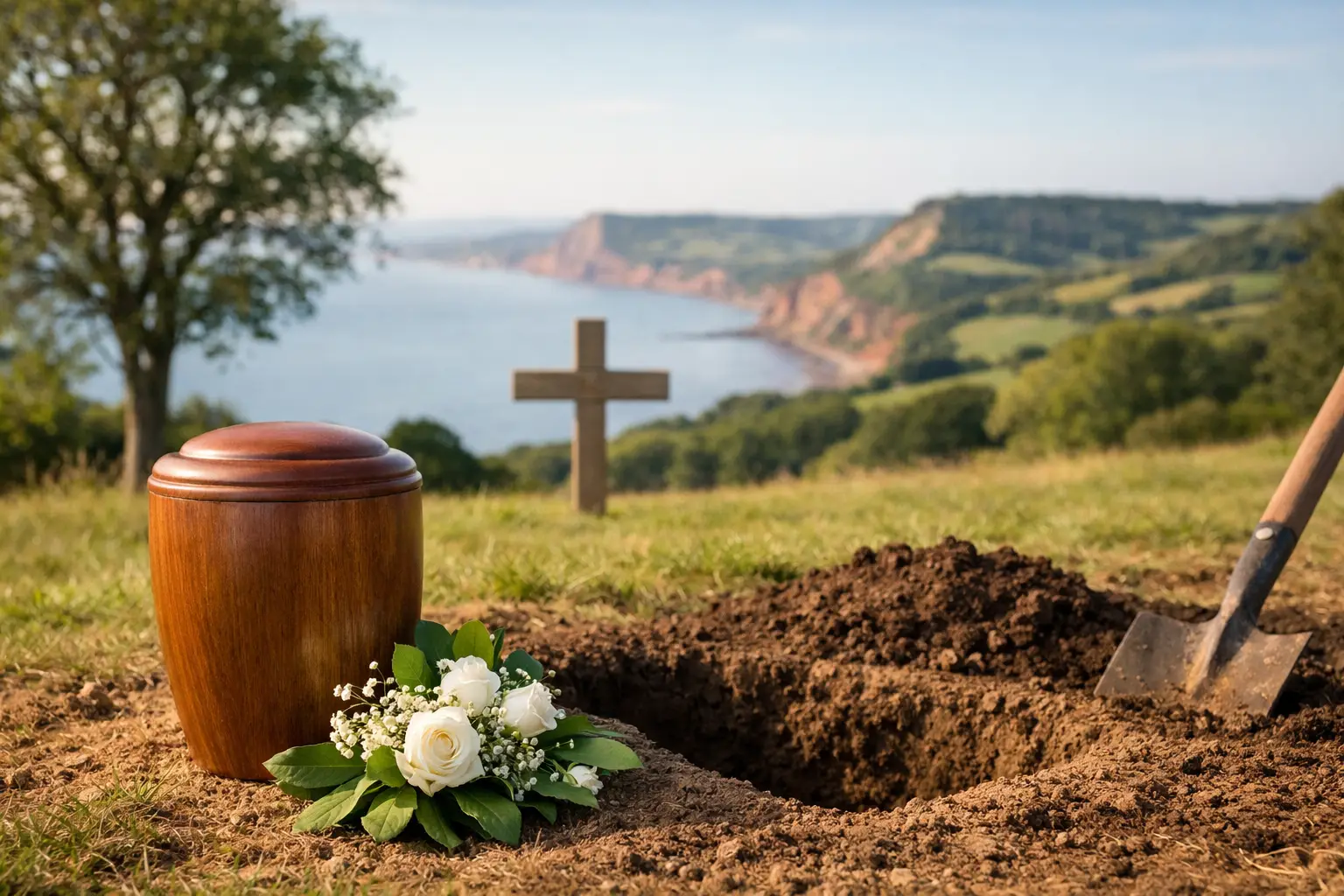

A garden can hold a lifetime of memories: a favourite rose, a bench in the afternoon sun, the view from a kitchen window. It is understandable that families ask, can ashes be buried privately there, rather than choosing a cemetery or formal memorial garden. In many cases, the answer is yes – but the right approach depends on who owns the land, where it is, and what will happen to it in the years ahead.
For many people, a private burial of ashes feels quiet, personal and reassuring. There is no need for a large gathering or a fixed timetable. A few close family members may say a prayer, share stories, play a meaningful piece of music, or simply take a moment together. Yet a little planning beforehand can prevent difficulties later and help make the decision one everyone feels comfortable with.
Can ashes be buried privately in England and Wales?
Generally, cremated remains may be buried on private land in England and Wales, provided the landowner has given permission. If the land belongs to you, this will usually mean you can choose a suitable place in your own garden or on other land you own.
There is not normally a requirement to register the burial of ashes in the way a burial of a body must be registered. However, this does not mean every location is appropriate or that permission can be assumed. A tenant needs their landlord’s written consent. A family member cannot make the decision for a garden that belongs to someone else simply because the person who died loved the home.
If the land is jointly owned, it is wise to agree the plan with all owners. This matters especially where relatives may hold different views, or where a property may be sold in future. A calm conversation now is often kinder than leaving uncertainty for later.
Rules can differ in Scotland and Northern Ireland, and individual circumstances vary. Where there is any uncertainty about ownership, rights of access or restrictions affecting land, take professional legal advice before proceeding.
Choosing a garden burial place with care
There is no prescribed depth for an ashes burial in a private garden, but the chosen spot should be protected from disturbance. Avoid places likely to be dug over for planting, close to drains or watercourses, or where future building work is likely. A quiet border, beneath a tree that is unlikely to be removed, or beside a well-loved shrub may feel more appropriate.
Some families bury ashes in the crematorium container. Others choose a biodegradable urn, a casket, or a simple cloth wrapping where this suits their beliefs. A biodegradable option can be particularly fitting in a natural setting, but it is worth remembering that different materials break down at different rates. There is no single right choice – the significance of the act matters more than the container.
Think, too, about whether the place will remain accessible. A cherished garden can change hands, be redesigned, or become difficult to visit if a surviving partner moves into care. This is not a reason to rule out a home burial, but it is a reason to consider the future honestly. Some families keep a small portion of ashes in a memorial urn, or arrange a plaque elsewhere, so remembrance is not tied to one address.
It can be helpful to make a private record of the location and date. Keep it with the cremation paperwork or tell a trusted relative. A discreet sketch, photograph, or note can spare future generations from uncertainty. If you mark the place with a stone, plant or plaque, make sure it feels right for the household and is not likely to cause disagreement later.
Private land beyond your own garden
Ashes can also be buried on farmland, woodland, an estate or another piece of privately owned ground, but only with clear permission from the owner. Verbal agreement may be enough in some close family situations, but written permission is sensible where land is managed by someone else or ownership is complex.
There may be practical restrictions. Land subject to agricultural use, environmental protections, leases, mortgages or planned development may not be suitable. It is also best to avoid sites near streams, ponds, coastal edges, wells and drainage systems. Cremated remains are not harmful in ordinary circumstances, but respect for the land, water and those who use it should guide the decision.
A meaningful view does not automatically make somewhere private. Beaches, parks, clifftops, commons and woodlands are often owned or managed by councils, charities, estates or other bodies. Permission must be sought before ashes are buried or scattered there. The same principle applies to a favourite sports ground, golf course, school grounds or churchyard.
Family graves, churchyards and cemeteries
A private ceremony can still take place in a cemetery or churchyard, but permission is required from the authority or church responsible for the grounds. If ashes are to be placed in an existing family grave, the person who holds the exclusive right of burial will usually need to authorise this. The cemetery team can also confirm whether there is room, what paperwork is needed and whether a memorial needs approval.
Churchyards have their own rules, often overseen by the parish and the Diocese. Some permit ashes to be interred in an existing grave or a designated area, while others have particular requirements about containers, records and memorials. These arrangements may feel more formal than a garden burial, but they offer the reassurance of a permanent recorded resting place and continued access for the family.
Natural burial grounds can offer another gentle middle ground. They provide a peaceful setting while ensuring the burial is properly recorded and the ground is cared for in the long term. For families drawn to a simpler, nature-led farewell but concerned about the future of a private garden, this can be a comforting option.
Making the moment personal
The burial itself can be as simple or as structured as you wish. Some families prefer to attend alone after the cremation. Others invite a small circle of relatives and friends for a separate gathering weeks or months later, when the first pressure of arranging the funeral has passed.
A short reading, a few words from a grandchild, flowers from the garden, or a shared toast can give the moment shape without making it feel formal. If faith is important, a minister, celebrant or other spiritual adviser may be able to lead a brief service. Equally, silence can say enough.
There is no deadline for burying ashes. Taking time can be helpful, particularly when close relatives need to be involved or when emotions are raw. Keeping ashes at home temporarily is a choice many families make while they decide what feels most fitting.
What if relatives do not agree?
Disagreement about ashes is more common than people expect, especially where wishes were not written down. Try not to make a decision in the first rush of grief if key family members have not been heard. It may be possible to divide the ashes, arrange more than one memorial moment, or choose a place that feels meaningful to several people.
The person named on the cremation paperwork is usually entrusted with collecting the ashes, but sensitivity and communication matter greatly. Where conflict is serious, pause and seek appropriate legal guidance before any irreversible decision is made.
Do we need a funeral director to arrange it?
No. Families may collect ashes and arrange a private burial themselves. A funeral director can, however, provide practical guidance on suitable containers, paperwork, cemetery arrangements, celebrants and local options. At Otter Valley Funerals, we understand that the smallest farewell can carry enormous meaning, and we are always happy to talk through the practicalities with families who want to make an informed choice.
A private burial of ashes need not be elaborate to be dignified. Choose a place with permission, consider the people who may wish to visit in years to come, and allow the occasion to reflect the person you are remembering. Often, that quiet act of care is more than enough.