
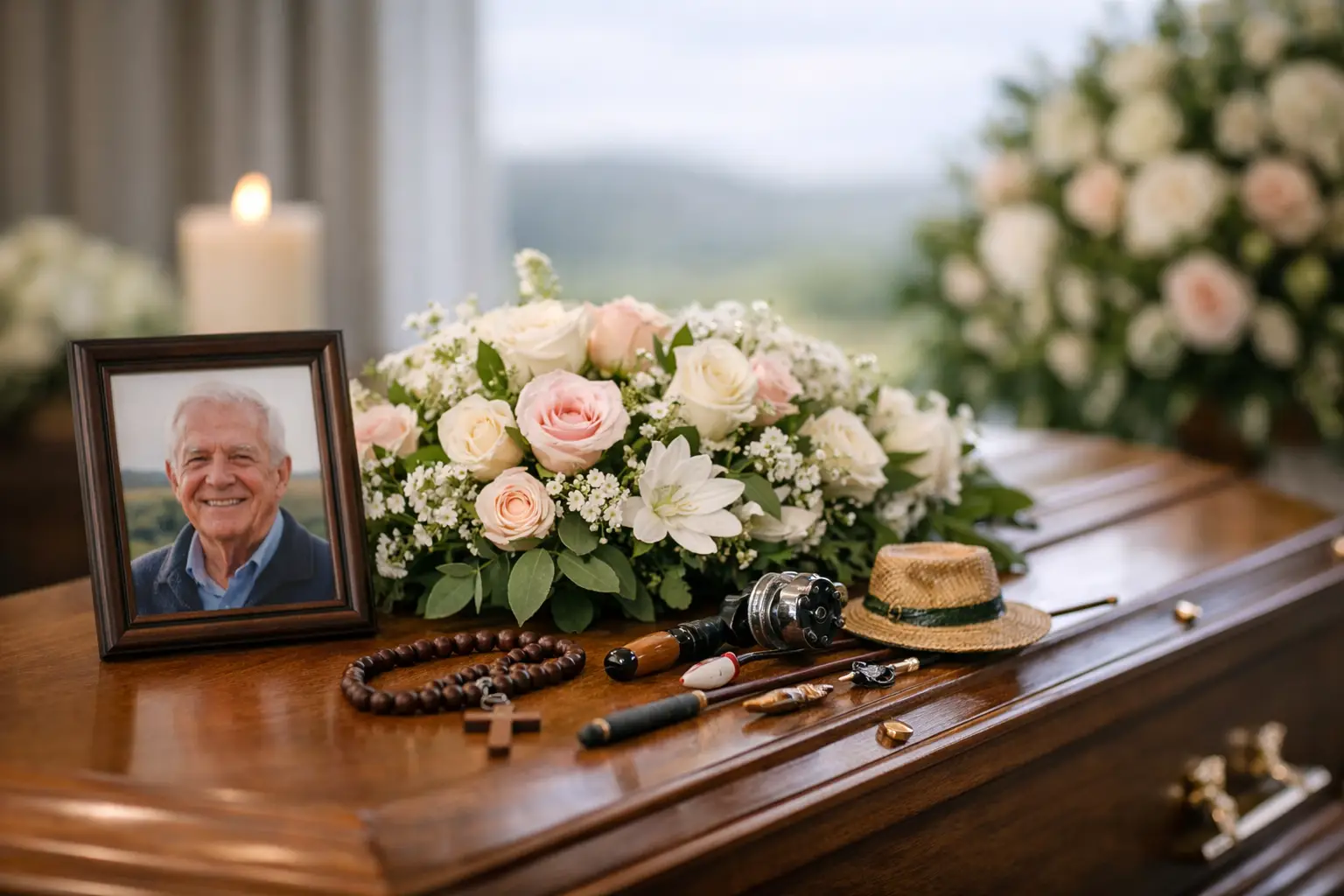

The words spoken at a funeral do not need to capture an entire lifetime. Often, the most moving funeral tribute examples simply bring one person clearly to mind: their welcome at the door, their sense of humour, the way they cared, or the small habit everyone will remember. A tribute is not a test of how well you write. It is an opportunity to speak honestly, in a way that feels true to the person who has died.
Whether you are preparing a few lines for a funeral service, writing a reading for a celebration of life, or helping a child put their memories into words, it can help to begin with the person rather than the occasion.
What makes a funeral tribute meaningful?
A meaningful tribute gives people permission to remember. It may make them smile, bring tears, or do both in the same sentence. The best words are usually specific. Rather than saying someone was kind, you might recall how they always made an extra place at the table, remembered a neighbour’s birthday, or checked in after a difficult day.
You do not need to overlook the more complicated parts of a person’s life. Most tributes are not biographies, and there is no need to force a perfect picture. Choose the qualities and memories that feel most loving and appropriate to share in the room. If family relationships were difficult, a short, respectful tribute can be every bit as fitting as a longer one.
It also helps to consider who will be listening. A church service may call for a more traditional tone, while a woodland burial or celebration of life may leave more room for informal stories, favourite music and gentle humour. There is no single right way to honour someone.
A simple structure when words feel difficult
When grief makes it hard to know where to start, three parts are enough. Begin by saying who the person was to you and to others. Share two or three details, stories or qualities that show their character. Then close with what they leave behind, whether that is love, lessons, laughter, friendship or a particular memory.
You might write a first draft as though you were telling a friend about them over a cup of tea. The language does not need to be formal. Once you have the heart of it on paper, you can shorten it and read it aloud. Hearing the words helps you spot sentences that do not sound like you.
A tribute of two or three minutes is often ideal. It is long enough to feel personal, but short enough to read comfortably when emotions are high. If you are worried that you may be unable to speak on the day, ask a family member, friend, celebrant or funeral director to read it for you. Your words still matter, even when someone else gives them voice.
Funeral tribute examples to adapt
These examples are starting points, not scripts to copy exactly. Adding a name, a familiar phrase or one shared memory will make any of them more personal.
A short tribute for a parent
“Dad was a steady presence in our lives. He never made a fuss, but he was always there – with practical advice, a cup of tea, and a willingness to help before we had even asked. He taught us that showing up for people matters. We will miss his dry humour, his stories, and the quiet comfort of knowing he was at the end of the phone. We are grateful for all he gave us, and we will carry his love with us.”
For a mother, grandmother or another parent figure, you could focus on the atmosphere they created: the meals they made, the family traditions they kept, their warmth, resilience or straight-talking advice. It is the detail that makes it recognisable.
A tribute for a husband, wife or partner
“[Name] was my home. Through the ordinary days and the difficult ones, they brought love, laughter and a sense that we were on the same side. We built a life full of small routines that I will treasure: morning cups of tea, walks, holidays, and conversations that could make even the longest journey pass quickly. I cannot imagine life without them, but I am thankful beyond words that I had the chance to share it with them.”
A partner’s tribute can be deeply personal without including every private detail. Choose the moments that best show the life you made together and the qualities you will miss most.
A tribute for a friend
“Some people make a room feel easier simply by walking into it. [Name] was one of those people. They had a gift for making everyone feel included, and they could find humour when the rest of us had run out of patience. Their friendship was loyal, generous and full of fun. We will miss them terribly, but we will keep telling the stories – and we know they would expect us to laugh at the good ones.”
This kind of tribute works well when a group of friends is speaking together. Each person can contribute one brief memory, creating a picture made from many voices.
A tribute for someone known for service and care
“[Name] gave their time freely, whether it was to family, friends, colleagues or people who simply needed a hand. They believed in doing things properly and in looking after others without expecting praise. Their care was practical, dependable and often quiet. The difference they made may not always have been visible to them, but it was felt by many people, and it will not be forgotten.”
This may be particularly appropriate for someone who worked in the Armed Forces, emergency services, caring professions or in a valued community role. If relevant, include a short memory from their work or volunteering, but keep the focus on the person beyond the uniform or job title.
A faith-neutral closing
“Today we say goodbye with sadness, but also with gratitude. [Name] shaped our lives in ways large and small. Their love remains in the stories we tell, the values they passed on, and the people gathered here. We will remember them with affection and carry them with us.”
For a religious service, a minister or celebrant can help you find a suitable prayer, blessing or reading. A personal tribute and a traditional service can sit very naturally alongside one another.
Choosing stories that feel right
A good story need not be grand. In fact, a small moment often says more than a list of achievements. Perhaps they always took the scenic route, could never refuse a rescue animal, made legendary roast potatoes, or had a saying the family still repeats. These details invite people to nod in recognition and remember their own moments with them.
If several people are contributing, it is wise to agree the broad shape beforehand. One person might speak about childhood, another about family life, and another about work, friendship or hobbies. This avoids repetition while allowing each speaker to bring their own voice.
Be mindful of stories that could embarrass close relatives or cause discomfort. Gentle humour is welcome when it reflects the person’s character, but it should never leave people feeling exposed. If you are unsure, ask someone who knew them well to read the draft first.
Practical ways to make speaking easier
Print the tribute in a clear, large font and leave spaces between paragraphs. Take a slow breath before you begin. There is no need to apologise if your voice shakes or you need a moment – everyone present will understand.
It can be reassuring to have a glass of water nearby and a second copy with another person. If reading aloud feels too much, a written tribute can be placed in an order of service, displayed with photographs, or shared at the wake. Some families choose a favourite song in place of spoken words; others combine music with a short introduction explaining why it mattered.
At Otter Valley Funerals, we see how much comfort a few sincere words can bring. There is no expectation to perform or to find perfect phrasing. Start with one true memory, write as you would speak, and let love do the rest.