
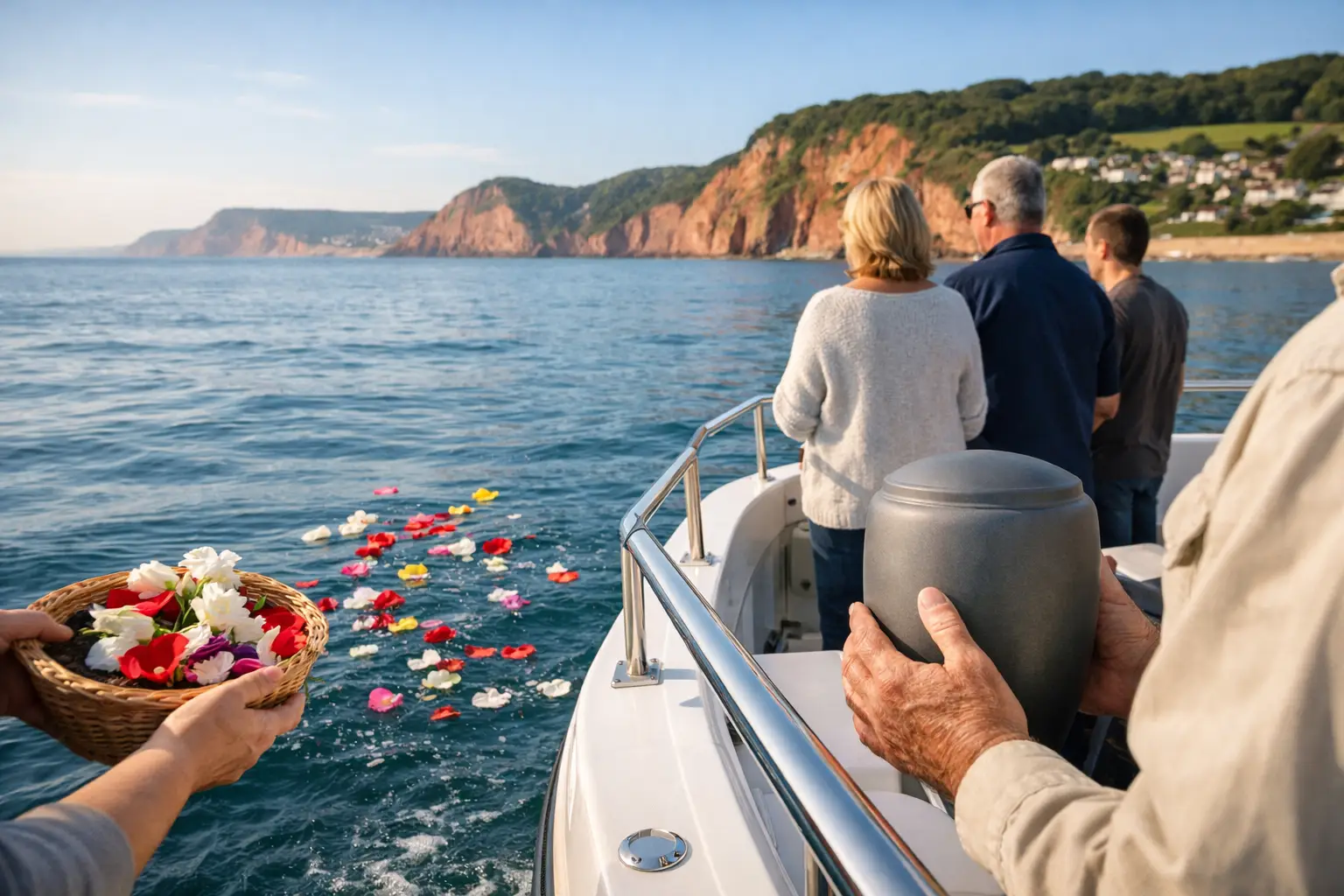

A boat moving gently beyond the shoreline can create a rare kind of quiet. For some families, that sense of open space feels more fitting than a formal chapel service. These memorial cruise ceremony examples are designed to help you picture what a farewell on the water might feel like, while leaving room for the person at its centre.
A cruise can be the main ceremony following a cremation, or a smaller gathering held days or weeks later. There is no single correct order of events. The most meaningful choice is usually the one that reflects how your loved one lived, the people they were close to, and what your family can comfortably manage.
What makes a memorial cruise feel personal?
A memorial cruise does not need a packed programme. In fact, the sea, river or estuary already provides a natural pause from everyday life. A simple structure gives everyone reassurance without making the occasion feel staged: a welcome, a few words of remembrance, a reading or piece of music, the scattering of ashes if this is planned, and a final moment together.
Before choosing readings, songs or rituals, think about the character of the person you are remembering. Were they happiest sailing, fishing, walking the coast, swimming, or simply watching the tide? Did they enjoy a good gathering, prefer privacy, have strong faith, or dislike fuss? Those answers will shape the ceremony far better than a standard script.
It is also worth considering who will attend. A short, calm ceremony may suit young children, older relatives, or anyone who finds the sea unsettling. A larger celebration with food and stories can be lovely, but it may be better held ashore after the cruise if space and weather are uncertain.
Memorial cruise ceremony examples to adapt
The following examples are not rules to follow word for word. They are starting points that can be shortened, combined or made more informal. A family member, a celebrant, a funeral director or the boat’s skipper may lead the practical parts, depending on your wishes.
A quiet family ash-scattering ceremony
This is often the right choice for a small group who want privacy and very few formal words. Once the boat has reached the agreed location and everyone is ready, the person leading can say:
> “We are here to remember [name], and to say goodbye in a place of peace and beauty. We carry forward the love, laughter and lessons they gave us.”
One or two people can then share a brief memory. This might be a story about a favourite holiday, a much-loved saying, or a quality that made them unmistakably themselves. Keep each contribution short enough that people can listen without feeling pressure to speak next.
A favourite piece of music may be played softly, followed by a moment of silence. The ashes can then be scattered by one person or shared between close family members, if the conditions allow and this has been agreed with the skipper. Some families lay a small handful of loose flower petals on the water afterwards. Use only natural, biodegradable materials, and do not throw containers, plastic wrapping, ribbons or ornaments into the sea.
The ceremony can close with a simple phrase: “May the sea hold you gently, and may we carry you with us always.” There is no need to fill the silence that follows.
A celebration led by family stories
For someone sociable or known for bringing people together, a warmer, more conversational ceremony can feel right. Rather than one formal eulogy, invite three or four people to prepare a memory of no more than two minutes. You might ask each person to choose a moment that shows a different side of your loved one: their humour, kindness, determination, work, hobbies or devotion to family.
The leader could open with: “Today is not only about loss. It is about the life [name] made, the people they brought together, and the stories that will continue to be told.”
Between memories, play short sections of songs that mattered to them. It is sensible to prepare music in advance and check how it can be played on board. Wind and engine noise can make a mobile phone speaker difficult to hear, so a spoken introduction to each song may matter more than playing the whole track.
After the ashes are scattered, guests can raise a glass of the person’s favourite drink, if appropriate and permitted on the vessel. A final toast might be: “To [name] – dearly loved, greatly missed, and remembered with a smile.” This format works especially well when the group continues to a nearby venue or family home afterwards, where stories can carry on without a timetable.
A faith-based ceremony on the water
A memorial cruise can include religious elements without recreating a full church funeral. A minister, faith leader or family member may offer prayers, a blessing and a reading from scripture or another meaningful text. If your loved one had a particular faith tradition, speak with the person leading the ceremony about customs that should be observed.
A gentle structure could include an opening prayer, a hymn or recorded sacred music, a reading, a short reflection on the person’s life, and a prayer at the moment of committal. The words may be as straightforward as: “We give thanks for [name] and for all they meant to us. Into God’s care, and into the peace of this place, we commend them.”
For some families, a faith-based cruise is most comforting when it follows a church service or crematorium committal. Others prefer it to be the principal act of farewell. It depends on whether the gathering needs the familiarity of a formal service, or whether the water itself feels like the truest setting.
A ceremony involving children and grandchildren
Children should never be made to participate, but they may value having a role. Explain beforehand what will happen in clear, gentle language. Tell them that adults may cry, that this is normal, and that they can stay close to a trusted person or go inside the cabin if they need a break.
A child might read a short message, place a handwritten note in a memory box to be kept at home, hold a photograph during the music, or choose one natural flower to place on the water. Avoid asking children to scatter ashes unless they have genuinely said they want to and understand what that means.
One family-friendly closing ritual is to invite everyone to name, aloud or silently, one thing they will remember. The leader can then say: “The love we have for [name] does not end here. It lives in the ways we speak of them, care for one another, and remember the good times.”
Readings and music that do not feel overdone
The best reading is not necessarily a famous poem. A letter, postcard, recipe in a loved one’s handwriting, a few lines from a favourite book, or a family story can have more meaning than words chosen because they sound traditionally funeral-like.
If you would prefer a literary reading, choose something brief and listen to it aloud before the day. Words that look beautiful on paper can feel too long when people are cold, emotional or standing on deck. The same applies to music. One song at arrival and one at the scattering is usually enough. A favourite upbeat song can be as appropriate as a reflective one, particularly if it brings an immediate picture of the person to mind.
Practical details to settle before the day
The calmest ceremonies are usually those where practical decisions have been made beforehand. Confirm the departure point, duration of the cruise, maximum guest numbers, access for anyone with limited mobility, toilet facilities, shelter, and the skipper’s approach to poor weather. Ask what happens if conditions make the cruise unsafe. A respectful postponement is always preferable to a difficult journey for family and crew.
Discuss the ash scattering with the boat operator in advance. They will advise on a suitable location, local conditions and how to scatter ashes safely and respectfully. Ashes can be affected by wind, so the skipper may recommend a particular position on deck and a slow, careful release. If several people wish to take part, rehearse the order privately rather than deciding in the moment.
Bring layers, waterproof clothing and sensible shoes, even in summer. It can feel noticeably colder on the water. You may also want tissues, drinking water, a printed copy of readings, and a small framed photograph. Keep precious items secure – gusts of wind have a habit of taking people by surprise.
Giving yourselves permission to keep it simple
A memorial cruise need not look like anyone else’s farewell. Some families want prayers, a piper and a full gathering. Others need ten quiet minutes, one song and the freedom to watch the water afterwards. Both can be deeply dignified.
At Otter Valley Funerals, we find that families often feel more settled once they stop trying to create a perfect occasion and focus instead on one honest gesture of love. Choose the words, music and people that feel true to your loved one, then allow the day to unfold at its own pace.