
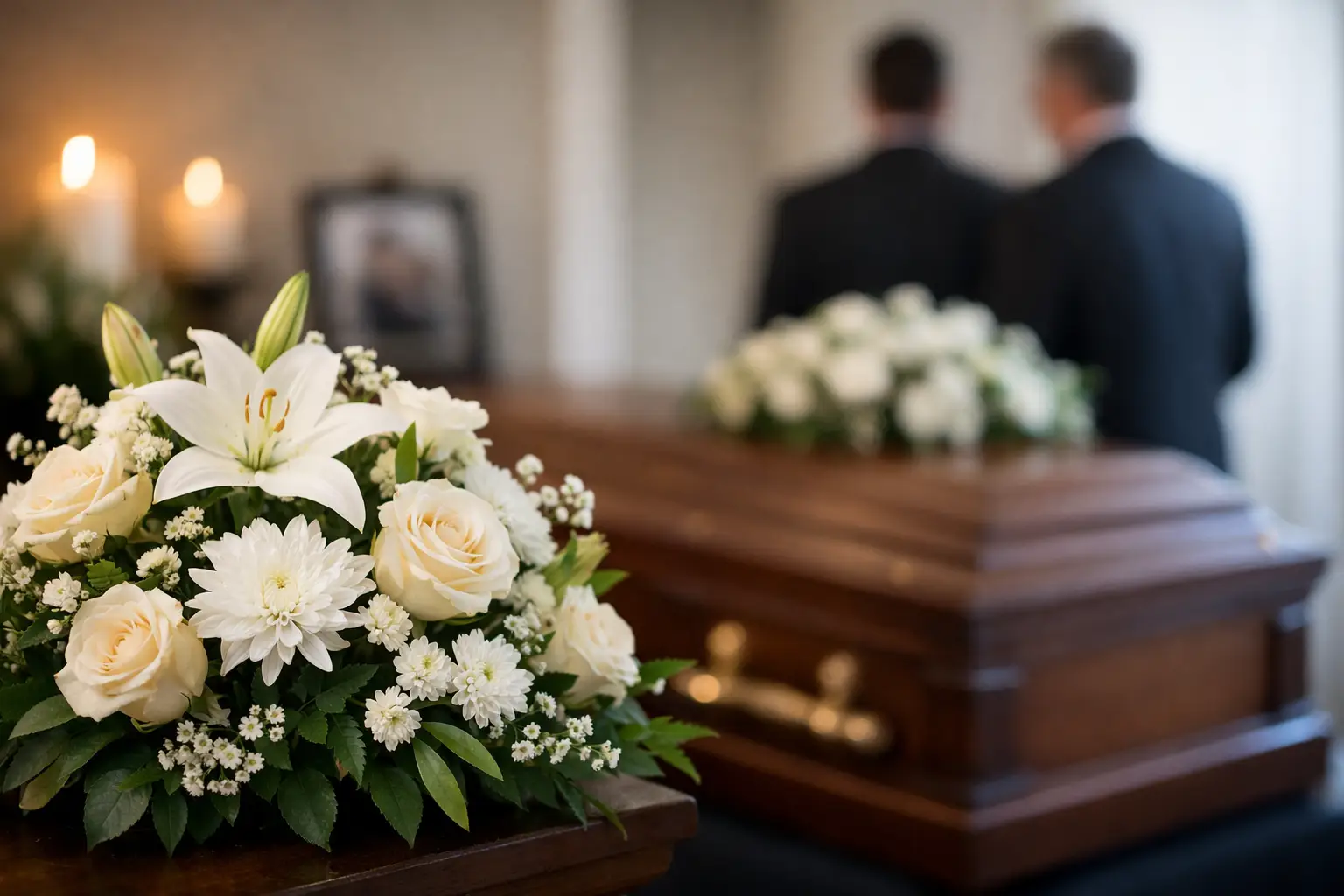

Flowers often feel like a small thing until the moment comes to choose them. When someone has died, even simple decisions can carry a great deal of emotion. Funeral flowers etiquette is really about one question – how do you show care and respect in a way that feels right for the person who has died and the family they leave behind?
There is no single rule that covers every funeral. Traditions, faith, family wishes and practical details all matter. What helps most is understanding the purpose behind the gesture. Flowers can offer sympathy, honour a life, and bring softness to a difficult day, but they should never add pressure or create extra work for grieving relatives.
What funeral flowers etiquette really means
At its heart, funeral flowers etiquette is less about strict formality and more about thoughtfulness. The kindest choice is usually the one that reflects the wishes of the family and the character of the person being remembered.
Some families welcome floral tributes and find comfort in them. Others may request family flowers only, donations in lieu of flowers, or no flowers at all. If that preference has been stated in the funeral notice, it should always be followed. Ignoring it, even with good intentions, can place the family in an awkward position.
If no guidance has been given, sending flowers is generally considered a kind and appropriate gesture. It is especially suitable if you knew the person well, wish to express sympathy, or cannot attend the funeral in person.
When it is appropriate to send flowers
In most cases, flowers may be sent to the funeral director, the family home, or the service venue, depending on the arrangements. Timing matters. If the flowers are intended for the funeral itself, they need to arrive in good time and to the right place. If they are for the family, sending them to the home shortly after the death or in the days following the funeral can be equally thoughtful.
There is a quiet difference between flowers for the funeral and flowers for the bereaved. Funeral tributes are part of the service and remembrance. Sympathy flowers sent to the home are more personal and are often intended simply to let someone know they are in your thoughts.
It also depends on your relationship with the deceased or the family. Immediate family and close friends may choose larger or more personal tributes. Colleagues, neighbours and wider friends often send a bouquet, wreath or sheaf, or they may contribute to a joint tribute from a group.
When flowers may not be the right choice
There are times when flowers are not appropriate, or at least not the best option. If the family has asked for charitable donations instead, it is best to honour that request. Many people make this choice because the cause meant something to the person who died, or because they want a simpler service.
Flowers may also be unsuitable for some natural or green funerals. In those settings, biodegradable arrangements or hand-tied flowers without plastic wrapping may be preferred. Some families choose no cut flowers at all and may welcome seasonal foliage, garden flowers, or donations towards tree planting instead.
Religious and cultural customs can matter too. In some traditions, white flowers are most suitable. In others, certain colours may carry particular meanings. If you are unsure, asking the funeral director is far better than guessing.
Which flowers are considered suitable
You do not need to choose the most elaborate arrangement for your tribute to be meaningful. Simplicity is often best. White lilies, roses, chrysanthemums, carnations and mixed seasonal flowers are commonly used because they feel respectful and understated.
That said, personal touches can be entirely appropriate. If the person loved bright gardens, a soft country-style arrangement may feel more fitting than something highly formal. If they had a favourite flower or colour, including it can be a lovely way to reflect their personality.
What matters most is tone. Funeral flowers should feel dignified rather than celebratory in a way that jars with the occasion. Very bold colours are not wrong in themselves, but they work best when they genuinely reflect the person and the family’s wishes.
Funeral flowers etiquette for close family and friends
Close relatives often choose named tributes, coffin sprays, wreaths or arrangements that sit near the coffin. These pieces tend to be larger and more central to the service. Friends and extended family usually send separate tributes unless the immediate family has asked for one shared arrangement.
There is no need to compete in size or cost. A modest tribute given with sincerity is just as appropriate as a more expensive one. In fact, very large displays from someone with only a distant connection can sometimes feel out of step. Etiquette here is really about proportion and relationship.
If you are contributing as part of a workplace, club or wider family group, a joint tribute can be both practical and thoughtful. It allows everyone to be represented without overwhelming the space with individual arrangements.
What to write on the card
The message attached to funeral flowers does not need to be long. A few honest words are enough. People often worry about getting this wrong, but simple and sincere is usually best.
You might include your name, your relationship to the person, and a brief expression of sympathy or remembrance. Messages such as “With love and deepest sympathy”, “In loving memory”, or “Thinking of you all at this sad time” are entirely appropriate.
If you were close to the person who died, a more personal line can be especially meaningful. You may wish to mention a quality you will remember, or simply say that they will be greatly missed. What matters is warmth, not perfection.
It is usually best to avoid anything overly casual, humorous or long-winded unless you are completely certain it would suit both the person and the family. A funeral card is a quiet gesture, not a place for explanation.
Practical points that are easy to overlook
One of the most common worries around funeral flowers etiquette is where to send them. This is worth checking carefully. Sending flowers to the funeral director is often the simplest option when they are intended for the service, because timing and placement can then be managed properly.
It is also important to include the full name of the person who has died and the date of the funeral if possible. Funeral directors may be caring for several families at once, and clear details help avoid confusion.
If you are ordering flowers close to the funeral date, do say so. Last-minute tributes can sometimes be accommodated, but availability, delivery times and florist workload all play a part. During a stressful week, the simplest arrangements are often the easiest to manage well.
If you are attending the funeral in person
Guests do not usually bring loose flowers to the service unless this has been specifically invited, such as at a natural burial or a memorial where people are asked to place a single stem. In most traditional settings, flowers are arranged in advance and delivered before attendees arrive.
If you are unsure, ask. It is a small question, but it can prevent uncertainty on the day. A good funeral director will be used to helping with exactly these practical points.
If you decide not to send flowers, that does not mean you are doing any less. A sympathy card, a charitable donation, an offer of help, or simply attending the funeral can be just as meaningful.
A note on cost, pressure and doing what feels right
People can feel embarrassed if they cannot afford a large tribute, but there should be no sense of obligation. Grief has a way of making ordinary choices feel loaded with meaning. In truth, the family is unlikely to measure your care by the size of an arrangement.
A single thoughtful tribute, a modest bouquet, or a donation made in memory can all be entirely appropriate. If you are close to the family, practical support in the days after the funeral may matter even more than flowers.
At Otter Valley Funerals, we often see that the gestures families remember most are not necessarily the grandest ones, but the most considerate.
Funeral flowers are there to express sympathy, love and remembrance. If your choice is guided by the family’s wishes, made with kindness, and offered without fuss, it is very unlikely to be wrong.