

A direct cremation is often chosen because it keeps the practical arrangements simple, but simple need not mean impersonal. If you are asking, can you personalise a direct cremation, the answer is yes. The personal elements may happen quietly, before or after the cremation rather than through a formal funeral service, but they can still reflect the person who has died and give family and friends a meaningful way to say goodbye.
For some families, that means a private moment with their loved one before the cremation. For others, it is gathering at a favourite place weeks later, playing a much-loved piece of music, or taking ashes somewhere that holds family memories. There is no single right way to do it.
What a direct cremation usually involves
A direct cremation is an unattended cremation with no funeral ceremony at the crematorium. The person who has died is collected and cared for, the necessary paperwork is completed, and the cremation takes place. Their ashes are then returned to the family, or dealt with according to their wishes.
This option can suit people who did not want a traditional funeral, families who want time to decide on a memorial, or those working within a tighter budget. It can also feel right when relatives and friends live far apart and a service immediately after a death would be difficult to arrange.
The exact service varies between funeral directors, so it is sensible to ask what is included. In particular, ask about care before the cremation, whether a visit is possible, how ashes are returned, and whether there are choices around timing, transport or personal items. Clear answers matter, especially when decisions are being made at short notice.
Ways to personalise a direct cremation
Personalisation does not have to mean a large event or added expense. It is about deciding which details would feel comforting and appropriate to the person who has died.
Spending private time together
Some families value the chance to visit their loved one in a peaceful setting before the cremation. This can offer a gentle opportunity to hold a hand, place a flower nearby, say a prayer, or simply sit quietly. Not everyone wishes to do this, and there should never be pressure to do so, but for some it provides reassurance and a more tangible goodbye.
You may also wish to choose their clothes, if this is appropriate and offered by your funeral director. Familiar clothing can be a small but significant expression of care. It may be a favourite cardigan, a football shirt, a uniform, or something chosen simply because it felt like them.
Including a personal item or message
A letter, card, drawing from a grandchild or photograph can be placed with a loved one where crematorium rules allow. Certain materials and objects cannot be cremated safely, so always check first rather than assuming an item can be included.
Sometimes the most meaningful gesture is very small: a handwritten note, a pressed flower, or a message that was never easy to say aloud. If an item cannot go into the cremator, it may still be possible to place it with the person during a private visit and take it away again afterwards.
Choosing how and when to gather
One of the strengths of direct cremation is that it separates the practical arrangements from the act of remembrance. A memorial can be held days, weeks or months later, when people are more able to attend and when the family has had space to think.
That gathering could be a service in a church, a celebration of life in a village hall, a meal at a favourite pub, or a quiet afternoon at home. It can be formal or informal. Some families ask people to share memories; others light candles, play a playlist, raise a glass or take a walk together.
A later gathering also allows you to include people who might otherwise have been excluded by illness, travel, work or the speed of the arrangements. Grief does not work to a timetable, and a memorial does not have to take place on the day of the cremation to be meaningful.
Creating a tribute in your own time
You might prepare an order of service or memory card for a later event, make a photo display, collect written stories, or choose a charity for donations in their memory. A simple online or printed funeral notice can also give people an opportunity to leave a message of condolence and share memories.
These tributes can be particularly valuable where someone was well known in their community. They give friends and neighbours a way to acknowledge the loss, even if there was no attendance at the crematorium.
Personalising the ashes arrangements
For many families, the most personal part of a direct cremation happens once ashes have been returned. There is no need to make an immediate decision. You can keep them at home for a while, discuss options with family members, and wait until a plan feels right.
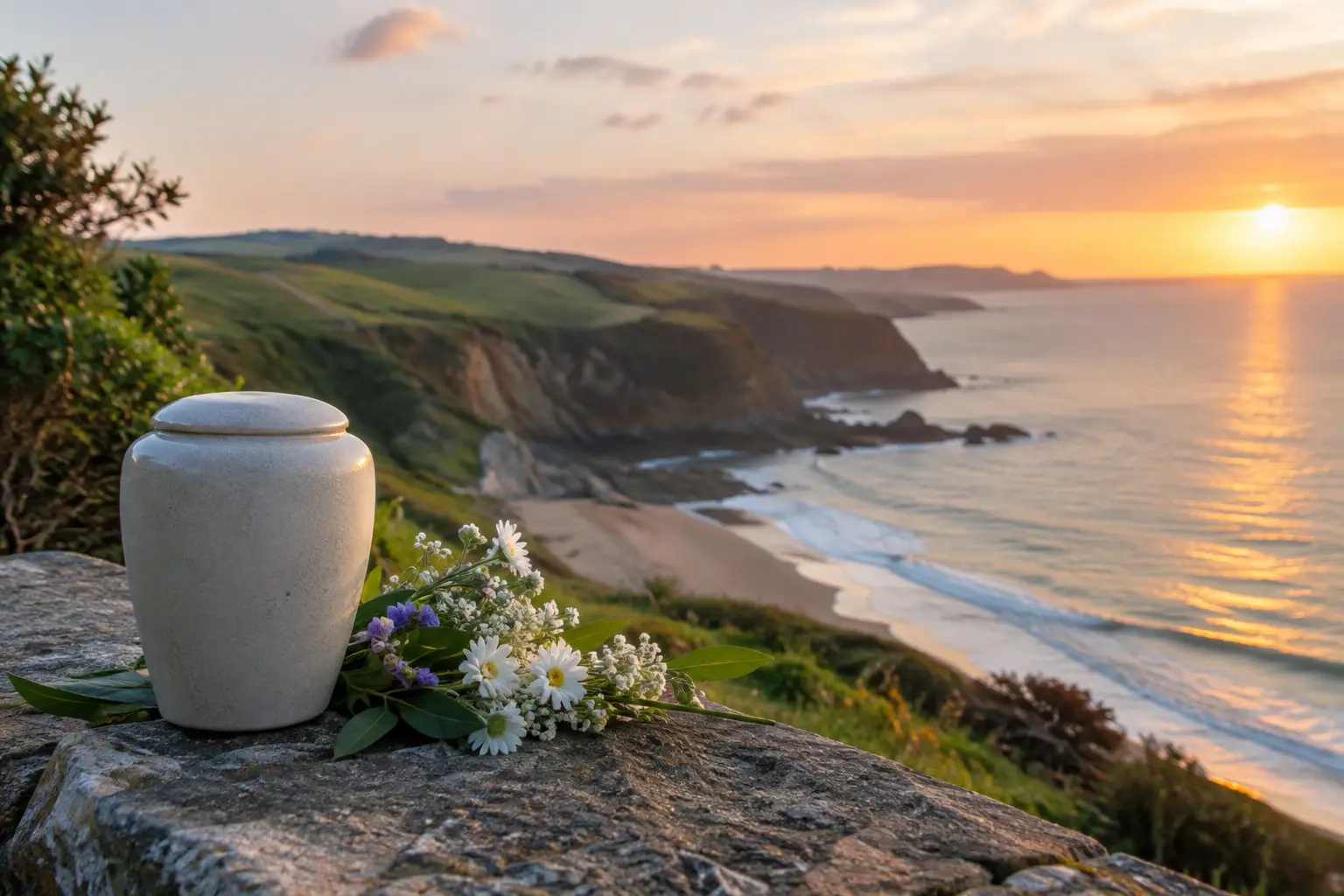
Ashes may be scattered in a meaningful place with the landowner’s permission, interred in a cemetery or churchyard, placed in a memorial garden, or kept in an urn. Some people choose a biodegradable urn for a natural setting. Others divide ashes between close family members, although this is a very personal choice and can be difficult if views differ.
If a scattering is planned, think about who needs to be there and what would make the occasion feel complete. A few spoken words, a poem, a favourite song played from a mobile phone, flowers, or a pause for shared silence may be enough. On the Devon coast or in the countryside, weather and access can shape the arrangements, so a little planning helps the day feel calmer.
Can you personalise a direct cremation without increasing the cost greatly?
Often, yes. Direct cremation is usually less costly than a traditional funeral because there is no hearse procession, chapel service or attendance at the crematorium. However, individual choices can add to the price, particularly if they involve additional transport, an out-of-hours visit, specialist vehicles, printed materials or a separate venue for a memorial.
The best approach is to identify what matters most before agreeing arrangements. If seeing your loved one is essential, say so. If the priority is a family gathering after the ashes are returned, you may prefer to keep the cremation arrangements straightforward and put your budget towards that occasion instead.
A good funeral director will explain costs clearly and without judgement. They should also distinguish between what is included as standard, what can be arranged for an additional charge, and what you may choose to organise yourselves. Personal care is not measured by how much is spent.
When a direct cremation may not feel right
Direct cremation is not the best choice for every family. If you feel strongly that you need to see the coffin arrive at the crematorium, follow it in a cortege, hear music in a chapel, or gather everyone together straight away, a simple attended cremation may be a better fit.
It is also worth recognising that family members may grieve differently. One person may appreciate the quiet simplicity of direct cremation, while another may feel unsettled by the absence of a formal farewell. Honest conversation can prevent hurt later. Where possible, involve the people closest to the person who has died and listen to what they need.
There are flexible middle options too. A small family service before an attended cremation, or a direct cremation followed by a carefully planned memorial, can balance simplicity with the need for ceremony.
Questions worth asking your funeral director
Before choosing a direct cremation, ask whether you can spend time with your loved one, provide their clothing, include a permitted personal item, and choose how ashes are returned. Ask when the cremation will take place, whether it will be at a local crematorium, and what support is available if you later want help arranging a memorial or ash scattering.
For families in Budleigh Salterton, Exmouth and across East Devon, a local independent funeral director can talk through these choices in person and help you find the balance that feels right. Otter Valley Funerals believes that even the simplest arrangements deserve careful, individual attention.
The most fitting farewell may be a quiet one. What matters is that the choices feel honest to the life being remembered, and that you are given the time, information and kindness needed to make them.