
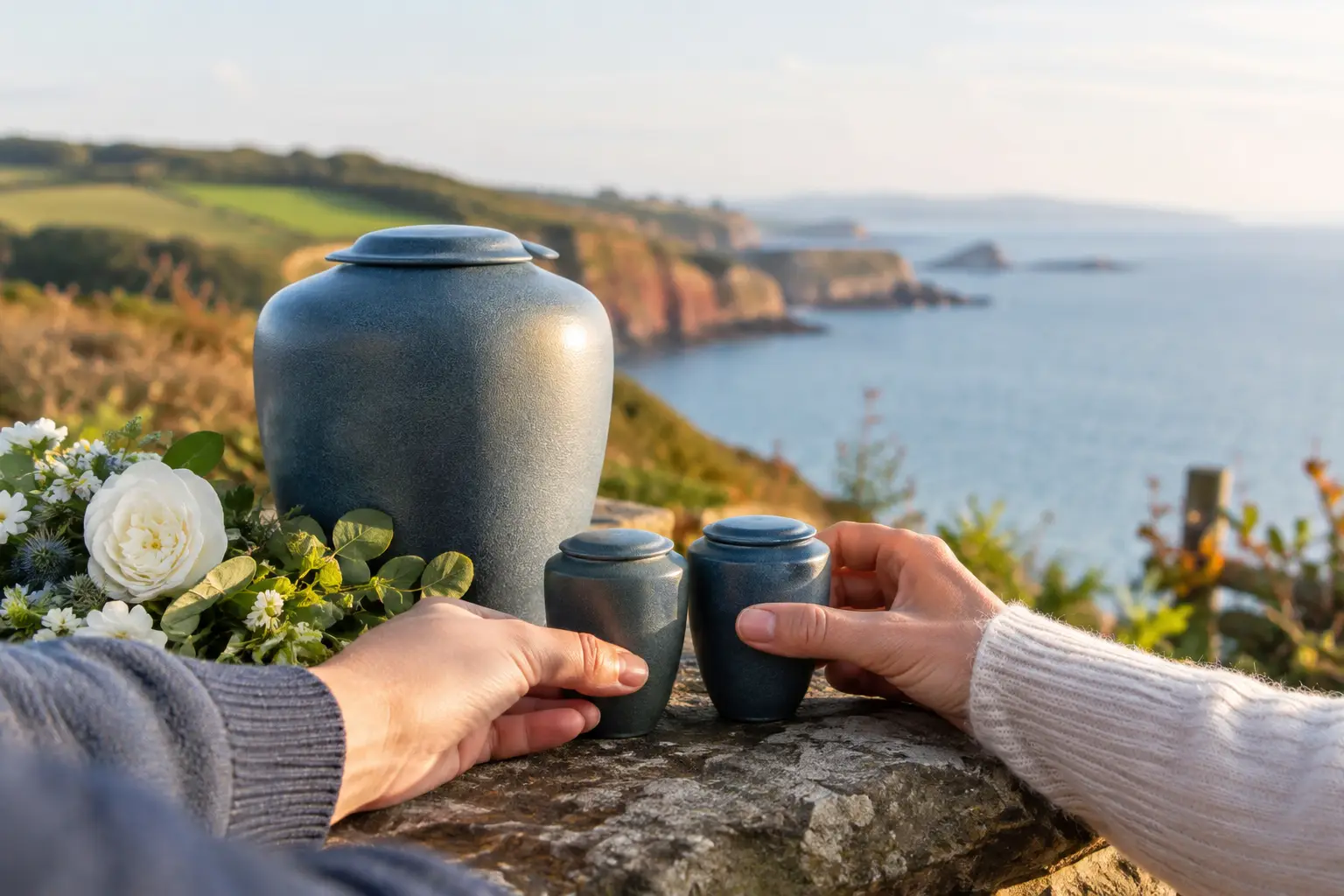

A family may be spread across Devon, the country or even the world, yet each person may feel a close connection to the person who has died. When one family member hopes to scatter ashes at a meaningful place and another would like a small keepsake, a natural question arises: can you split ashes?
In most circumstances, yes. Cremated remains can be divided, allowing different family members to remember someone in ways that feel right to them. There is no single correct decision, however. The kindest approach is one that respects the person who died, makes space for the people closest to them and avoids anyone feeling hurried or left out.
Can you split ashes after cremation?
Ashes can usually be shared between relatives or close friends after they have been collected from the crematorium. Some families divide them into two or three portions. Others keep most of the ashes together while placing a small amount in keepsake jewellery, a miniature urn or a memorial item. It is also possible to reserve some ashes for a future interment or scattering.
The practical point to remember is that cremated remains are returned in a temporary container or urn, depending on the arrangements made. A funeral director can help transfer them into separate containers carefully and discreetly. This can be especially reassuring if dividing the ashes feels emotionally difficult, or if family members are not comfortable doing it themselves.
There is no requirement to divide ashes equally by weight. Equal portions may feel appropriate for some families, but fairness is not always about measurement. One person may want a small keepsake while another wishes to scatter a larger portion at a place the deceased loved. Talking openly about what each person hopes for can lead to a decision that feels more considered than simply dividing the ashes into identical amounts.
Who can decide what happens to the ashes?
This is often the more sensitive question. The person who arranged the cremation and is named on the cremation paperwork is generally the person responsible for collecting the ashes and giving instructions about them. In practice, they should consider any wishes left by the person who died, whether in a will, a funeral plan or conversations with loved ones.
Where there is no clear instruction, it is sensible to consult close family before a permanent decision is made. This is not only a matter of courtesy. Ashes can carry enormous emotional significance, and a decision made too quickly can be hard to revisit once scattering, burial or placement in jewellery has taken place.
If there is disagreement, it may help to pause. The ashes do not need to be scattered immediately after the funeral or cremation. They can be kept safely while everyone has time to reflect. A calm conversation, perhaps led by the person arranging the funeral or a trusted family member, may reveal that there is room for more than one meaningful tribute.
Reasons families choose to share ashes
Families share ashes for many personal reasons. Adult children may each want a small memorial close to home. A partner may wish to retain an urn while other relatives scatter a portion at the coast, in a garden or somewhere associated with happy memories. Where loved ones live far apart, separate portions can make remembrance feel less distant.
It can also be a thoughtful choice when there are several places that mattered deeply. Someone may have grown up in one town, built their family life in another and found great peace by the sea. Dividing the ashes means those connections do not have to compete with one another.
For some people, keeping ashes is not the right choice at all. They may prefer a single shared scattering, an interment in a family grave or a natural burial ground. Religious beliefs, cultural traditions and the wishes of the deceased may guide this decision. There is value in recognising that different members of the same family can grieve differently, while still agreeing on a respectful plan.
Practical ways to divide ashes with care
If you decide to share ashes, it is worth thinking about the final destination before choosing containers. A keepsake urn will need a secure lid and a size suitable for the amount it will hold. Ashes intended for scattering can be placed in a biodegradable container, while ashes for burial may need an urn approved by the cemetery or natural burial ground.
A funeral director can arrange suitable containers and transfer the ashes with dignity. This may be preferable to dividing them at home, particularly if the ashes are in a sealed container or if the task feels too upsetting. It also helps ensure each portion is clearly identified before it is passed to a family member.
If ashes are to be taken abroad, check the airline and destination country’s requirements well in advance. Airlines commonly ask for ashes to be carried in hand luggage in a non-metal container that can be screened, alongside the cremation certificate. Rules vary, so it is best not to leave this until the day of travel.
When ashes are being scattered, always seek permission from the landowner. This applies to private gardens, farms, beaches managed by an authority and many beauty spots. Scattering at sea is often possible, but it should be done thoughtfully, away from busy areas and with consideration for the weather and tide. Ashes should never be scattered on public land simply because it feels like an appropriate place.
When sharing ashes may need more thought
There are occasions when dividing ashes is possible but may not feel straightforward. A very small amount of ashes can make multiple portions impractical. Equally, a family may be worried that dividing them somehow diminishes the person they loved. These feelings are understandable, and there is no need to make a decision before people are ready.
Memorial jewellery can be comforting, but it is worth discussing expectations first. A pendant or ring may hold only a very small quantity, and not everyone will want this type of tribute. Similarly, a family member may want ashes nearby but later decide they would prefer to scatter or inter them. Choosing a temporary keepsake container can give them time without closing off future choices.
Children and young people may also want to be included. Depending on their age and understanding, offering them a choice can be meaningful: attending a scattering, helping to choose a memorial, or keeping a small token. They should not feel pressured to handle ashes or to make a permanent decision while they are grieving.
Making a shared decision without pressure
The most helpful conversations tend to focus on memories rather than possessions. Ask what each person feels would honour their loved one, what place holds meaning and whether there is a wish that must be respected. It may help to agree that no ashes will be scattered or permanently placed until everyone has had the opportunity to speak.
Sometimes a simple plan brings peace: keep the ashes together for a few months, arrange one shared memorial moment, then divide a small portion for those who wish to keep one. Other families choose to place most ashes in one location and reserve a little for separate private goodbyes. Neither approach is more loving than the other.
At Otter Valley Funerals, we understand that decisions about ashes can feel unexpectedly weighty. Gentle, practical support can make the process less daunting, whether a family is considering separate urns, a local scattering or time to decide.
There is no deadline on remembrance. Taking a little time, listening to one another and choosing a tribute with care can give every family member a place to hold their loved one in their heart.