
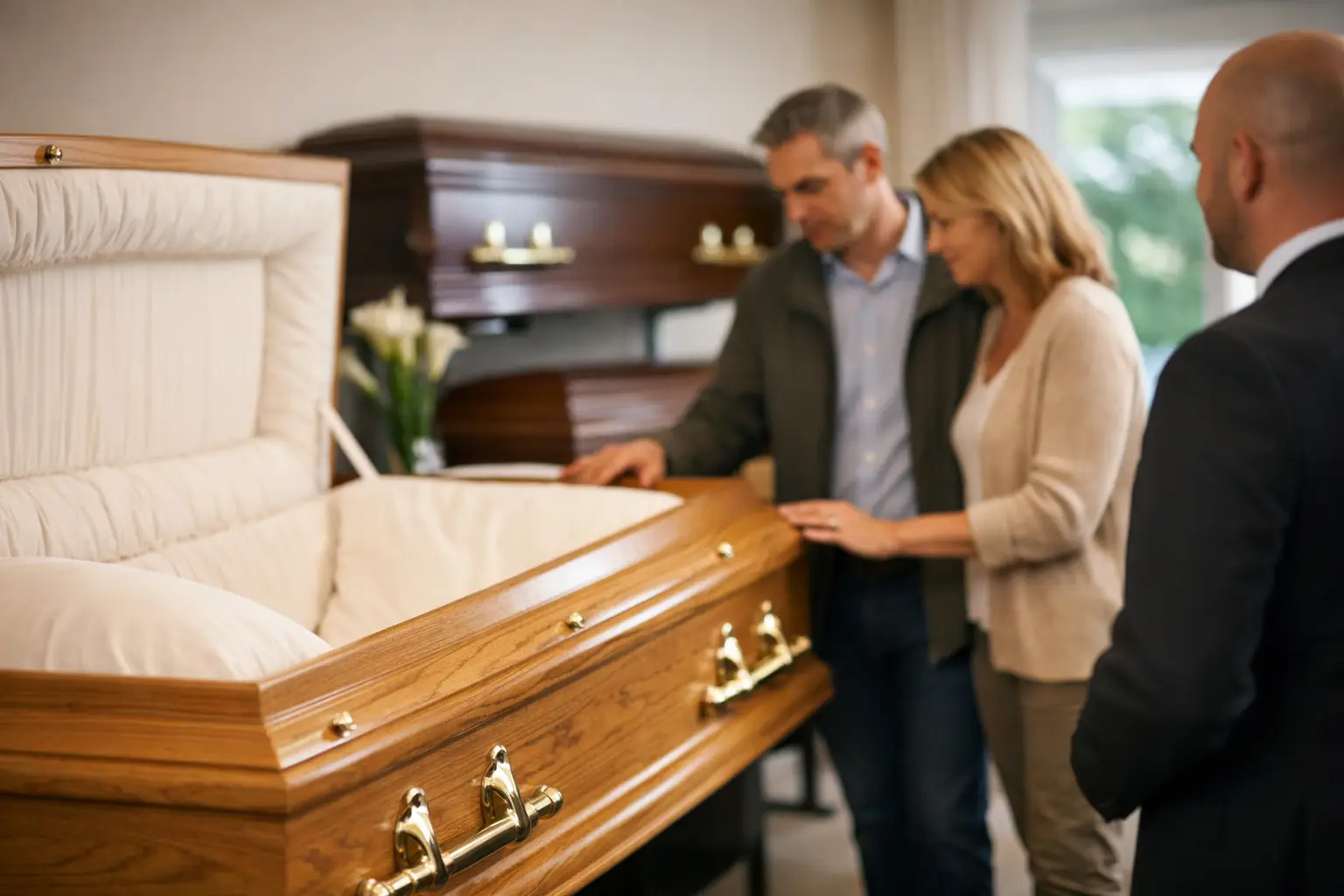

A coffin is one of the most visible choices made for a funeral, yet it is often chosen at a time when decisions already feel overwhelming. Knowing how to choose a coffin can make this part of the arrangement feel less daunting. There is no single right answer – the best choice is one that feels appropriate for the person who has died, works for the type of funeral planned, and sits comfortably within the family’s budget.
A good funeral director will talk you through the options without pressure. You do not need to know the names of materials, have a fixed style in mind, or make an instant decision. A little clear information can help you choose something dignified and personal.
Start with the funeral you are arranging
The funeral itself will usually guide the coffin choice. For a traditional church or crematorium service, families may prefer a solid wood-effect coffin, a veneered coffin, or a simple traditional design. For a natural burial, a biodegradable coffin made from materials such as willow, bamboo, cardboard or wool may be more suitable.
If the funeral is a direct cremation, the coffin may not be seen by mourners, so a simple option is often preferred. That does not make the decision any less respectful. Many families find comfort in choosing a plain coffin because it reflects their loved one’s practical nature or keeps more of the available budget for a memorial, flowers, a gathering, or another meaningful part of the farewell.
For burial, it is worth checking the cemetery or natural burial ground’s requirements before deciding. Some grounds accept a broad range of coffins, while others have clear rules on biodegradable materials, fittings and finishes. Crematoria also have requirements to ensure the coffin is suitable for cremation. Your funeral director can confirm these details for you.
Consider the material and what it represents
Coffins are available in a wide variety of materials, each with a different appearance, cost and environmental consideration. A traditional-looking coffin is not necessarily made from solid wood, and a simple coffin is not necessarily of lesser quality. The material should be safe, suitable and chosen with care, whatever the price point.
Traditional wood and wood-effect coffins
Solid wood coffins, often made from oak, pine or other timbers, can feel warm, familiar and timeless. They are often chosen for burials or formal services, particularly where a family wants a classic appearance. Veneered and wood-effect coffins can offer a similar look at a lower cost and are commonly used for both burial and cremation.
The difference is not simply about appearance. Solid wood is generally heavier and more expensive, while veneered options are often lighter and more economical. Both can be dignified choices.
Eco-friendly and natural coffins
Willow, bamboo, seagrass, cardboard and wool coffins are popular for natural burials and for families who wish to reduce environmental impact. Their textures can feel softer and less formal than a conventional coffin, which may suit someone who loved the outdoors, gardening, the coast or a simpler way of life.
It is helpful to remember that “eco-friendly” can mean different things. The material, lining, fittings, transport and burial ground policies may all affect the overall environmental impact. If this matters to you, ask practical questions rather than relying on a label alone.
Printed and personalised coffins
A printed coffin can feature a colour, pattern, photograph or design that reflects a person’s interests. Families may choose a countryside scene, a favourite sport, a railway theme, flowers, or artwork created by grandchildren. This can be a gentle way to bring personality into the service and give mourners something recognisable to hold on to.
Personalisation does not need to be bold. A favourite colour, a simple floral panel, or a small name plate can be just as meaningful. Think about what would have felt right to the person themselves, rather than what you feel expected to choose.
Set a budget without feeling guilty
Cost is a legitimate consideration when choosing a coffin. A more expensive coffin does not demonstrate greater love, and a modest choice is not a lesser tribute. Funeral costs can add up quickly, particularly where there are burial fees, church fees, celebrant costs, flowers, vehicles and catering to consider.
Ask for the price of each coffin option clearly and in writing. A funeral director should explain what is included, such as the lining, fittings, name plate and any required preparation. They should also be able to show options across a range of prices, without steering you towards the highest-cost choice.
Sometimes families choose a simpler coffin and use the saving elsewhere. That might mean arranging a gathering where stories are shared, commissioning a memorial, supporting a cause their loved one cared about, or simply reducing financial strain on the person paying for the funeral. All of these are valid decisions.
Make sure the coffin is the correct size
Coffins are made in different lengths, widths and depths. This is a practical matter, but it is one you should not have to manage alone. The funeral director will take the necessary measurements and make sure the coffin is suitable, including where there are access considerations at home, church, crematorium or cemetery.
Do not worry if you do not know what size is needed. The important thing is that the person is cared for respectfully and that the coffin is appropriate for them. If a larger or bespoke size is required, this should be explained clearly, including any effect on cost or funeral arrangements.
Think about what family and friends may need
For some families, seeing the coffin before the funeral is reassuring. For others, it is not something they wish to do. Neither response is wrong. If you are planning a visit in a chapel of rest, consider whether the style, colour and finish will help create the calm atmosphere you want.
You may also wish to involve close family members in the choice. This can be particularly helpful where adult children, a spouse or partner, and other relatives all want to contribute. A shared decision can reduce the feeling that one person has carried the responsibility alone.
If views differ, return to a simple question: what would the person who died have chosen, or appreciated? Where there is no clear answer, choose the option that feels kind, manageable and true to the family’s values.
Personal touches can matter more than the design
A coffin does not have to carry all the meaning of a funeral. Often, the most memorable moments are created by what happens around it. A favourite piece of music, a photograph, a tribute, flowers from a garden, or the chance for family members to place a handwritten message can say far more than the material itself.
Some coffins can be decorated or written on by family and friends before the service. This may be especially meaningful for children or grandchildren, giving them a quiet, practical way to say goodbye. Check first whether the coffin and funeral arrangements allow for this, particularly for cremation or natural burial.
Questions worth asking before you decide
When comparing options, it can help to ask your funeral director:
- Is this coffin suitable for cremation, burial or a natural burial ground?
- What is included in the stated price?
- Are there lower-cost options with a similar appearance or purpose?
- Can the coffin be personalised, and are there additional charges?
- Will its size, weight or style affect any part of the funeral arrangements?
These questions are not about getting every detail perfect. They are there to help you make a decision with the information you need.
Give yourself permission to keep it simple
Families sometimes worry that they should choose something more elaborate, more traditional or more unusual than they genuinely want. In reality, a thoughtful funeral is not defined by a particular coffin. It is defined by care, respect and the way a person’s life is remembered.
At Otter Valley Funerals, families are guided through coffin choices at their own pace, with clear explanations and no expectation to spend beyond what feels right. Whether you are arranging a simple cremation, a burial, a green funeral or a more personal celebration of life, the right coffin is the one that allows you to say goodbye with honesty and peace of mind.