
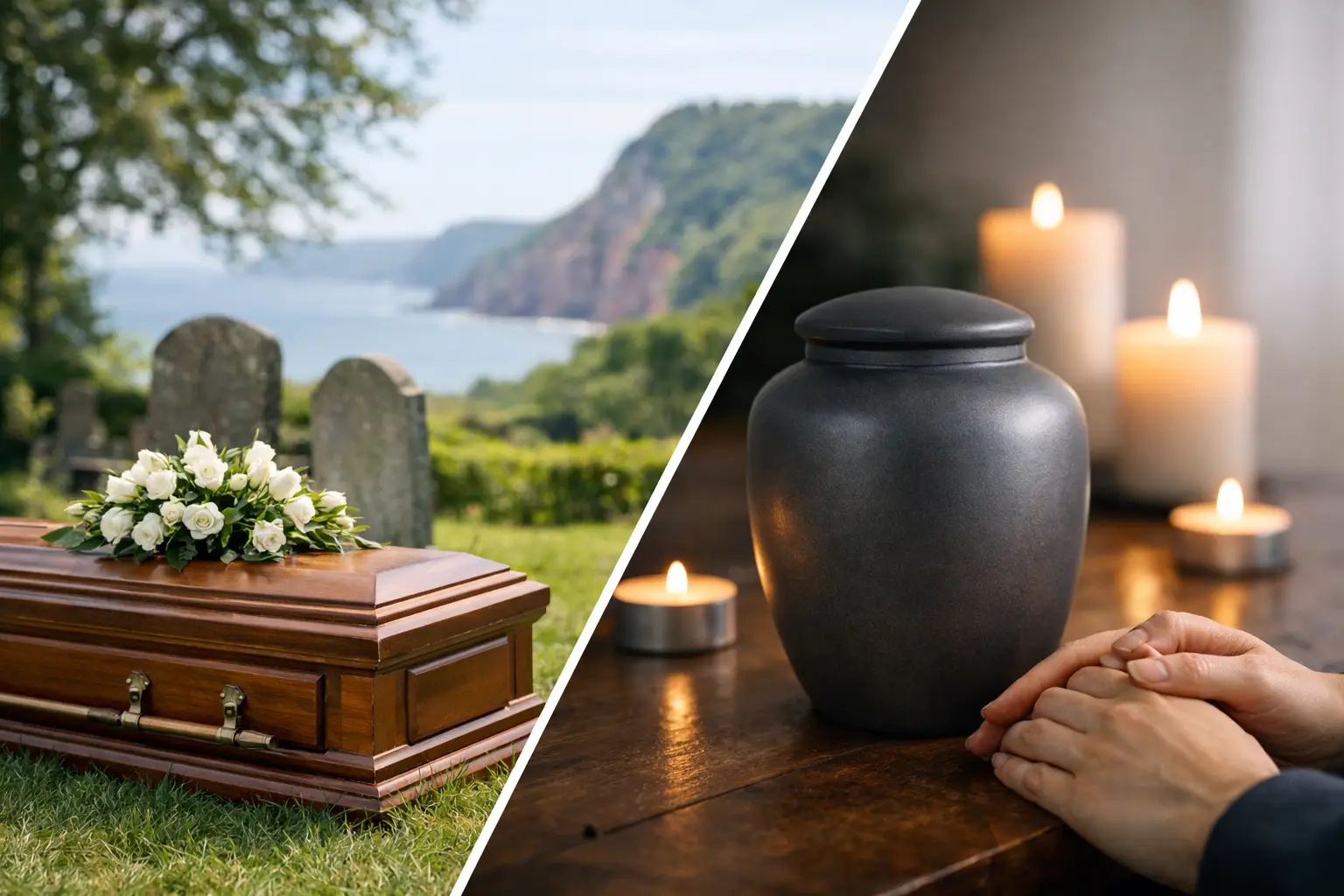

A burial or cremation choice can feel like one decision among many when someone has died, yet it often carries the greatest emotional weight. There is no universally right answer. The most fitting choice is usually the one that reflects the person who has died, respects any wishes they shared, and gives those closest to them a sense that their farewell has been handled with care.
Families do not need to decide everything at once. A compassionate funeral director can talk through the practical details, explain the available options clearly and give you time to consider what feels right.
Start with the wishes of the person who has died
If your loved one made their wishes known, whether in a written funeral plan, a will, a conversation or a simple remark made over the years, these should be the starting point. They may have felt strongly about being buried in a family grave, wanted their ashes scattered at a meaningful place, or preferred a natural burial.
Not every wish will be possible exactly as described. There may be questions of cost, cemetery availability, family circumstances or legal requirements. Even so, understanding the intention behind the request can help. Someone who asked for a simple cremation may have wanted to avoid fuss or expense. Someone who spoke about burial may have valued having a permanent place for relatives to visit.
Where no wishes have been left, it is reasonable to make a decision together with close family. If an executor has been appointed, they will usually take the lead in arranging the funeral. More importantly, no one should feel pressured into a choice that does not sit comfortably with them.
Burial or cremation choice: the practical differences
Both burial and cremation can be personal, dignified and affordable. Neither choice determines whether a funeral will be traditional, religious, informal, small or highly individual.
Choosing burial
A burial involves placing the coffin in a grave, usually in a churchyard, cemetery or natural burial ground. For many families, the value of burial lies in having a defined resting place. A grave can become somewhere to lay flowers, mark anniversaries and spend quiet time remembering.
There may be an existing family grave, which can make burial feel particularly meaningful. It is worth checking the grave deed and whether there is space for a further interment. If a new grave is needed, costs can vary considerably between burial grounds and may include the exclusive right of burial, grave preparation, interment fees and, later, a memorial or inscription.
Burial can also suit a funeral involving a church service followed by committal at the graveside. The act of gathering outdoors, hearing the final words and seeing the coffin lowered can feel difficult, but some people find it offers an important sense of farewell.
Choosing cremation
Cremation is often chosen because it offers flexibility. A service can take place at a crematorium, church, another venue or somewhere personal before the cremation. Alternatively, a direct cremation takes place without a service or mourners in attendance, allowing a family to hold a memorial at a later date if they wish.
After cremation, ashes can be kept for a time, scattered, buried, placed in a memorial garden or divided between family members where appropriate. This can be helpful when relatives live in different places or need time before deciding on a final resting place.
A cremation is not necessarily a simpler or less personal farewell. Families can choose music, readings, a colourful dress code, a celebrant-led ceremony or a quiet service with only immediate family present. The formality is yours to decide.
Think about what matters most to your family
When feelings are raw, broad questions can be easier than trying to compare every detail. Consider what would have mattered most to the person who died, and what those left behind may need in the months and years ahead.
A permanent grave may bring comfort to some families, while others prefer the freedom to take ashes to a place with special meaning. A family with a strong faith tradition may feel clear about the appropriate choice. Others may be guided by a wish for a modest funeral, a lower environmental impact or a service that is less conventional.
It can help to talk honestly about whether having a place to visit matters. There is no correct answer. Some people regularly visit a grave and gain great comfort from it. Others remember their person through a favourite walk, a garden, a photograph or a yearly gathering instead.
Cost should be discussed openly
Funeral costs should never be a source of shame. A loving farewell does not need to be an expensive one, and transparency allows families to make choices with confidence.
Burial is often more expensive than cremation because of the purchase or lease of a grave and interment charges. However, costs depend on the burial ground, whether a family grave is available, the type of coffin selected and the arrangements around the service. Cremation fees vary too, particularly according to the time and location of the service.
Ask for a clear written estimate that separates the funeral director’s services from third-party charges, sometimes called disbursements. This makes it easier to see what can be altered if the budget is limited. You may decide that a simple coffin and small gathering are right, while still including the music, flowers or readings that matter most.
Environmental considerations are personal too
For some people, environmental concerns will shape the decision. Natural burial grounds may allow burial in a woodland or meadow setting, often with biodegradable coffins or shrouds and without a traditional headstone. The rules vary between sites, so it is sensible to ask what is permitted and how the grave will be marked.
Cremation also offers choices that may reduce its impact, such as selecting a coffin made from natural materials and considering carefully what will happen to the ashes. There is no need to pursue an option simply because it is described as green. The most meaningful decision balances environmental values with the wishes, beliefs and needs of the family.
Faith, culture and family traditions
Religious and cultural customs may provide valuable guidance. Some faiths have clear practices around burial, cremation, timing and who should take part in the funeral. A minister, faith leader or experienced funeral director can help ensure the arrangements are respectful.
Family traditions can matter just as much. Perhaps several generations are buried in the same churchyard, or a loved one had always said they wanted their ashes scattered at sea. These details are not small when they carry a family’s shared history.
At the same time, different relatives may hold different views. Try to make space for each person to be heard, especially where there is grief, guilt or old family tension. The decision does not have to represent every preference perfectly. It needs to be a respectful decision that the family can live with.
Give yourselves permission to take a little time
Some arrangements have to move forward promptly, but not every decision is urgent. If cremation is chosen, the ashes do not have to be scattered straight away. Many families keep them safely at home while deciding, sometimes for months or longer.
Similarly, you can hold a small funeral now and plan a larger memorial later, when relatives can travel and the initial shock has eased. This can be particularly helpful if a direct cremation feels right for the immediate arrangements but family and friends would still value a chance to come together.
The funeral itself is one moment in a longer process of remembrance. A burial or cremation choice matters, but it is not the only way love is shown.
Ask for calm, clear guidance
You do not need prior knowledge of funerals to make a good decision. Ask questions until you understand the options, the likely costs and what will happen on the day. A local, independent funeral director should be able to explain matters without pressure, including burial, cremation, natural burial and simple arrangements.
At Otter Valley Funerals, families are given the space to make choices in their own time, with practical guidance from a team who understand that every goodbye is different. The right decision is the one that feels truthful to the life being remembered and gentle enough for those who must carry that memory forward.