

When someone has been cremated, families are often relieved to have time. Time to let the first shock settle, time to speak to relatives, and time to think about what would feel most fitting. A memorial service after cremation can offer exactly that – a chance to gather in a way that feels personal, unhurried and true to the person being remembered.
For some families, that means a quiet service in a village church or local hall. For others, it may be a celebration of life by the coast, a gathering in a favourite garden, or a simple moment to share stories with close family and friends. There is no single right way to do it. What matters is creating a farewell that feels respectful and manageable at a difficult time.
What is a memorial service after cremation?
A memorial service after cremation is a ceremony held after the cremation itself has taken place. Unlike a traditional funeral service with the coffin present, the memorial happens later and can be arranged in a far more flexible way.
That flexibility is often one of the main reasons families choose it. If the cremation has been a direct cremation or a simple cremation with no formal service, a memorial allows loved ones to come together afterwards without the time pressure of arranging everything within a few days. It can also help when family members need to travel, when emotions are still raw, or when the person who has died asked for something less formal.
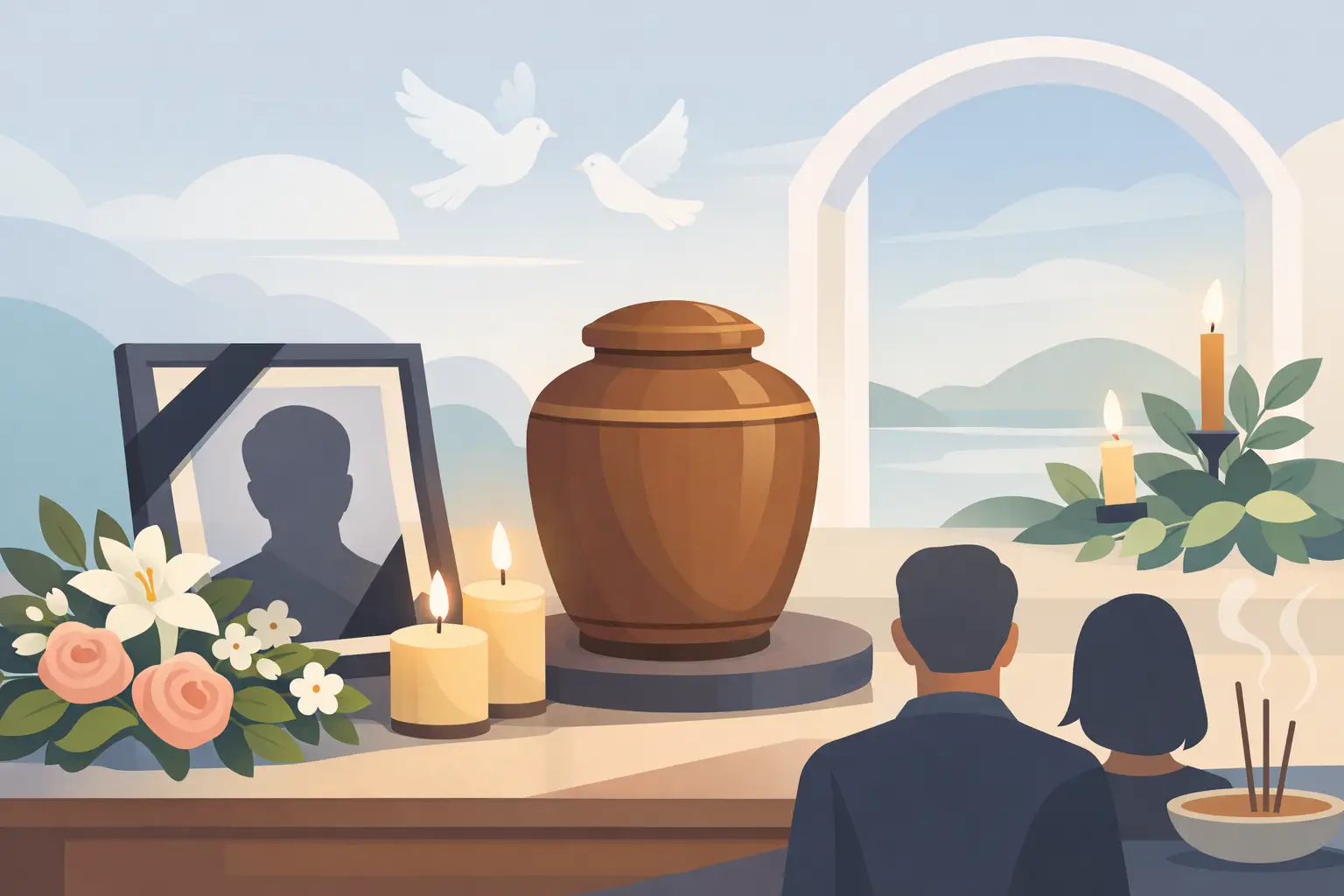
Some memorials include the ashes, and some do not. An urn may be placed at the front of the room, or the gathering may focus entirely on words, music and shared memories. It depends on the family, the venue and the tone you want to create.
Why families choose a memorial service after cremation
In practice, the appeal is often simple. Families want breathing space. A death brings a long list of practical decisions at the same time as grief, and not everyone wants to make every choice immediately.
A memorial service after cremation can also make things easier for a wider circle of mourners. If close family live in different parts of the country, or if friends and neighbours would appreciate more notice, holding the service later can mean more people are able to attend. That can matter greatly, especially in close communities where many people may wish to pay their respects.
There is also a financial and emotional trade-off to consider. A direct cremation followed by a memorial can sometimes give families more control over costs while still allowing a meaningful farewell. At the same time, some people find that the absence of the coffin changes the feel of the service. Neither approach is better. It is simply about what feels right for the person who has died and those left behind.
How to plan a memorial service after cremation
The first step is to think about the kind of atmosphere you want. Some families want something formal and reflective. Others want a warmer, more conversational gathering where people can speak freely, share photographs and remember happy moments. Starting with tone often makes the other choices easier.
Choosing the venue
A memorial can be held in many places. A church or chapel may feel familiar and comforting. A function room, community venue or hotel can give more freedom with timings and format. Some families choose an outdoor setting, particularly if the person had strong ties to the countryside or coast.
The venue should suit both the numbers expected and the style of service. A large room can feel impersonal if only a small group attends, while a very small space may be difficult if many people want to come. Accessibility matters too, especially for older mourners or those with limited mobility.
Deciding who will lead the service
The service may be led by a minister, celebrant, family member or close friend. This choice can shape the whole experience. A religious service may bring comfort and tradition. A celebrant-led service often allows more flexibility and a balance of reflection, music and storytelling. A family-led gathering can feel especially intimate, though it may be emotionally harder for those taking part.
If you are unsure, it can help to ask who knew the person best and who can speak with warmth and confidence. Some families prefer to share the role, with one person welcoming guests and others reading poems or tributes.
Thinking about the order of service
There are no fixed rules, but most memorials include a welcome, a few words about the person who has died, music, readings and a closing moment of reflection. Tributes from family and friends can be especially meaningful, though not everyone feels able to speak on the day.
It is wise to keep the service manageable. A very long programme can feel draining, particularly when emotions are high. Often, a simple and well-chosen service says more than one packed with too many elements.
Personal touches that make the service meaningful
The most memorable memorials are usually the ones that feel recognisable. Favourite music, photographs from different stages of life, a display of hobbies or achievements, and flowers in colours they loved can all help guests feel connected.
If ashes are to be present, you may want to decide how visible that should be. For some families, placing the urn alongside flowers and photographs feels natural. For others, it may feel too formal or too painful. There is no need to include ashes unless it brings comfort.
Small details can carry real weight. Serving a favourite cake afterwards, asking guests to wear a particular colour, or displaying gardening tools, medals, books or artwork can speak quietly but powerfully about a life. These choices do not need to be elaborate to be moving.
Should the ashes be scattered, buried or kept?
This is often one of the most sensitive questions after cremation, and it does not always need an immediate answer. Some families choose to hold the memorial first and decide about the ashes later. That can remove pressure and allow everyone time to think.
If scattering ashes is part of the day, the setting and timing need careful thought. A private family moment may feel more suitable than including everyone. In other cases, an ash burial or placement in a cemetery, churchyard or memorial garden may offer a lasting place to visit.
Keeping ashes at home is another option, though families sometimes feel differently about this over time. What seems comforting at first may later feel difficult, or the opposite may be true. It is worth allowing room for those feelings to change.
Supporting family and friends on the day
A memorial can bring comfort, but it can also reopen fresh emotion. That is entirely normal. People may have very different ways of grieving, and not everyone will want the same kind of service.
It can help to think about who may need extra support. An older spouse, young grandchildren, or someone who was closely involved in caring for the person may find the day especially hard. Quiet seating areas, clear timings and a calm welcome can make a real difference.
If children are attending, families sometimes worry about whether that is appropriate. Usually, the question is less about whether they should come and more about how they can be included in a way that suits their age. A drawing, flower, reading or memory card can help them take part gently.
Practical details that are easy to overlook
Because a memorial service after cremation can feel less formal than a funeral, some practical matters are sometimes left until late. It helps to think ahead about invitations, printed orders of service, music equipment, parking, refreshments and whether someone will greet guests as they arrive.
You may also want to consider whether the service should be private or open to the wider community. In close-knit places across East Devon, neighbours, former colleagues and local friends often value the chance to attend. A larger gathering can be a comfort, but a smaller one may feel easier to manage.
For many families, the balance lies in keeping arrangements straightforward while still allowing warmth and personality. That is often where experienced guidance can ease the load. A compassionate funeral director can help turn general ideas into a service that feels thoughtful rather than overwhelming.
At Otter Valley Funerals, we often find that families feel reassured once they realise there is time to do this properly. A memorial does not need to follow a set pattern. It only needs to reflect the life that has been lived, and the people who are gathering to remember it.
A good memorial service after cremation leaves space for sadness, certainly, but also for love, gratitude and the small details that make a person unforgettable. If you are planning one, be gentle with yourself. The right choices are usually the ones that feel honest.