
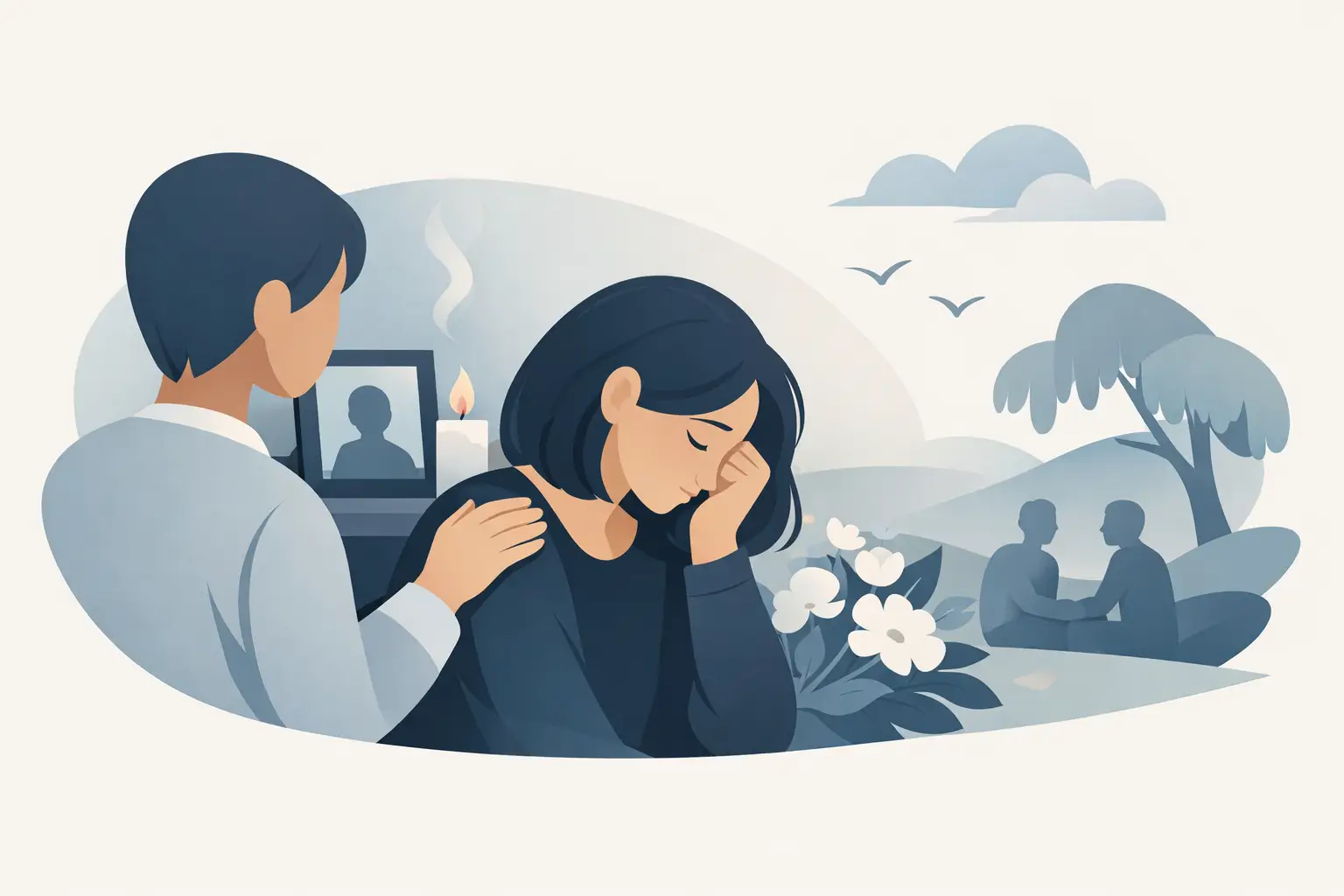

The days immediately after a funeral are often quieter than people expect. Cards may stop arriving, family may return home, and the practical focus of arranging the service gives way to something less manageable. Bereavement support after funeral is often needed most at this point, when the formal goodbye has taken place but the reality of the loss is only just beginning to settle.
Grief does not follow a timetable. Some people feel numb for weeks. Others are busy and capable at first, then find everyday tasks suddenly difficult. You may be coping with poor sleep, a loss of appetite, anxious thoughts, or a sense that you should be “getting back to normal” when normal no longer feels possible. All of this can be part of bereavement, and none of it means you are grieving in the wrong way.
What bereavement support after funeral really means
Support after a funeral is not one single service and it is not only for those in deep crisis. For some, it means having one trusted person who will listen without trying to fix anything. For others, it may involve a bereavement group, one-to-one counselling, help from a GP, support from a faith community, or practical guidance with the many tasks that follow a death.
That distinction matters. Grief is emotional, but it is also physical, social and practical. A bereaved husband may be struggling with loneliness in the evenings. An adult daughter may be carrying the paperwork for probate, banks and utilities while also looking after children. A widow may feel able to cope during the day but dread the quiet of the night. Good support recognises the whole picture rather than reducing grief to tears alone.
It also helps to say plainly that support is not about being pushed to talk before you are ready. Some people need conversation straight away. Others prefer company, structure or simple reassurance. The right kind of help depends on the person, their relationship with the person who died, and what else is happening around them.
Why the period after the funeral can feel so hard
Before the funeral, there is usually a clear sequence of decisions to make. People rally round. There are phone calls, timings, forms, flowers and people to contact. That activity can carry you for a while.
After the funeral, there is often a sudden drop in momentum. You may wake the next day and realise there is no next task to complete for the person who has died. That can leave an emptiness that feels sharper than before. Many people are surprised by this, especially if they managed the funeral arrangements calmly.
There can also be delayed reactions. The service itself may have held you together because you wanted to support others or honour your loved one well. Once that responsibility has passed, emotions may become less predictable. Anniversaries, weekends, meal times and small habits can trigger fresh waves of grief.
This is one reason bereavement support after funeral should never be treated as an afterthought. The need for help often grows once the visible part of bereavement is over.
The kinds of support that may help
The most effective support is often a combination of emotional understanding and practical steadiness. Family and friends can be a comfort, but even loving people do not always know what to say. Sometimes they avoid the subject because they are worried about making things worse. Sometimes they mean well but rush too quickly towards reassurance.
Professional bereavement support can be helpful because it makes space for your grief without judgement. A counsellor or bereavement worker is there to listen carefully, notice patterns and help you understand what you are experiencing. That may be particularly useful if your loss was sudden, traumatic, complicated by family strain, or linked to previous grief that has resurfaced.
Group support can also help, especially if you feel isolated. Speaking with others who understand the strangeness of early grief can be deeply reassuring. You may hear your own feelings reflected in someone else’s words and realise that what seemed frighteningly personal is, in fact, a recognisable part of bereavement.
Practical support should not be underestimated either. Help with administration, meals, transport, sorting belongings or simply having someone sit with you while you make difficult calls can reduce the sense of being overwhelmed. When people think of bereavement care, they often picture conversation. In reality, support is sometimes most valuable when it lightens the ordinary burdens of daily life.
When to ask for extra help
There is no correct moment to seek support. You do not need to wait until things are unbearable. If you are finding each day hard to manage, if you are feeling persistently anxious, or if the loss is affecting your sleep, appetite or ability to function, it is reasonable to reach out.
Equally, some people seek help months later. This is common. The first shock may have worn off, but the longer-term reality of living without someone can become more painful rather than less. Returning to work, facing a first birthday, or clearing a wardrobe can bring grief into focus again.
There are also times when support should be sought more urgently. If you feel hopeless for long periods, unable to keep yourself safe, or unable to cope with everyday life at all, you should speak to your GP or an appropriate professional straight away. Intense grief can be normal, but you do not have to carry frightening thoughts on your own.
Supporting children and teenagers after a funeral
Children grieve differently from adults, and often in shorter bursts. A child may cry in the morning and ask to play in the afternoon. That does not mean they are unaffected. It usually means they process grief in manageable pieces.
After a funeral, children may need simple, honest explanations and the chance to ask the same questions more than once. Teenagers may appear withdrawn, irritable or unusually practical. Some want to talk openly. Others prefer not to. Both responses can be normal.
What matters most is consistency. Clear routines, honest language and permission to remember the person who has died all help. If a child is showing prolonged distress, sleep difficulties, strong anxiety or changes in behaviour that worry you, extra bereavement support can make a real difference.
The value of local, personal support
Bereavement can feel lonely even when you are surrounded by people. That is one reason local support matters. Speaking with someone who understands your community, your pace of life and the practical realities around you can feel more grounding than navigating a distant system.
For families in East Devon, personal aftercare often means knowing there is still someone to speak to once the funeral has taken place. Independent funeral directors such as Otter Valley Funerals understand that care does not end when the service finishes. For many families, reassurance comes from dealing with people who remember their loved one and know the story behind the arrangements.
That personal continuity cannot remove grief, but it can make the path through it feel less abrupt.
What helps in the first few weeks
Small things matter more than grand advice. Try to keep one or two daily anchors in place, such as getting dressed at a usual time, stepping outside for a short walk, or eating something regular even if your appetite is poor. Grief affects the body as well as the mind, and routine can offer a little steadiness when everything else feels altered.
It may also help to lower expectations. This is not the time to measure yourself against how you think you ought to be coping. Some paperwork can wait. Some invitations can be declined. Some days will feel heavier than others without any obvious reason.
If people ask what they can do, be specific if you can. You might need help with shopping, lifts, collecting prescriptions or sitting with you while you sort through documents. Clear requests are often easier for others to respond to than a general “I’m fine”.
You may also find comfort in continuing a bond with the person who has died. That could mean speaking their name, looking through photographs, visiting a meaningful place, or marking anniversaries in a quiet personal way. Grief is not about forgetting. In many cases, healing comes from finding a different way to carry the relationship forward.
If you feel you should be coping better
Many bereaved people are hardest on themselves. They worry they are too emotional, not emotional enough, too dependent on others, or not making progress quickly enough. Grief rarely behaves neatly. It can be calm one day and raw the next.
There is no prize for coping alone. Asking for support is not a sign that you are failing. It is often a sign that you are recognising what this loss has cost and giving it the care it deserves.
If the days after the funeral feel harder than you expected, that does not mean something has gone wrong. It means you are living through a significant loss. Support, whether practical, emotional or both, can help you find your footing again – not by rushing grief away, but by helping you carry it with a little more strength and a little less isolation.
Be gentle with yourself in the weeks ahead. The funeral may be over, but care is still allowed, and often still needed.