
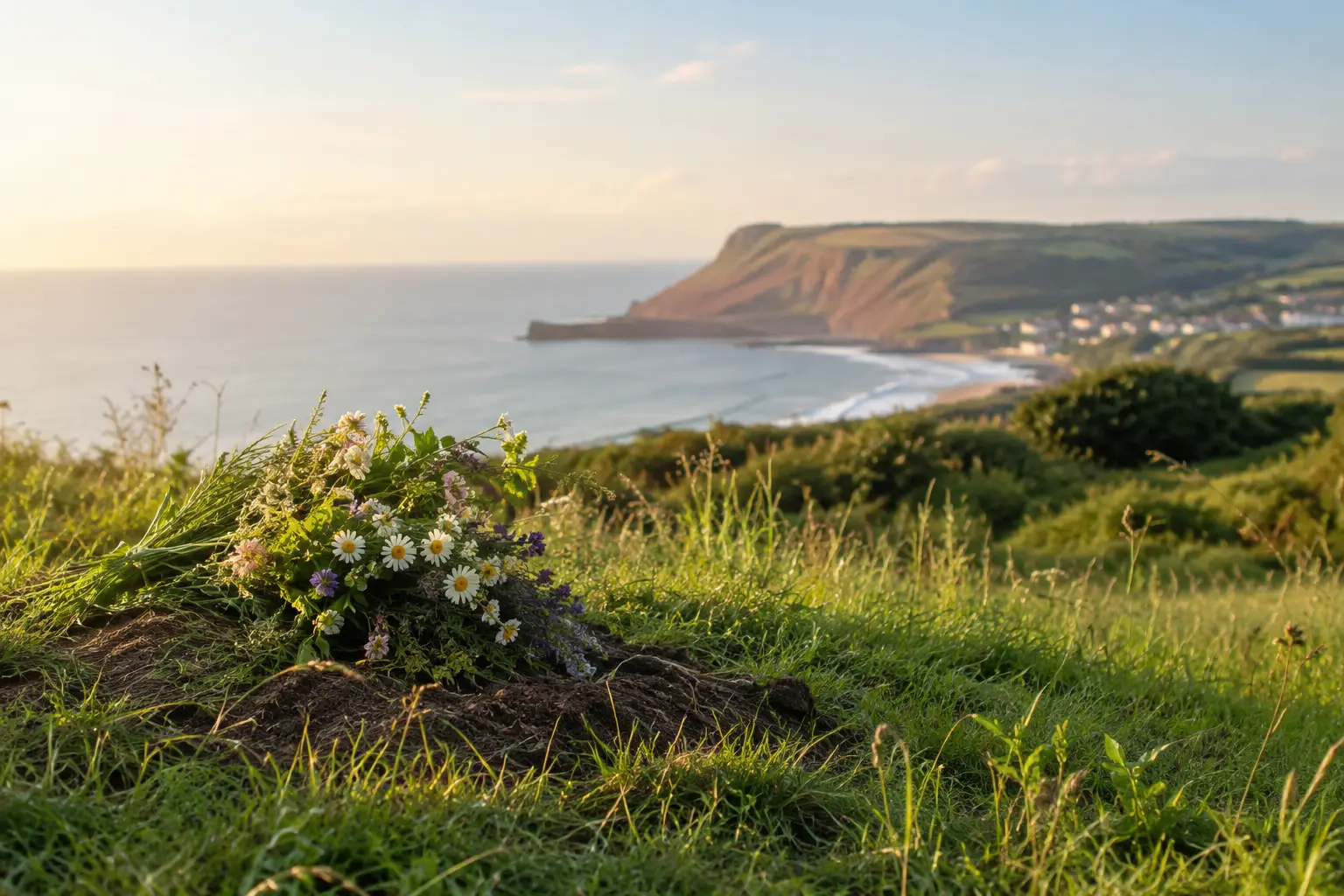

A natural burial can feel particularly fitting when someone loved the countryside, valued simplicity, or wished to leave as little impact on the environment as possible. Rather than following a fixed pattern, natural burials allow a farewell to be shaped around the person who has died: quiet or well attended, religious or non-religious, formal or wonderfully informal.
For many families, the comfort lies in knowing that a loved one will rest in a place intended to remain close to nature. There is still plenty to arrange, however, and clear information can make those decisions feel less daunting.
What are natural burials?
A natural burial, sometimes called a green burial, takes place in a burial ground managed with environmental considerations in mind. Graves are usually set within meadowland, woodland or another natural landscape. The aim is for the site to develop naturally over time, often supporting native plants and wildlife.
The person who has died is buried in a biodegradable coffin, shroud or casket. Materials may include cardboard, willow, bamboo, wool, seagrass or untreated wood. The right choice depends on the burial ground’s rules as well as the family’s wishes.
Unlike a traditional cemetery, a natural burial ground may not permit polished stone headstones, plastic flowers or permanent kerbs. Some sites mark graves with a small wooden plaque, a tree, or a record held by the burial ground. Others keep the landscape unmarked. This can be reassuringly simple for some people, while others may find it difficult not to have a conventional memorial to visit.
Why families choose a natural burial
Environmental concerns are often part of the decision, but they are rarely the whole story. Families may be drawn to the setting, the gentler pace of the service, or the feeling that the funeral is connected to the seasons and the local landscape.
A natural burial can also create space for personal touches. A family might carry the coffin together, choose wildflowers where permitted, read a poem, play a favourite piece of music or simply allow a few moments of quiet at the graveside. A minister, celebrant or family member can lead the service, and there is no requirement for it to be religious.
For those arranging a funeral in East Devon, a natural setting can feel especially meaningful. The coast, fields and woodland are part of many families’ memories. Yet the location should be chosen for more than its appearance. It needs to be somewhere that feels right for the person who has died and practical for those likely to visit in the years ahead.
Natural burial or green funeral: is there a difference?
The terms are often used interchangeably, but they can mean slightly different things. A natural burial describes the method and setting of burial. A green funeral is broader and may include environmentally conscious choices for any funeral, including one followed by cremation.
For example, a family may choose a simple coffin, locally gathered flowers, shared transport and fewer printed orders of service as part of a green funeral. They may then opt for cremation or for burial in a conventional cemetery. Equally, a natural burial can include a traditional church service before the burial ground committal.
There is no single definition of an environmentally friendly funeral. The most suitable choice is one that balances the person’s wishes, the family’s needs, the available budget and the rules of the chosen venue.
Choosing a burial ground
Every natural burial ground has its own approach, so it is worth asking practical questions before making arrangements. Find out whether the grave is purchased for a fixed term or in perpetuity, whether the family can choose the exact plot, and how the ground will be cared for over time.
Ask about access too. A peaceful meadow may be beautiful in summer but uneven, muddy or difficult to reach in winter. If elderly relatives or someone with limited mobility will attend, check parking, paths, seating and the distance from the entrance to the grave. It may also be helpful to know whether dogs are welcome and whether visiting hours apply.
Clarify the memorial policy before committing. Some families find a tree planting or woodland plaque deeply comforting. Others want a more recognisable marker. If a grave will not be individually marked, make sure everyone understands how its location will be recorded and found again.
It is sensible to discuss what happens if the burial ground changes ownership or ceases to operate. Reputable operators should be able to explain their long-term management arrangements, including how the land is protected and maintained.
The coffin, shroud and flowers
A natural burial ground will provide a list of permitted materials. Biodegradable does not always mean that every natural-looking item is accepted. Coffins can contain glues, fittings, linings or decorative elements that do not meet a site’s requirements, so it is best to check before ordering.
Willow and cardboard coffins are often chosen for their simplicity, while a shroud can be a very personal option. A shroud burial may involve a stretcher or a simple carrier, and families should be guided carefully through what this involves. It will not be right for everyone, but it can be peaceful and dignified when it reflects the person’s wishes.
Flowers are another area where small choices matter. Seasonal flowers, foliage from a garden and arrangements without plastic wrapping can suit the setting beautifully. Some burial grounds ask that flowers are removed after a set period so that the land can return naturally to meadow or woodland.
Planning the service around the person
A natural burial does not need to be austere. The service can be as warm, traditional, colourful or quiet as the family wishes. Some people prefer a brief graveside gathering followed by tea at home or in a favourite local place. Others arrange a full ceremony, with readings, music and a gathering before travelling to the burial ground.
Timing deserves thought. A graveside service is exposed to the weather, which can be part of its honesty and beauty but also challenging. A gazebo, umbrellas, seating and a clear plan for wet or windy conditions can help guests feel looked after. A funeral director can coordinate these details while ensuring there is time and privacy for the family.
Children can be included in gentle, meaningful ways: placing a flower, drawing a picture for the coffin, or choosing a reading. There is no pressure to involve anyone beyond what feels comfortable. The funeral should support those present, not ask them to perform grief in a particular way.
Costs and decisions to make early
The cost of a natural burial varies between burial grounds and is affected by the grave fee, interment fee, coffin or shroud, transport, professional services, celebrant or minister, and any ceremony arrangements. A woodland setting is not automatically less expensive than a cemetery burial, particularly where plots are limited or specialist land management is involved.
Being open about budget from the start helps a funeral director explain the options clearly. It is possible to create a meaningful natural farewell without adding services that do not matter to the family. Equally, a bespoke service may be the right choice where there are particular requests to honour.
If someone is planning ahead, recording their preferences can be a real kindness. They do not need to decide every detail, but noting whether they would prefer burial or cremation, the kind of setting they value, and the people they would like involved gives relatives a helpful starting point.
Gentle guidance when it is time to decide
Arranging a funeral often means making unfamiliar decisions while living with shock or sadness. At Otter Valley Funerals, we take time to explain each option plainly, listen to what matters most and help families arrange a farewell that feels true to the person they love.
A natural burial is not about doing things perfectly or meeting someone else’s idea of a green funeral. It is about choosing a resting place and a goodbye that feel honest. When the decisions are guided by love, care and the character of the person being remembered, even a very simple service can stay with a family for years to come.